

With the outbreak of the war, Israelis were introduced to a new enemy: the Houthis of Yemen. They had always been there, another arm of Iran threatening Israel, but their great distance made them seem like a less pressing danger than others.
Since Oct. 7, 2023, however, the Houthis — responsible in their own country for one of the world’s worst hunger crises — have become a particular headache for Israel. Now, a strike in Sanaa that reportedly targeted the group’s top leadership may signal a change.
IDF airstrikes in Sanaa, Yemen
(Video: Defense Ministry)


The strike took place on Thursday, just hours after Israel intercepted two more drones launched by the Houthis. According to reports, the target was a gathering of senior officials preparing to watch the weekly address of the group’s leader, Abdul-Malik Badr al-Din al-Houthi.
Israeli officials are now checking whether the attack succeeded in killing the Houthis’ defense minister, Mohamed al-Atifi, and the group’s chief of staff, Muhammad Abd Al-Karim al-Ghamari — the latter previously surviving an Israeli attempt on his life in June.

Anti-Houthi sources operating from the southern Yemeni city of Aden reported Friday morning that Ahmed Ghaleb al-Rahwi, who serves as the Houthis’ prime minister, was killed in the strikes in Sanaa. According to the report, the strike targeted a house in a residential neighborhood where al-Rahwi was apparently present along with other officials. The Houthis have not commented, but Russia’s RIA news agency also reported al-Rahwi’s death, citing “a source in his family.”
Al-Rahwi holds no operational authority within the Houthi leadership and has no connection to the group’s military wing, which continues to regularly harass Israel with missiles and drones. A source in Aden, which remains outside Houthi control, told Ynet that al-Rahwi’s death carries no military, security or other significance for the Houthis’ activities.

Abdul-Malik al-Houthi
(Photo: Mohammed HUWAIS / AFP, REUTERS/Stringer)
According to reports, the strike was carried out by firing missiles in succession at the same underground location, in a manner reminiscent of past assassinations of senior figures such as Hezbollah leader Hassan Nasrallah and Hamas commander Mohammed Sinwar. The IDF said only that it struck a target in Sanaa, but Reuters cited Israeli sources who said several targets were attacked over the course of minutes.
The Houthis’ 46-year-old leader, Abdul-Malik al-Houthi, is considered a far more difficult target. His weekly speeches are always delivered remotely, and past reports have said he hides in a cave in Yemen’s mountains. Reuters reported this year that he rarely stays in one location for long and, since Yemen’s civil war broke out a decade ago, has avoided meetings with foreign officials.
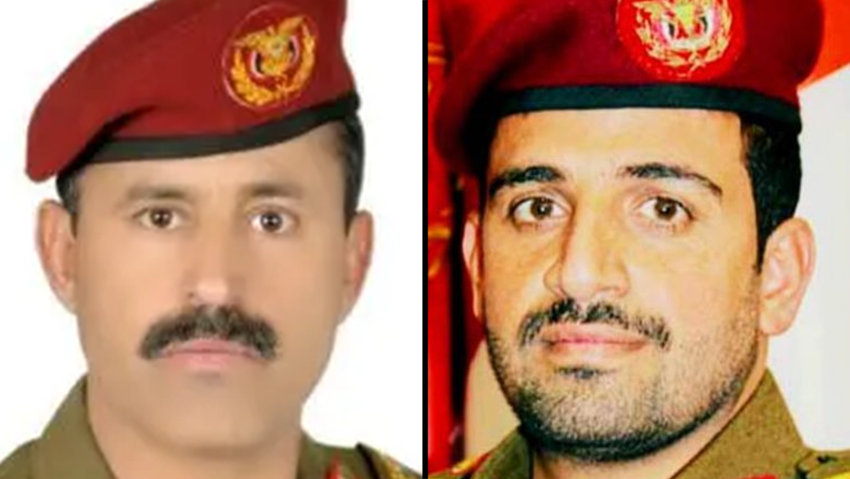
Mohamed al-Atifi, Muhammad Abd Al-Karim al-Ghamari
A source familiar with the arrangements told Reuters that those seeking an audience were required to travel to the capital, Sanaa, where they were escorted by a heavily armed Houthi convoy to secure houses. After searches, they were brought to an upstairs room — but even there, they never met him face to face, only via screen.
Trump also confronted them — and the agreement with him was broken
If Thursday’s strike did succeed in killing senior Houthi figures, it would mark a significant achievement in Israel’s prolonged campaign of attacks, which until now has struggled to deal a crippling blow to the terrorist group. The Houthis enjoy several unique characteristics that make them a particularly difficult adversary.
First is their indifference to the fate of the millions of Yemenis living under their control since they seized large swaths of territory from the internationally recognized government during the civil war a decade ago. According to United Nations figures, 19.5 million people in Yemen are in need of humanitarian assistance, and 17.1 million face severe food insecurity—most of them in or near Houthi-controlled areas. War has only deepened the crisis, but the Houthis, driven by a hardline ideology, show little concern. Israeli strikes do not deter them on this front.

Million facing hunger in Yemen
(Photo: UN/Reuters)
The second factor is distance. In Gaza, the West Bank, Lebanon and Syria, Israel has often relied on ground forces to complement airstrikes. With the Houthis, however, that option is seen as unrealistic. The only time in the past two years the possibility of a ground operation was even raised was during a U.S.-led air campaign. That effort fizzled out, leaving Israel disappointed.
Despite absorbing wave after wave of American strikes, the Houthis managed to inflict damage on U.S. forces. Ultimately, the Trump administration reached an agreement with them, centered on halting attacks on commercial shipping in the Red Sea. In recent months, however, the Houthis have resumed such attacks, some of them deadly, sinking vessels and threatening key trade routes.
Iran is also far from Israel, but its Shiite regime retains at least some responsibility toward its citizens and governs under far shakier legitimacy. The Houthis, by contrast, rule their population with an iron fist, including through deliberate starvation.
Thus, even after Israel repeatedly struck the air and sea ports used by the Houthis, destroyed aircraft and oil facilities, took out power stations and energy infrastructure, plunged Sanaa and Hodeidah into darkness and sent fireballs echoing across the Middle East, the Houthis continued to fire missiles and drones toward Israel.

Aftermath of Israeli strike on Sanaa airport, May 2025
(Photo: Mohammed HUWAIS / AFP)
“We are ready for a long struggle with the occupation and welcome direct confrontation with Israel,” senior Houthi official Mohammed al-Bukhaiti declared Thursday night. “Our military action in support of Gaza will continue as long as the Israeli war in the Strip continues.”
Other Houthi leaders delivered similar messages, along with the group’s routine and cynical accusations that Israel was “attacking civilian targets,” while denying that any senior figures had been hit. The Houthis’ Supreme Political Council issued a statement saying Yemen’s support for the Palestinians and Gaza “will not stop and will not be affected by Zionist escalation.”
Their strength lies in their weakness
Until now, Israeli and American strikes on the Houthis have caused damage mainly of a financial nature—estimated at several billion dollars—alongside losses among mid-level operatives. But for the first time, Israel may have succeeded in striking the group’s senior leadership, figures who in the past survived a long and grinding war against a Saudi-led Arab coalition.

Israeli strike on Sanaa, Yemen
(Photo: REUTERS/Stringer)
“Israel relies on an air force that can strike in Yemen, but certainly not every day,” explained Danny Citrinowicz, a research fellow in the Iran program at Israel’s Institute for National Security Studies (INSS) and a former head of the Iran branch in the IDF’s military intelligence research division. “That forces you to go after classic infrastructure targets, which creates economic damage but doesn’t generate a sense of being hunted among senior leaders. And you certainly can’t hit mobile launchers or disrupt fire toward Israel. That’s why, absent pressure, they can launch more at Israel.”
“Therefore, Israeli activity—while producing economic damage—does not harm the Houthis’ command or launch capabilities,” the analyst said. “The Americans had the ability to do that, but once their campaign ended there has been nothing creating that same sense of vulnerability. The economic cost to the Houthis is significant, but it’s tolerable compared with the gains they believe they achieve by attacking Israel. So even if we bomb Hodeidah another 100 times, it won’t help. Their strength is in their weakness. They have no single ‘center of gravity’ Israel can strike that will make them stop firing.”
Now, however, things may have shifted. The full results of the strike in Sanaa—and which senior figures, if any, were hit—remain unclear. In any case, the Houthi threat is not expected to disappear, even if curtailed temporarily by a ceasefire in Gaza or some other agreement.
Ultimately, Citrinowicz said, “What’s needed is cooperation with the United States, the Gulf states and southern Yemeni militias, with the ultimate goal of toppling the Houthi regime.”
“At the present moment, that looks impossible,” he added. “So halting Houthi fire is only likely to happen in the framework of a deal in Gaza. Despite their heavy losses, the Houthis—at least according to their claims—are able to rebuild parts of their infrastructure relatively quickly. Unlike the population living under their rule, the Houthi leadership has money, from taxes, levies, oil and, of course, from Iran.”