



The warning that the president of the United Arab Emirates reportedly conveyed to Prime Minister Benjamin Netanyahu about a week and a half before the October 7 massacre joins a long list of warnings that reached Israel's political and security leadership in the months and years before the attack.
According to a report in Haaretz on Tuesday, Mohammed bin Zayed Al Nahyan warned Netanyahu that he had received verified information indicating that Yahya Sinwar was planning a major operation against Israel. The call lasted about 45 minutes, but according to the report, the warning was not shared with the heads of Israel's security establishment.
The revelation joins the 'Jericho Wall' document, warnings from the Military Intelligence Directorate and statements by former Shin Bet chief Ronen Bar and opposition leader Yair Lapid, all issued months or even years before the Hamas attack. Yet despite the accumulation of warnings, the most extreme scenario became reality on October 7.
'Jericho Wall' — and the invasion plans postponed twice
In the spring of 2022, the IDF received the 'Jericho Wall' plan, a critical document warning of an attack that reached senior defense officials. The document, accompanied by a presentation and based on detailed intelligence, described with considerable accuracy the Hamas attack that ultimately took place on October 7.
ynet also revealed that at a secret General Staff meeting on July 27, 2022, led by then-Operations Division chief Brig. Gen. Yaron Finkelman, who was commander of the Southern Command on the day of the attack, orders were given to prepare for war with Hamas based on 'Jericho Wall' — but nothing was done.
At that meeting, Finkelman concluded that Hamas would be able to achieve surprise only by disguising an attack as a military exercise or because of a mistaken assessment that it was raising its alert level in anticipation of an Israeli strike.
ynet further revealed last November that in the hours before the Hamas invasion, Finkelman himself fell victim to the same deception tactics he had warned about in his previous post. During a telephone situation assessment at 3 a.m., he raised those same two dangerous possibilities while discussing Hamas' heightened alert level.
Hamas had planned to carry out the same invasion plan during the Jewish holiday season in the fall of 2022 and again on the night of the Passover Seder in 2023, when IDF Chief of Staff Herzi Halevi chose to stay overnight at the Kissufim outpost — without Hamas knowing he was there.
Hamas ultimately called off the attacks in order to complete preparations for its elite Nukhba force. Halevi himself learned about 'Jericho Wall' only two weeks after the war began, despite having served during the previous decade as head of Military Intelligence, commander of the Southern Command and deputy chief of staff.
According to the investigation, the reason Hezbollah did not join the fighting was apparently a misunderstanding between the group and Hamas during advance coordination carried out in July 2023.
Finkelman's summary of the 2022 meeting stated: "At its core, the 'Jericho Wall' plan represents a transition to a large-scale offensive effort inside Israeli territory as part of Hamas' lessons from previous events."
He said that if the ideas were implemented even partially, there was "significant potential for damage." According to the summary, the Operations Division chief gave the plan the appropriate weight and understood that Hamas was undergoing a strategic change.
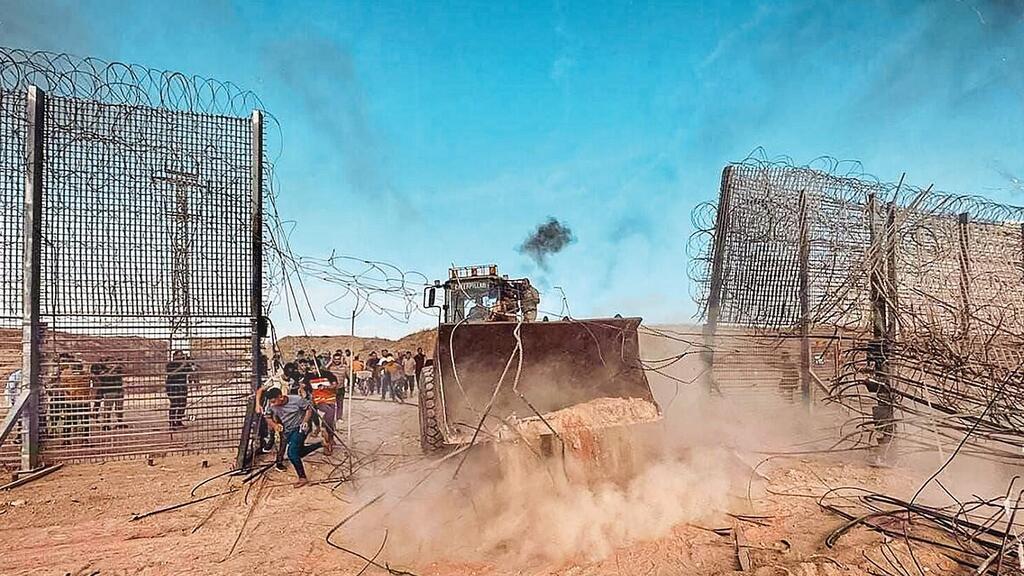
The breach of the border fence on October 7
In a strikingly accurate assessment, Finkelman wrote that "without the element of surprise, the plan's chances of success are very low."
He listed steps that should be taken, including "preparing for the plan as a possible scenario during fighting" and reviewing emergency orders to determine whether an adequate response was in place. In particular, Finkelman said, the military needed to examine how to deal with a mass raid into Israel "in a scenario of simultaneous fighting on two fronts."
The weakening of the 'four legs'
In July 2023, about three months before the attack, the Military Intelligence Directorate warned Netanyahu directly and personally several times about "the serious new security consequences that have emerged in recent months."
One letter said Israel's enemies saw a historic opportunity to change the strategic situation in the region because of the severe crisis inside Israel, the likes of which they had never seen before.
Senior Military Intelligence officials warned that the damage was not only immediate but could have long-term consequences. According to the IDF's analysis, enemies such as Iran and Hezbollah viewed Israeli deterrence as resting on four pillars, all of which had weakened: the strength of the IDF, the alliance with the United States, a strong economy and a high level of internal cohesion.
Even then, Military Intelligence viewed the political crisis with the United States as extremely serious and likely to have long-term effects.
Regarding the military's readiness, intelligence officials identified that Iran and Hezbollah were closely monitoring the crisis in Israel's reserve forces and the damage being done to critical military units.
The summer of 2023 in Israel, as Israel's enemies saw it according to Military Intelligence, represented a historic point of weakness. Until then, officials had spoken of a "tactical" erosion of deterrence. This time, intelligence officials were concerned that Israel's fundamental deterrence was being significantly undermined.
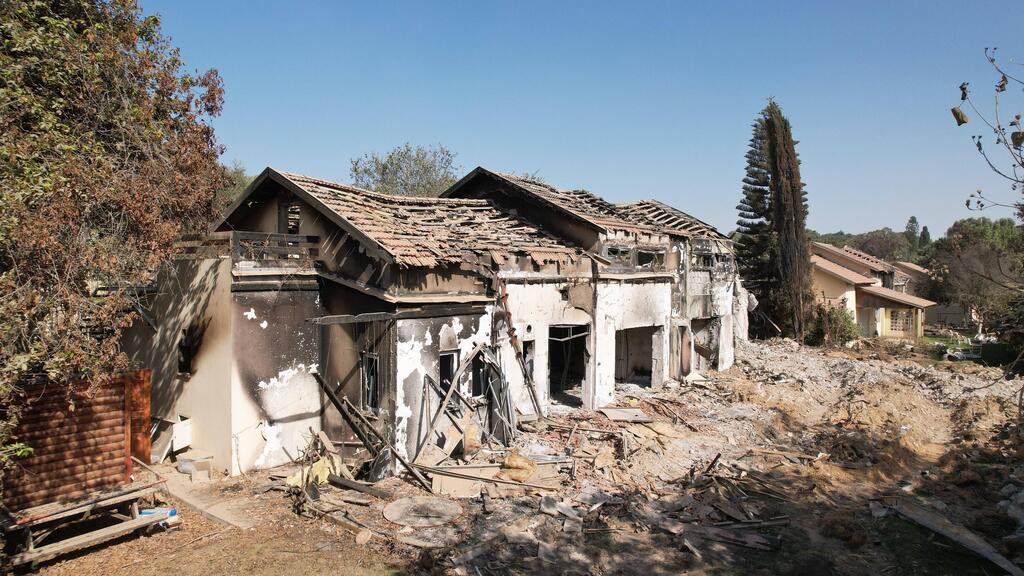
Military Intelligence warned Netanyahu of 'serious security consequences'; Destruction at Kibbutz Be'eri
(Photo: Gadi Kabalo)
Former Shin Bet chief Ronen Bar also told Netanyahu on July 24, 2023, about three months before the attack and on the eve of the Knesset vote on legislation limiting the reasonableness standard: "I am giving you a warning of war here today. I cannot give you an exact day or hour, but this is the warning."
Bar's position was clear: Israel's enemies saw weakness. Israel needed to project broad national consensus to the region in order to prevent the possibility of war.
Bar received Netanyahu's approval and blessing to meet with the opposition leader, and he conveyed the same message to him.
It should be noted that despite the general warnings, Israel's security establishment was itself caught unprepared on the morning of October 7.
Lapid's 'warning speech'
According to the Haaretz report, about a week and a half before October 7, the UAE president called Netanyahu.
He delivered an explicit warning: I have received verified information that Sinwar is planning a major operation against Israel. You must prepare for a horrific event.
The call lasted 45 minutes. Netanyahu listened, but according to the report, did not disclose the serious warning to the heads of Israel's security establishment.
The Prime Minister's Office responded to the investigation by calling the report "a complete lie. Prime Minister Netanyahu did not speak with the president of the United Arab Emirates during the period in question and received no warning from him."
Former Shin Bet chief Ronen Bar and former IDF Chief of Staff Herzi Halevi said they were not informed of any warning delivered by the UAE president.
About two weeks before Hamas' surprise attack on October 7, opposition leader Yair Lapid delivered what became known as his 'warning speech,' telling Israelis: "We are getting dangerously close to a violent, multi-front confrontation."
"The recent events near the Gaza border fence are exactly the kind that have led to rounds of fighting in the past," he said. "All the heads of the security establishment — the IDF, Shin Bet, police and intelligence agencies — are warning the government and the Cabinet about a violent escalation, but Ben-Gvir and Smotrich repeatedly ignore the security officials' recommendation to act cautiously and responsibly."
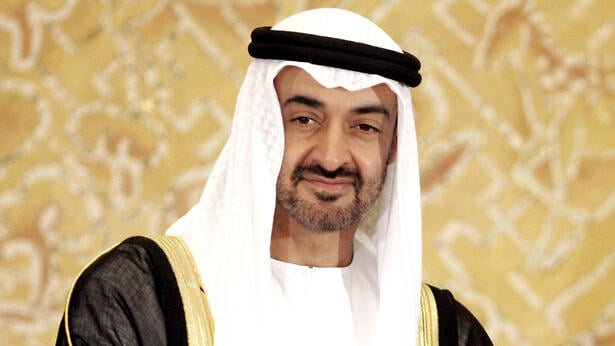
Warned of Sinwar's intentions: Mohammed bin Zayed
(Photo: AP)
In a later interview with ynet, Lapid said his remarks were "based on intelligence information" and that Netanyahu was actually the person who had "set in motion" the process that led him to make the information public.
"I was at a security briefing for the opposition leader with the prime minister, and the information I heard horrified me," Lapid said in the interview. "When you have the basic information available at the prime minister's level, you also know where to look. Then I went three or four times to the Foreign Affairs and Defense Committee to read the intelligence materials. It was all in the material, all the warnings."
The Egyptian warning — and indifference in Israel
According to a senior Egyptian source, three days before Hamas' surprise attack on Israel, Egyptian intelligence chief Gen. Abbas Kamel contacted Netanyahu's office and relayed a message warning that "something unusual, a horrific operation" was about to take place from Gaza.
ynet reported the warning following an Associated Press report about an Egyptian warning. The Prime Minister's Office denied the claims.
Amid the controversy that followed the report and despite Netanyahu's explicit denial, the Egyptian source said: "We are not denying or moving even a centimeter from what we told several international media outlets, including Israel's Yedioth Ahronoth."
The chairman of the U.S. House Foreign Affairs Committee also said the Egyptian warning had indeed been passed along.
The Egyptian intelligence official told ynet that Kamel "was stunned by the indifference" displayed in Israel.
Egyptian sources said the response to the Egyptian intelligence chief was that the IDF and Israeli security forces were "preoccupied" with dealing with cities in the West Bank from which terrorist attacks against Israel were being carried out.
According to the source, senior Israeli officials told their Egyptian counterparts that "the situation in Gaza, and particularly along the border, is under control."
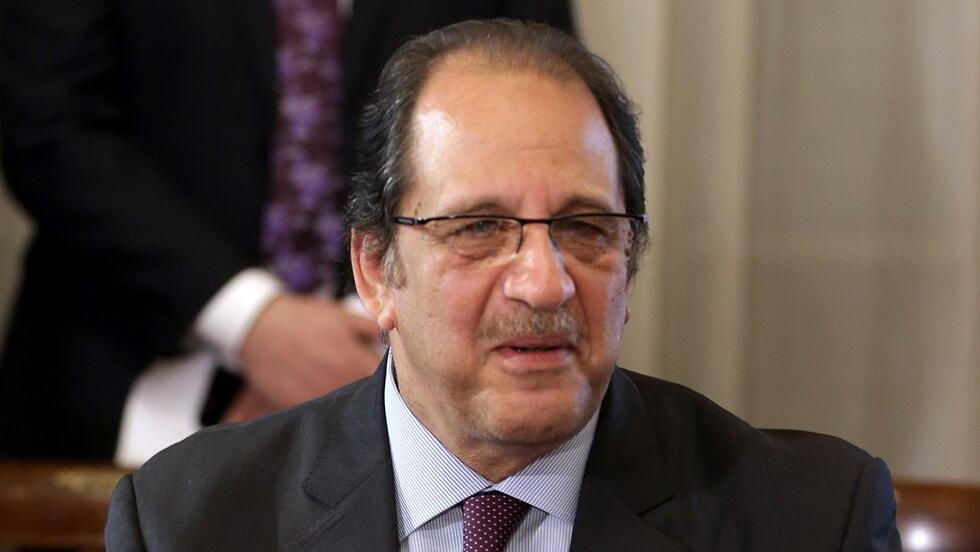
Warned of 'something horrific' three days before the massacre: Abbas Kamel
(Photo: AP)
Later, following Netanyahu's denial, the Egyptian source stressed: "We are not denying or moving even a centimeter from what we said. Egypt believed it was appropriate to warn Israel about the seriousness of the situation regarding Gaza."
The official said he was referring to a confidential dialogue that had been underway for a long time "between the office of the Egyptian intelligence minister and Prime Minister Netanyahu's office."
The source added: "When the conversation took place, we on the Egyptian side were told that Israel, for its own reasons, preferred to focus on the West Bank, and it was explained to us that Israel's 'eyes' along the Gaza Strip were open and reporting constantly. Experience shows that this did not work.
"I warn against anyone trying to turn the Egyptian intelligence minister into a spy or Israeli agent. His intention was — and remains — to advance an arrangement between Gaza and Israel."
'They reported rising tensions — Netanyahu looked bored'
In August 2024, Lapid testified before the Civil Commission of Inquiry into the October 7 disaster, which was established in part by bereaved parents and parents of hostages.
"It is not true that the political leadership received no warning about October 7 — for months they received warnings and did nothing," he said.
"Until mid-2023, the terrorist organizations knew they could not do it, but from then on there were more and more voices saying that they believed they could. There were voices like that in Israel too — I was one of them. I want to refute the claim that people say they were not updated. I was briefed on the warnings."
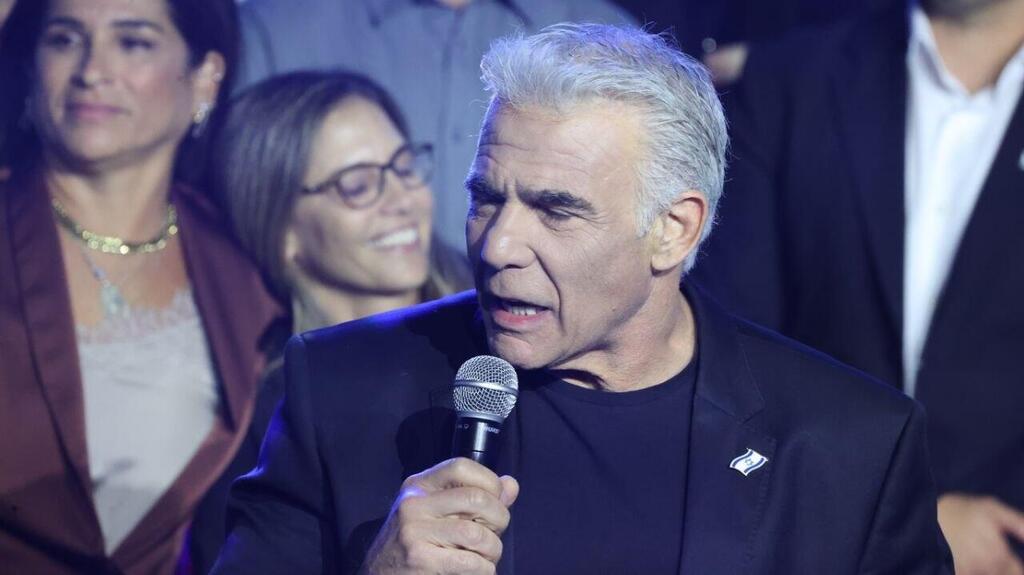
'They received warnings and did nothing'; Yair Lapid
(Photo: Motti Kimchi)
Lapid also said that on Aug. 21, 2023, he attended a security briefing with Netanyahu led by Maj. Gen. Avi Gil, who was then the prime minister's military secretary.
"He reported rising tensions in every arena — the Iranians, Lebanon, the terrorist organizations in Gaza," Lapid said. "He reported that all of them identified weakness on the Israeli side, internal division, tensions and a loss of military readiness, as well as a developing crisis with the Americans.
"I thought the information was extraordinary in both its severity and how unequivocal it was. The prime minister looked bored and indifferent and did not comment on it at all. They knew there was a security risk in their conduct. The Cabinet knew, Netanyahu knew, the security establishment warned them."
In May 2024, the IDF officially confirmed in response to a Freedom of Information request filed by the nonprofit group Hatzlacha that Netanyahu had received four separate warning letters from the Military Intelligence Directorate between March and July 2023.
The letters warned Netanyahu that Israeli deterrence was weakening because of the severe damage to social cohesion in Israel.
According to the letter sent to the organization's legal adviser, Elad Mann: "During 2023, between March and July, four separate warning documents were delivered by the Military Intelligence Directorate illustrating how Israel's enemies across all arenas viewed the damage to cohesion in the State of Israel, and in the IDF in particular."