

An external review committee examining how the military handled intelligence about Hamas’ “Jericho Wall” invasion plan is expected to submit its conclusions in the coming weeks, but its mandate is limited to investigating military officials and does not include the political leadership.
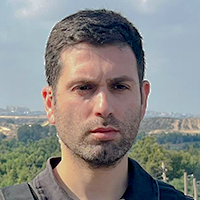
The panel is headed by retired Maj. Gen. Roni Numa and was tasked with reviewing the military’s treatment of the documents outlining Hamas’ plan to invade and attack communities and bases near Gaza.
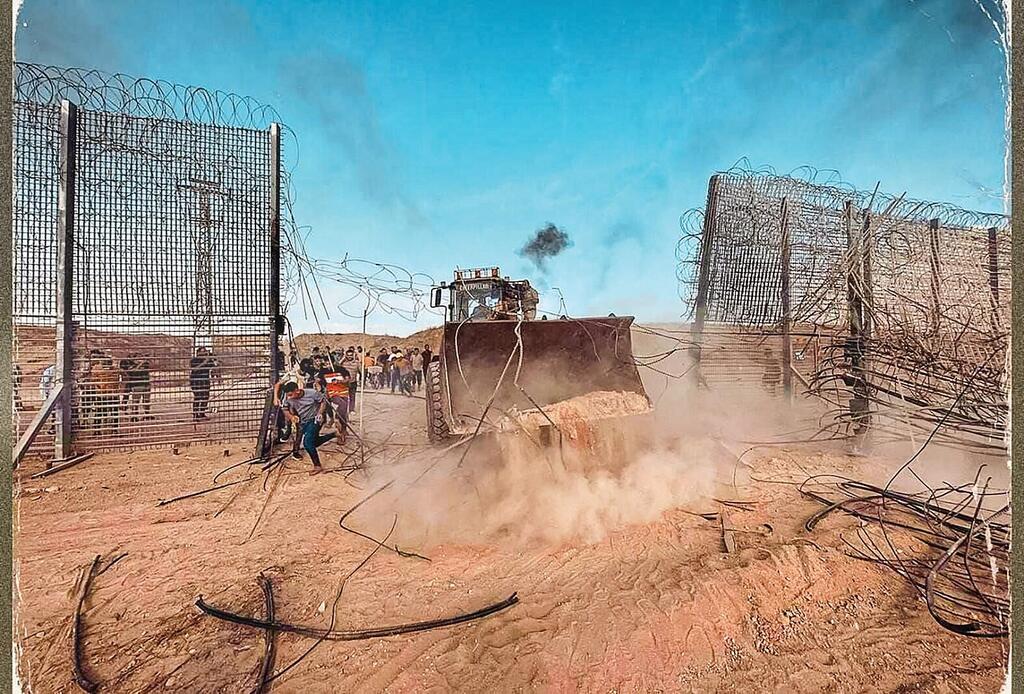
According to reporting by ynet and Yedioth Ahronoth, information about the plan was first brought to Prime Minister Benjamin Netanyahu’s attention in 2018, when Israeli intelligence initially uncovered it.
In what has been described as one of the military’s key failures, former Chief of Staff Herzi Halevi was not informed about the plan and has said he was unaware of it. When Halevi first visited Southern Command as chief of staff in January 2023, no officer briefed him on the existence of “Jericho Wall.” He learned of the plan only toward the end of October 2023, after the war had already begun. Halevi previously held senior posts including head of Military Intelligence, commander of Southern Command and deputy chief of staff.
Military Intelligence reportedly obtained a more detailed and operational version of the plan in May 2022. Unlike the earlier 2018 material, which was described as more conceptual, the updated version contained clearer operational elements.
Investigations conducted during the war, as well as intelligence gathered during ground operations in Gaza, indicated that Hamas had been close to implementing “Jericho Wall” at least twice in the two years preceding Oct. 7, around the Passover and Independence Day holidays in 2022 and 2023. That information was not identified in real time by the Shin Bet or Military Intelligence.
According to the findings presented to the Numa committee, had Hamas carried out the plan in April 2022, the military would not have been aware of its full operational scope, as the detailed version was located only about a month later.
A separate review led by retired Maj. Gen. Sami Turgeman, which examined the quality of the military’s internal investigations into the Oct. 7 attacks, identified early warning signs that were not fully addressed. These included significant changes Hamas made in the year before the war to its artillery array, improving its ability to launch heavy rocket barrages and explosive drones at observation systems and defensive positions near the border, as well as bolstering engineering capabilities capable of breaching the barrier.
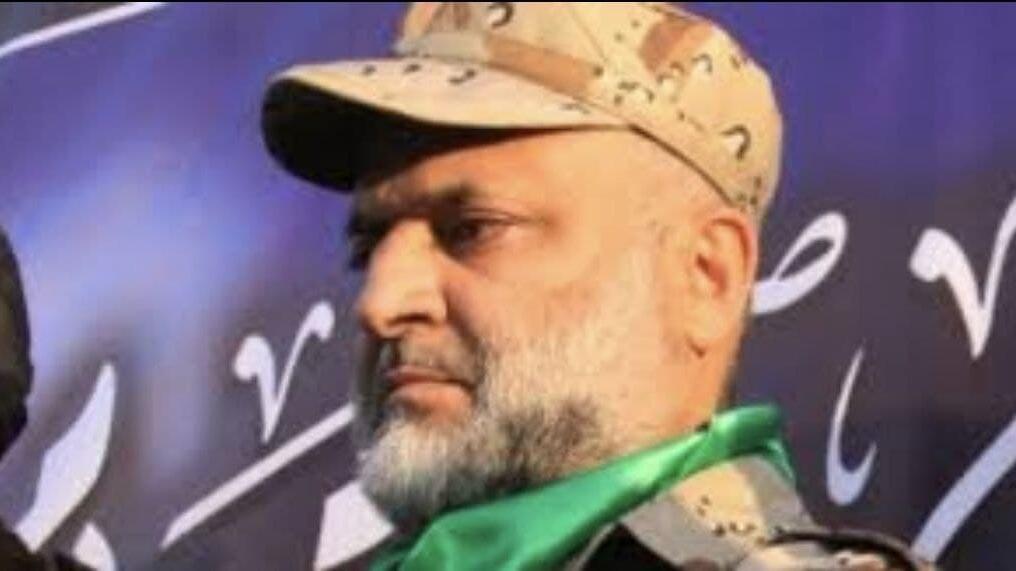
Raed Saad
The operational plan was developed within Hamas by senior figure Raad Saad, who served as head of operations in its military wing in the late 2010s. He translated the broader vision of Yahya Sinwar and Mohammed Deif into a detailed operational blueprint centered on overrunning the Gaza Division and attacking Israeli territory.
According to the report, Saad opposed implementing the plan, arguing it would lead to severe destruction in Gaza and a collapse of Hamas as a result of Israel’s response. Disagreements between him and Sinwar and Deif led to his removal from his post, though he remained in the military wing. He was killed by the military about a month after the war ended, in a targeted strike on a vehicle in Gaza City, following repeated violations of the ceasefire.
Most senior officers who discussed “Jericho Wall” in the years before the attack viewed it as a force-building framework rather than an imminent operational plan, despite training exercises by Hamas simulating the takeover of communities and bases. According to testimony presented to the Numa committee, only two or three relatively junior noncommissioned officers in Military Intelligence, including one identified as “V.,” insisted that the plan was actionable and warned that Hamas could carry it out. Some of those warnings were raised again in the weeks before Oct. 7.
The scope of the plan exceeded even the most extreme reference scenarios prepared by Southern Command, which envisioned a surprise attack without prior intelligence warning involving six to eight infiltration points and several dozen terrorists. “Jericho Wall” described a much broader assault.
Testimony before the committee also indicated that some senior officers who reviewed the plan in the year before the war were not told that its core had already been discovered in 2018. According to sources familiar with the discussions, had senior commanders known the plan had been developing for five or six years, Southern Command might have requested and received additional routine security forces, instead of maintaining the relatively small number of companies deployed along the border on the morning of the Simchat Torah holiday.
In 2022, the Operations Directorate held only two discussions about “Jericho Wall.” In the absence of new intelligence developments, no additional measures were taken, such as reinforcing forces or recommending a preemptive move against Hamas. At the time, the policy was to avoid targeting Hamas operatives in order to distinguish the group from Islamic Jihad during periods of escalation between 2021 and 2023.
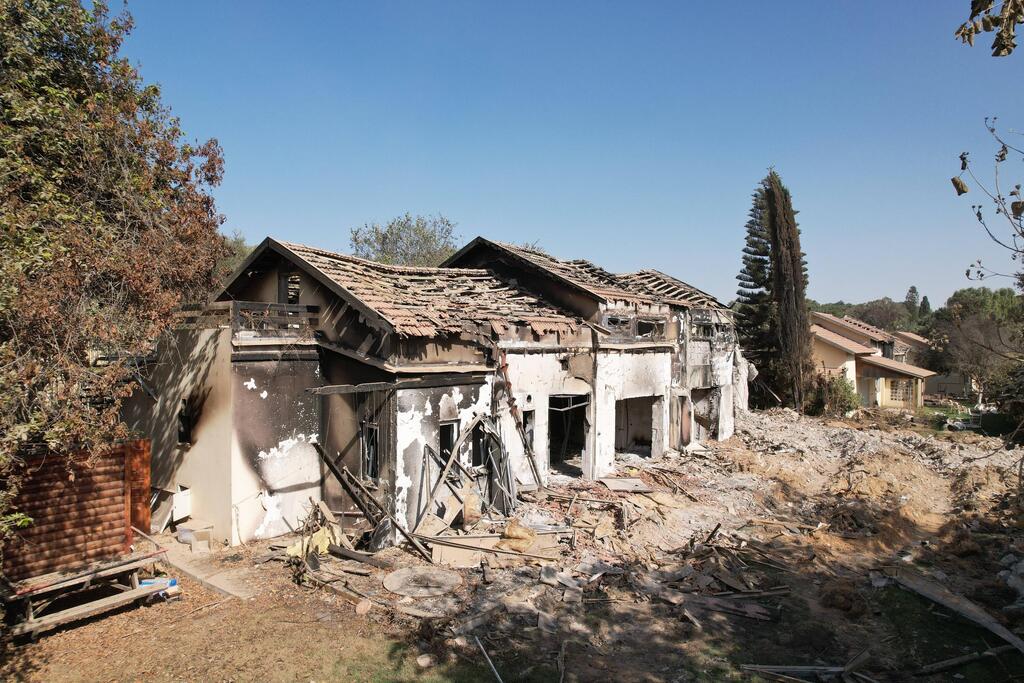
(Photo: Gadi Kabolo)
Even in November 2022, less than a year before the attack, “Jericho Wall” was mentioned only briefly in a Southern Command conference summary document titled “Portrait of a Campaign.” The possibility of a large-scale above-ground assault — rather than infiltration through tunnels — was raised on a single page of roughly 60. The term used to describe the scenario was “raid,” not “invasion,” reflecting the prevailing assessment that any such operation would be limited in scope.
Senior officers later testified that in the years before Oct. 7, the General Staff viewed the primary threat from Gaza as its estimated arsenal of about 15,000 rockets, thousands of which could reach Tel Aviv. As a result, most intelligence resources were focused on the rocket threat following previous operational shortcomings in earlier rounds of fighting.
Only in the months leading up to Oct. 7 did Southern Command begin more serious processes aimed at addressing and monitoring the plan. In one discussion, participants suggested continuing to examine the issue “after the holidays.”
Among the steps taken in the weeks before the attack was the establishment of “red teams” to challenge assumptions regarding mass protests along the border fence. Those demonstrations were later determined to have served as cover for placing explosives along the barrier.
The red teams were tasked with reexamining core assumptions about Hamas and questioning the prevailing assessment that the group was deterred and seeking a long-term arrangement. Their conclusions, delivered at the end of September 2023, largely aligned with the dominant intelligence view that Sinwar was acting pragmatically and was not seeking escalation.
A deadline was set for submitting further conclusions in November 2023. By then, the Oct. 7 attack had already occurred.