


Fighting in southern Lebanon continues at high intensity, but in recent days it appears that developments on the ground are unfolding alongside the diplomatic hourglass. Growing reports of an emerging agreement between Washington and Tehran that is expected to have direct implications for the northern front are being felt clearly along the line of contact. On Sunday morning, Hezbollah terrorists launched several UAVs that exploded inside Israeli territory without causing casualties. In recent days, there has been a noticeable increase in friction with Hezbollah operatives — a familiar dynamic of the “final stretch” before potential arrangements, when each side tries to establish facts on the ground and improve its positions.
The IDF is trying to tune out the background noise. “Not everything being said is accurate,” a senior military official said in a conversation from the field. “Especially in the current era, we have learned to protect our soldiers physically and mentally. We are trained for the possibility of agreements. Their desire to harm us is constant, and so is our objective of harming them.” According to the official, the increased emphasis on defense and protection is not a product of recent days, but a broad approach that has guided the entire campaign.
Drone strike in the north
(Video: According to Section 27A of the Copyright Law )


One of the main achievements of the engineering forces, special units and Yahalom combat troops at the current stage of the deep maneuver is the exposure and neutralization of a massive Hezbollah underground infrastructure. The military official explained: “This is an infrastructure very similar to the ‘City of Refuge’ project we exposed in the past. It is an Iranian project in every sense, whose construction began as early as the end of the previous decade. The strategic purpose of this infrastructure is to defend the Beaufort Ridge and Ali Taher, and it is made up of different routes with varying lengths and characteristics.”
At this point, the forces have achieved full control. “In the area where we are currently operating, we found everything. The entire infrastructure is under the control of the 36th Division,” the official said. Searches in and around the underground compound yielded a large cache of weapons, including anti-aircraft missiles, RPG rockets and Kalashnikov rifles. “Over the past weekend, we located a command room from which it is possible to directly observe all the communities of the Galilee Panhandle, and we also extracted vehicles belonging to the organization from there,” he added.
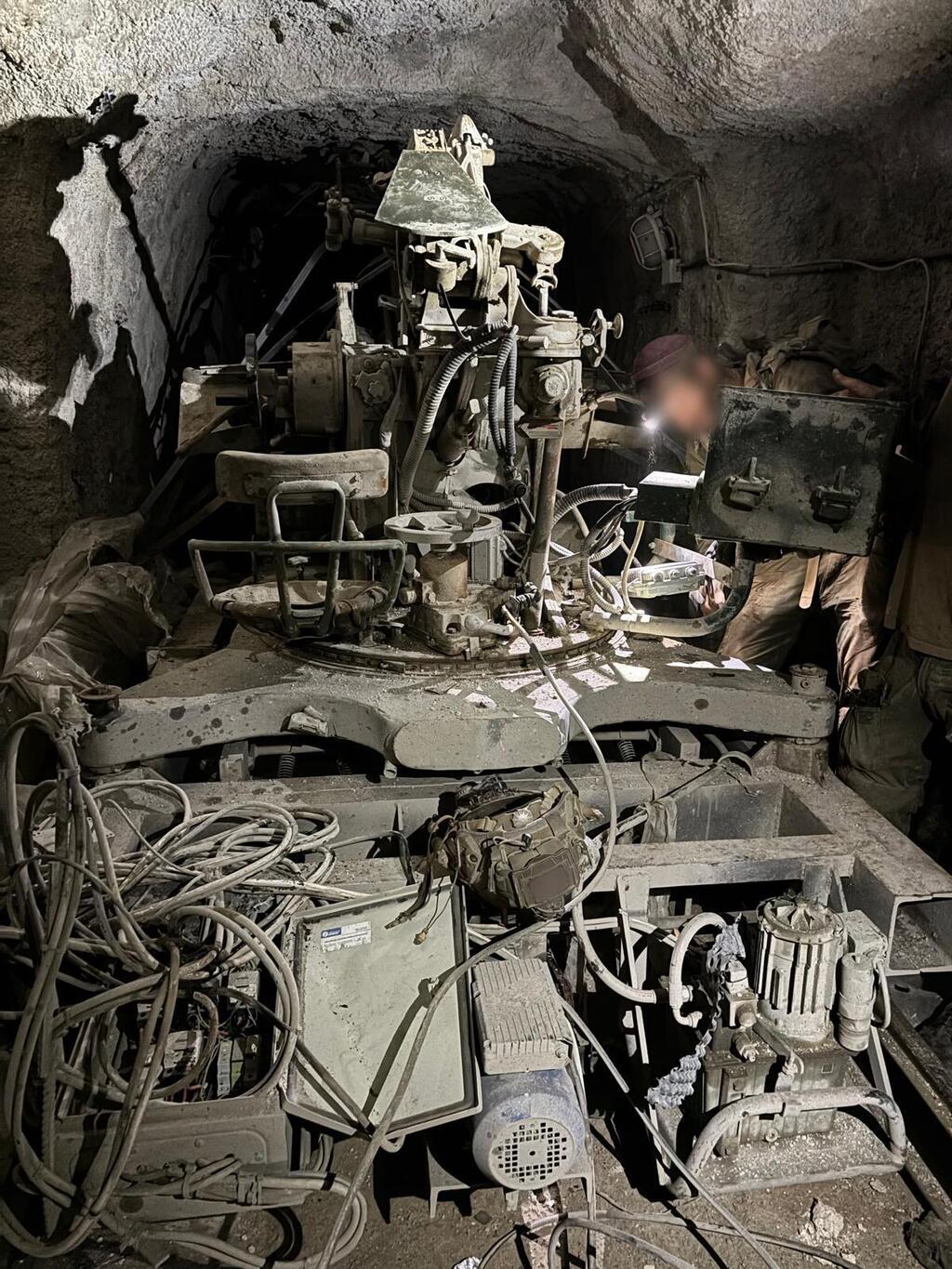
For the fighters of the Yahalom unit, some of whom moved north directly from the sands of the Gaza Strip, the comparison between the two underground arenas is inevitable. But from an engineering and operational perspective, these are two completely different worlds. “In Gaza, you know where you start, but the route is extremely winding and branched,” the officer recalled. “Sinwar fled there over insane distances, and I remind you that at the time we also considered flooding those systems with water.”
He added: “In Lebanon, by contrast, the route begins and ends at clearer points, simply because digging through mountainous rock is far more difficult. While in Gaza a kilometer-long tunnel can be dug quickly, in Lebanon such excavation is a two-week project. Much more energy is required to neutralize and strike such a route.” The difference in terrain also dictates a dramatic change in the operational outcome. According to the official, “The basic combat doctrine does not change drastically, but there is a significant difference. In Lebanon, once I control the openings of the infrastructure, I have won the event.”
‘They invest in drones because digging is difficult’
The officer, who also took part in Operation Northern Shield in 2018, during which six cross-border tunnels were destroyed, said Hezbollah has learned lessons since then: “In the current operation, we reached the other side of those tunnels and saw that Hezbollah did not go back to digging under the border fence. The amount of energy they need to invest in digging through rock is simply not worth it for them. In Gaza, it is easy to dig, so they invested in the underground realm, while in Lebanon, because of the difficulty of digging, we saw them invest more resources in drones and UAVs.” The IDF says that “in the specific area where we are currently located, we reached all the infrastructure.”
Beyond the tactical achievements, the current campaign marks a professional leap for the IDF’s special engineering units, which have become sought after internationally as well. “We have learned a great deal over the past two and a half years,” IDF officials said. “There are parallel units around the world, and there are international collaborations, not all of which can be publicized, but ultimately everyone comes to learn from us. This is truly a new combat dimension in which we have become professionalized.”
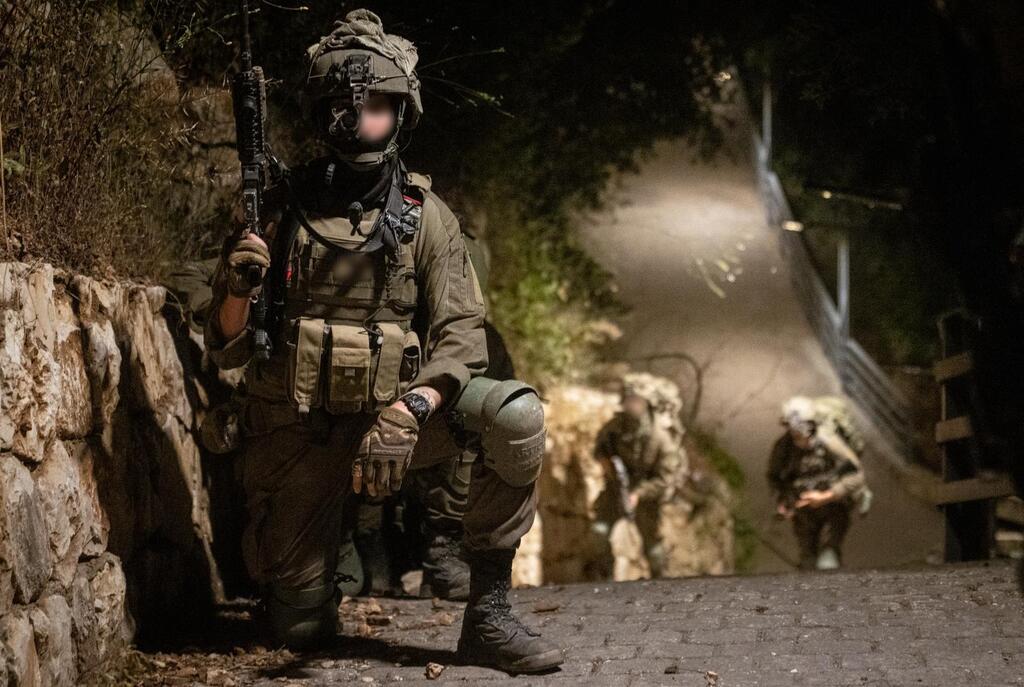
IDF soldiers in southern Lebabon
(Photo: IDF Spokesperson's Unit)
The main change is primarily within the military, in everything related to preparing for combat. In the past, special units would be called in to handle an underground incident only after the maneuvering force encountered it in the field. Today, they lead the effort from the very first moment.
“In the war in Gaza, there were fighters who encountered the threat and only then called us to come and handle it. Gradually, the perception changed,” military officials said. “Today, we sit with the head of the planning team before an operation. When we are partners already at the stage of the operational sketches, the understanding is that we have succeeded. Both the systemic perception and the intelligence have changed completely. The underground is no longer ignored; it is seen as another combat dimension, essential and inseparable from the maneuver.”
Against the backdrop of the emerging agreement between Iran and the United States, the IDF is careful on the one hand not to remain static — but on the other hand is looking toward Nabatieh. After completing the clearing of the ridge, the IDF is at a dramatic jumping-off point for a possible capture of Nabatieh, a significant Hezbollah center of gravity in southern Lebanon.
According to security officials, Hezbollah is deeply concerned that the IDF will enter the city, and is therefore bringing operatives down from various areas in Lebanon to reinforce its ranks for a defensive battle. In addition, according to security officials, the terrorist organization is pressuring the Iranians to be included in the deal and to stop the IDF.
At this stage, it is unclear whether Israel will withdraw and, if so, from where and under what conditions. In this context, it is worth recalling that Defense Minister Israel Katz has previously declared that the IDF will not leave southern Lebanon, as well as the other arenas — Gaza and the refugee camps in Judea and Samaria. In Northern Command, officials will seek to capitalize on the achievements they have secured in order to create a better security reality for residents of northern Israel.