



Despite the chaos dominating Gaza aid distribution, Israeli ministers—including National Security Minister Itamar Ben-Gvir and Finance Minister Bezalel Smotrich—acknowledge one reality: Israel has no choice but to continue providing food to Palestinians.
However, following widespread looting of aid trucks, Prime Minister Benjamin Netanyahu and Defense Minister Israel Katz last week demanded an alternative plan to deliver aid without it reaching Hamas. Security officials were outraged, saying such plans have been on decision-makers’ desks for weeks.
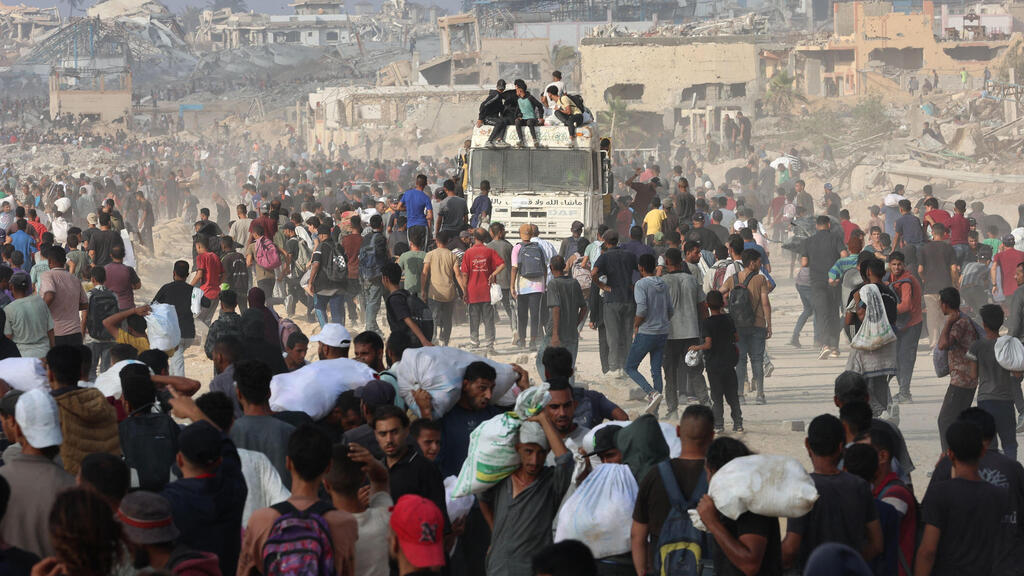
Recent footage showing looting of aid trucks in northern Gaza caused alarm among political leaders fearing right-wing criticism over indirectly strengthening Hamas in Gaza City.
Though Netanyahu gave the IDF 48 hours to present an “alternative plan,” Ynet found such plans exist, including establishing additional Palestinian food distribution centers in Gaza.
Simultaneously, officials told decision-makers that resuming daily deliveries of dozens of food, fuel and gas trucks via the Zikim border crossing to northern Gaza—where 800,000 Palestinians have returned—remains unavoidable.
In closed discussions, senior IDF officers added: “The army works to secure aid routes, including aerial surveillance, but soldiers can’t be at every Gaza intersection. During the Iran conflict, we withdrew a brigade operating near the northern border to reinforce other sectors.
“Thousands of Palestinians, including Hamas terrorists, immediately exploited this vacuum as aid trucks cross these areas. Distribution centers feed half of Gaza’s population—the other half cannot be starved.”
Aid distribution in Gaza


Food centers in southern Gaza are also far from ideal, with costs increasingly outweighing benefits. Initially, politicians boasted that IDF soldiers wouldn’t distribute aid—per Chief of Staff Lt. Gen. Eyal Zamir’s demand—relying instead on U.S. personnel funded by obscure sources at hundreds of millions of shekels monthly.
In practice, routes to these centers require daily security by hundreds of IDF troops tasked with crowd control and access regulation.
Get the Ynetnews app on your smartphone: Google Play: https://bit.ly/4eJ37pE | Apple App Store: https://bit.ly/3ZL7iNv
Soldiers in southern Gaza described this non-combat mission: “Sometimes 50,000 Palestinians arrive five hours before centers open. They stand behind a red line—crossing triggers warning shots, which aren’t always precise.
“Some approach our tanks and APCs with empty pots seeking provocation footage, including children. We can’t know who hides explosives or is sent by Hamas to test us.”
This reality also damages Israel politically. Warning-fire incidents kill unarmed Palestinians en route to food aid, with videos circulating globally. The IDF emphasized to policymakers how this serves Hamas strategically—not just in legitimacy battles.
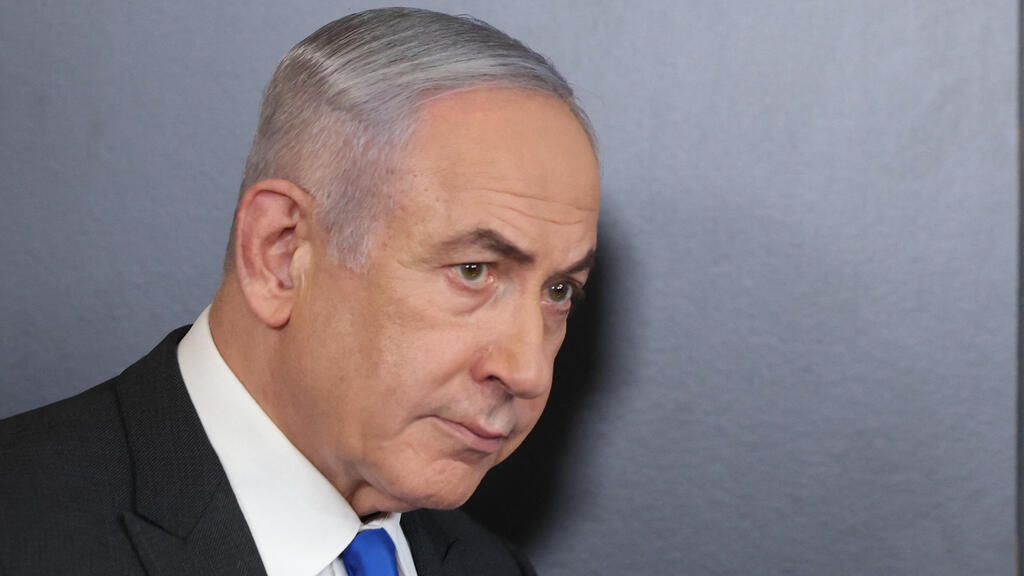
Prime Minister Benjamin Netanyahu
(Photo: ABIR SULTAN / POOL / AFP)
Entire IDF companies now guard distribution centers instead of attacking Hamas targets, which remain abundant 21 months into the war. Commanders report operational Hamas battalions from Khan Younis to Gaza City.
For example, this weekend, the IDF eliminated Hakham Muhammad Issa Al-Issa, a Hamas founder and military trainer involved in planning the October 7 massacre and training programs.
Meanwhile, the 98th Division—withdrawn from Gaza to prepare for Iran escalation scenarios—is preparing to return pending political approval. The government will decide within days between pursuing a hostage deal/long-term ceasefire or resuming ground operations against Hamas.