

Saudi media outlets reported Saturday that Hamas is expected to agree in principle to the latest U.S.-brokered ceasefire proposal presented by U.S. special envoy Steve Witkoff but intends to attach conditions and reservations.
According to Al Hadath, Al Arabiya and Asharq Al-Awsat, Hamas' response is anticipated to be generally positive, yet accompanied by demands that may complicate the negotiation process.
Gallery
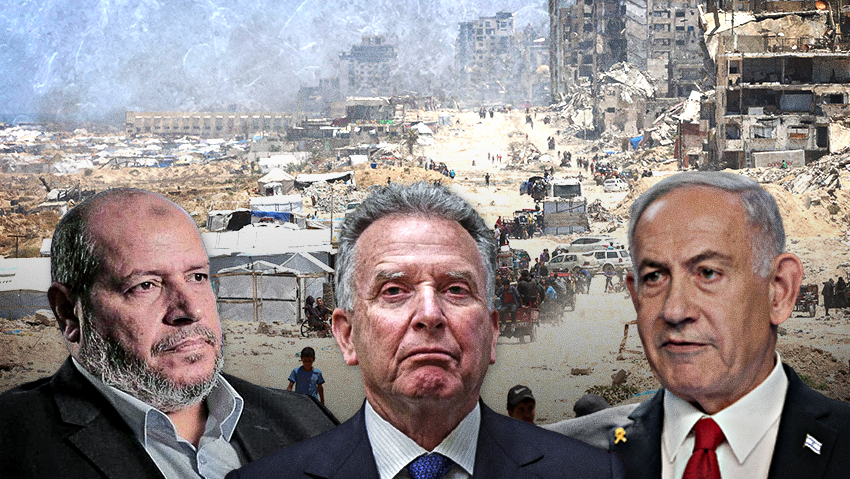
(Photo: REUTERS/Nir Elias, REUTERS/Evelyn Hockstein, Omar AL-QATTAA / AFP, REUTERS/Ronen Zvulun)
Israeli officials have indicated that any additional conditions from Hamas would not constitute acceptance of the proposal, as Israel requires the deal to be accepted as is. Should Hamas introduce new terms, further negotiations would likely be necessary.
Witkoff's ceasefire outline proposes a 60-day halt to hostilities during which Hamas would release 10 living hostages and the remains of 18 others in two phases—half on the first day and half on the seventh. In exchange, Israel would release 125 Palestinian prisoners serving life sentences, 1,111 other Palestinian detainees from Gaza arrested over the course of the war and return 180 bodies of Palestinian terrorists. The plan also includes daily humanitarian aid deliveries to Gaza and stipulates that negotiations for a permanent end to hostilities would commence during the ceasefire period.
A source close to Hamas acknowledged to Ynet that the terrorist group's leadership is grappling with the decision to accept or reject the proposal. The source noted that Hamas is likely to seek modifications, including:
A requirement for Israeli forces to withdraw to positions held before March 18, 2025, prior to the resumption of hostilities; a U.S. guarantee to enforce the ceasefire, without which Hamas would not agree to the deal; a revised schedule for hostage releases, spreading them over the entire 60-day period rather than concentrating them in the first week; and clarification on the mechanism for delivering humanitarian aid to Gaza, with a preference for distribution via trucks previously seized by Hamas, rather than through the U.S.-backed Gaza Humanitarian Foundation.
Gazan crowd loots UN World Food Program aid convoy in Gaza


Palestinian factions in Gaza have reportedly urged Hamas to accept the proposal, viewing it as an opportunity to halt the war and alleviate the humanitarian crisis, despite its shortcomings. One faction reportedly said, "This proposal could stop the hunger and displacement."
However, Israeli officials caution that any alterations to the proposal would necessitate renewed negotiations, and the introduction of new conditions could be interpreted as a refusal to accept the deal.
As of Saturday afternoon, Hamas had not officially submitted its response to the proposal. The group is expected to deliver its reply to mediators later in the day.
'Yes, but'
Hamas also demanded a full end to hostilities before the previous deal, which saw the release of 33 hostages—both living and deceased. However, Israel refused to move forward with the second phase of that agreement, arguing that no progress had been made in negotiations over Hamas’ disarmament and its withdrawal from the Gaza Strip.
Now, Hamas is seeking to avoid a repeat scenario in which it releases hostages only for fighting to resume shortly afterward. In the previous instance, not only did Israel return to military operations, it also halted all humanitarian aid to Gaza and announced plans to conquer the entire enclave under the Operation Gideon’s Chariots campaign.
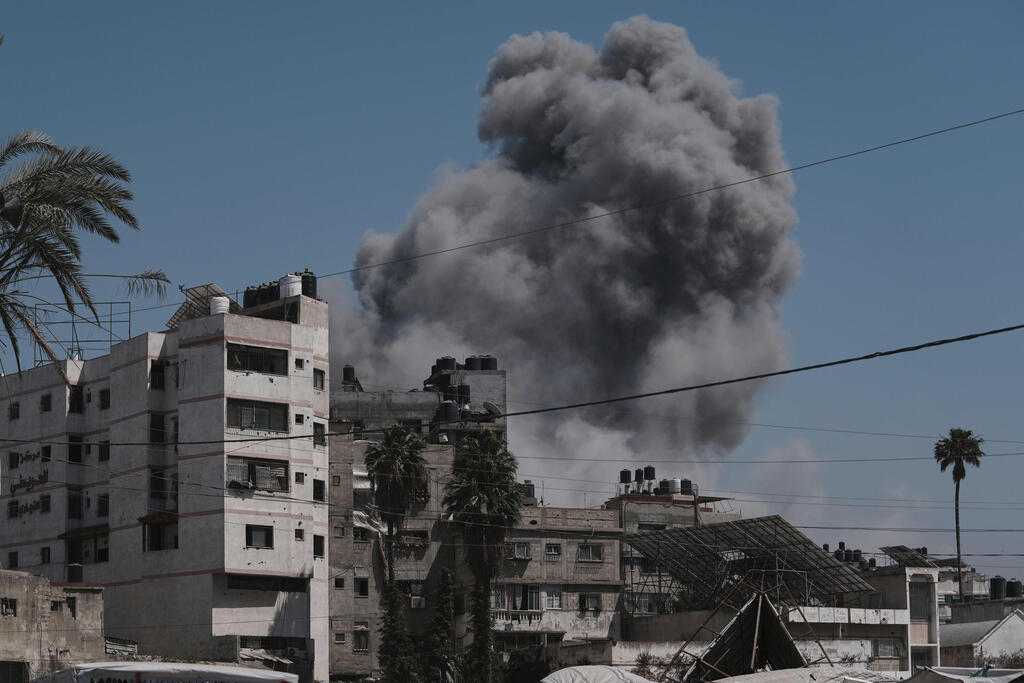
Israeli airstrike in Gaza
(Photo: AP Photo/Jehad Alshrafi)
Finance Minister Bezalel Smotrich declared that any territory captured from that point forward would not be returned in a future deal, and threatened to leave the government if Prime Minister Benjamin Netanyahu agrees to what he termed a “partial deal.”
Given this backdrop, Hamas is expected to present its response to Witkoff's proposal as “positive,” though in effect it will be a conditional “yes.” The group is attempting to steer the proposal back toward a version more closely aligned with the outline previously advanced by mediator Bishara Bahbah—a version Israel rejected.
That proposal included a 70-day ceasefire, the release of five hostages on the first day and five on the final day and the daily entry of 1,000 aid trucks—under a system that previously enabled Hamas to control the distribution. A senior Israeli official described that plan as a “capitulation to Hamas.”
Get the Ynetnews app on your smartphone: Google Play: https://bit.ly/4eJ37pE | Apple App Store: https://bit.ly/3ZL7iNv
From Israel’s perspective, the current proposal is to be accepted as is, with no room for further amendments. The government is also unwilling to relinquish control over humanitarian aid deliveries in Gaza to Hamas, preferring that they be managed through the U.S.-backed Gaza Humanitarian Foundation (GHF). Jerusalem does not wish to return to a system in which Hamas oversees hundreds of aid trucks, effectively controlling access to food and supplies for Gaza’s civilian population.
That said, dozens of such trucks are still entering the enclave each day, primarily carrying flour, medicine and baby formula. According to GHF, it has independently distributed over 3.8 million food servings in just five days, with a record 1.66 million handed out on Saturday. Barring one incident on the first day, distributions have proceeded without security issues, and the foundation now plans to expand its operations—particularly in northern Gaza.
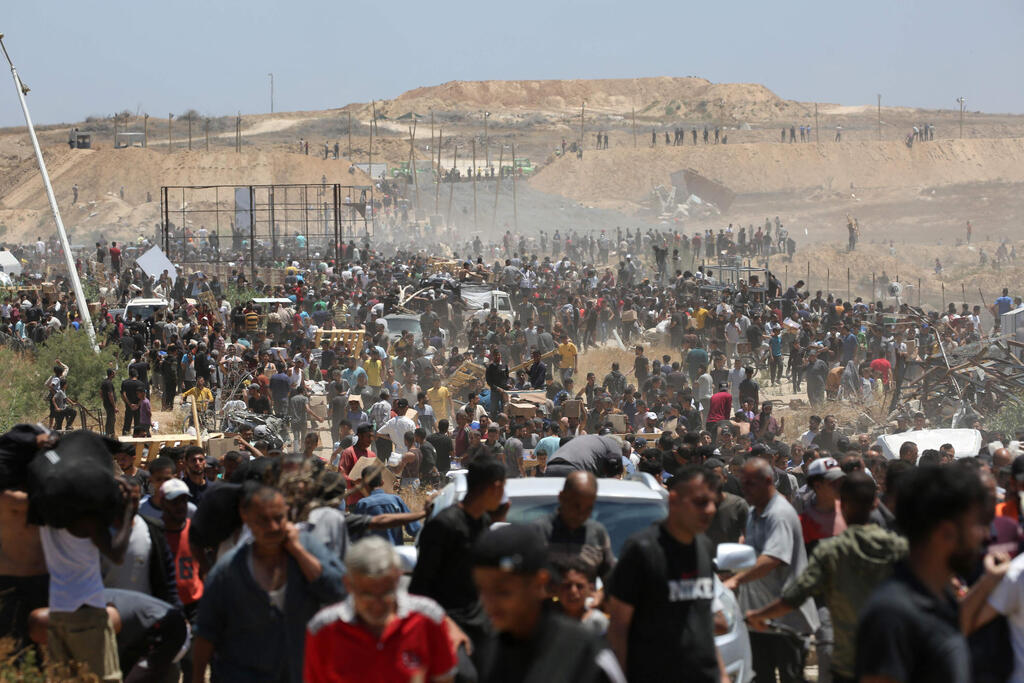
Palestinians line up to receive aid at a GHF distribution center
(Photo: Eyad BABA / AFP)
CNN reported Saturday that 80 percent of Gaza’s territory is either a closed military zone or under an evacuation order. The IDF has divided the coastal territory into four sections using humanitarian corridors in the north, center and south. For now, Israel does not appear prepared to halt its military advances in exchange for the release of 10 hostages, nor to end the war altogether in exchange for freeing them all—indicating yet another likely deadlock.
Even if Hamas’ expected conditions are not deemed deal-breakers, significant issues remain unresolved and would require clarification through so-called “proximity talks.” These include the mechanism for delivering humanitarian aid and, even more sensitively, the question of which hostages would be released.
Israel has yet to engage in this aspect of the negotiations, which involves wrenching dilemmas over how to determine release priority. Some hostage families have expressed anguish, saying the partial-deal format pits them against one another, each trying to prove their loved one’s situation is more urgent.