

A month after the October 7 massacre, Angie Nixon stood on the floor of the Florida House of Representatives and tried to persuade her colleagues to support a resolution calling for an end to Israel's fighting in Gaza. Most lawmakers rose from their seats and turned their backs on her as she spoke. Only one other lawmaker voted with her, and the resolution was defeated 104-2.
"And you can turn your backs on me, but I am on the right side of history because I don't want the babies to die," Nixon told them.
Nixon against Israel
(Video: Social media)


Angie Nixon with a megaphone; one of the most outspoken figures on the Democrats’ left flank
(Video: Social media)
Less than three years later, Florida's Democratic establishment has been forced to turn around. Nixon, a democratic socialist who for months was considered a fringe candidate, defeated Jewish candidate Alex Vindman in the Democratic primary and won the party's nomination for U.S. Senate. That same night, on the other side of the country, the pro-Israel lobby AIPAC was watching a troubling results screen of its own: In California, Aisha Wahab, the candidate it had spent millions of dollars trying to stop, appeared headed for victory in a special congressional election.
Nixon did not merely win. She erased nearly every advantage that was supposed to make Vindman the inevitable nominee. The Jewish Army officer, born in Kyiv to a family that fled the Soviet Union, immigrated to the United States as a child, served more than two decades in the military and became a national figure after providing key testimony in Donald Trump's first impeachment proceedings.
Vindman entered the race with establishment support, name recognition and a staggering financial advantage over his opponent. By the end of July, he had raised about $16.3 million, compared with less than $1 million for Nixon. He spent $2.2 million on advertising, compared with just $60,000 by her campaign. She did not buy a single television or cable ad.
In the end, Nixon received about 56% of the vote to Vindman's roughly 44%. At her victory event in Jacksonville, she said the result showed the strength of a grassroots campaign against wealthy political interests and vowed to engage even with those who had attacked her during the race.
Refused to condemn 'From the river to the sea'
For most Americans and Israelis, the 42-year-old Nixon is a new name. In Florida, however, she has for years been one of the loudest and most persistent figures on the Democratic Party's left flank.
A sixth-generation Jacksonville resident from a working-class family, Nixon is a former union organizer who has served in the state House since 2020. She founded a market for small Black-owned businesses in the city and opened a bookstore and coffee shop called 'Cafe Resistance,' which became a community hub during Gov. Ron DeSantis' battles over books and classroom material dealing with race. Earlier, she co-wrote a children's book with her daughter about a girl whose natural Afro hair becomes a source of strength.
Her politics were built around the same grassroots image. In 2020, she defeated an incumbent lawmaker in a Democratic primary despite a major fundraising disadvantage. In recent years, she has led protests against DeSantis' redistricting maps. This year, police arrested her after she refused to leave a protest at his office.
Gallery
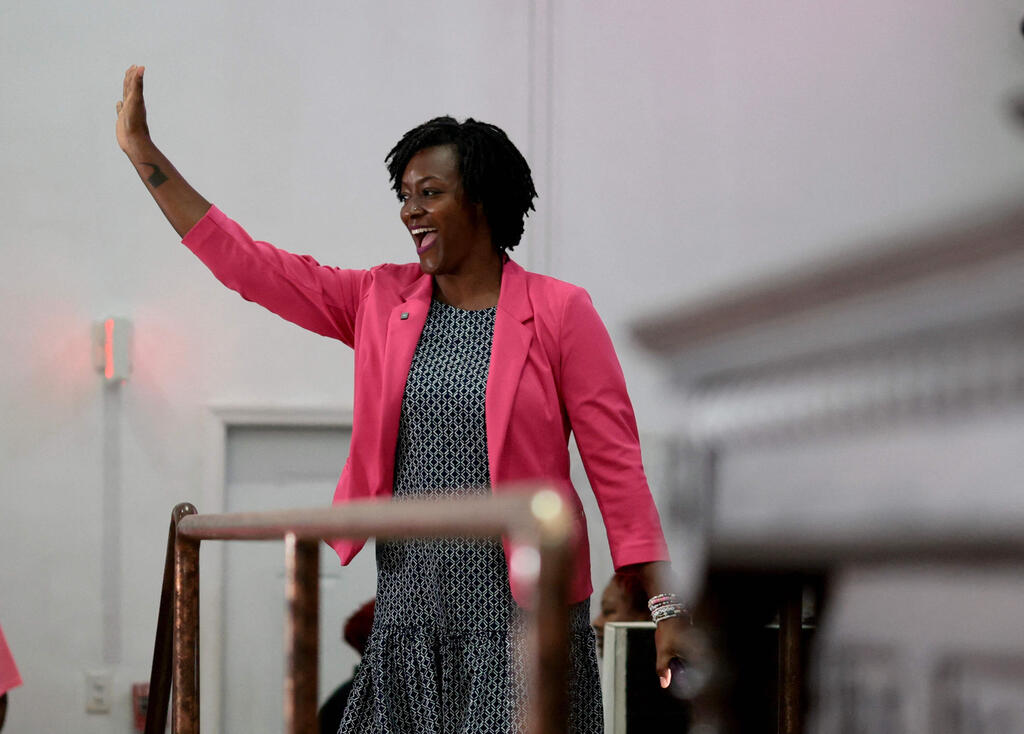
Sixth-generation Jacksonville resident Angie Nixon
(Photo: Joe Raedle / Getty Images North America / AFP)
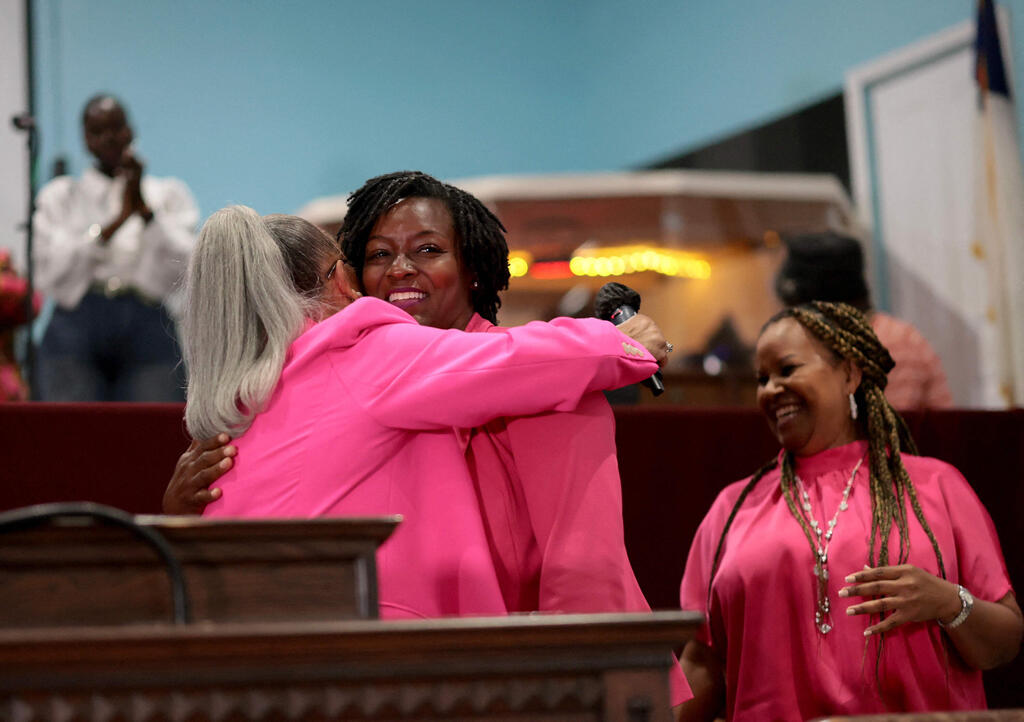
(Photo: Joe Raedle / Getty Images North America / AFP)
But the reason her name is now likely to become far more familiar in Israel lies in her positions on Gaza. Nixon describes Israel's actions in the enclave as genocide, has said she would support ending U.S. aid to Israel and received backing from Rashida Tlaib, Ilhan Omar, former Rep. Cori Bush and anti-Zionist groups including Jewish Voice for Peace and TrackAIPAC.
She strongly rejects accusations that those positions are antisemitic.
"I would have voted in support of that, because we cannot continue to send money to countries that are violating international law, that are violating human rights," she said recently when asked about a congressional proposal to cut aid to Israel.
Rick Stark, chairman of the Florida Democratic Party's Jewish caucus, said after a Zoom conversation with Nixon that she did not give a clear answer when asked whether Israel had the right to exist as a Jewish state and declined to condemn the slogan "From the river to the sea." Nixon has said Palestinian friends told her they did not understand the slogan as a call for Israel's destruction.
That dispute has followed her since the first weeks after October 7. In the resolution she introduced at the time, Nixon called for a ceasefire and de-escalation. She also sought the release of the hostages, though amendments dealing with them did not pass. The measure drew condemnation even from Jewish members of her own party.
Michael Gottlieb, then chairman of the Jewish caucus in the state House, said a ceasefire resolution that failed to understand Jewish history was "born out of ignorance and antisemitism."
Republican state Rep. Randy Fine, who is Jewish, said anyone voting for it would be putting Jewish children at risk. Nixon responded: "Caring about thousands of innocent lives lost does not make anyone antisemitic."
Last weekend, just days before the election, she appeared in Fort Lauderdale at a rally alongside Tlaib and other left-wing candidates. The original venue canceled the event after protests from Gottlieb and other Jewish figures, and organizers moved it elsewhere.
Nixon continues to present the 2023 confrontation as proof that she took a position before much of her party was prepared to do so. "I will always fight to stand on the right side of history," she said recently while recalling the episode.

Asked whether Israel has the right to exist as a Jewish state, Nixon did not provide a clear answer
(Photo: Joe Raedle / Getty Images North America / AFP)

(Photo: Joe Raedle / Getty Images North America / AFP)
Her victory is all the more striking because it came in Florida, a state Trump won by 13 percentage points in 2024 and where the word socialism carries particular political weight among communities with roots in Cuba, Venezuela and Nicaragua.
Nixon joined the Democratic Socialists of America only this year, the organization associated with figures including New York Mayor Zohran Mamdani, but sought during the campaign to play down the importance of the label and instead emphasize voters' material concerns.
The results suggest her coalition extended well beyond DSA activists and the progressive wing. She won by substantial margins in Black communities across the state and relied on a network of churches, labor unions and local relationships built over years. Vindman, by contrast, moved to Florida only in 2023 and was attacked during the campaign as an outsider.
After his defeat, Vindman said he would support Nixon in November.
A wave against Israel? Not exactly
A far more difficult task now awaits her. Nixon will face Republican Sen. Ashley Moody, Florida's former attorney general, who was appointed to the seat after Marco Rubio joined the Trump administration as secretary of state.
Democrats have not won a U.S. Senate race in Florida since 2012, and Moody enters the general election as the clear favorite. If Nixon manages another upset, she would become the first Black woman to represent Florida in the Senate.
But the fact that she has reached this point already gives the Democratic left a symbolic victory in a state where almost no one expected one.
The broader picture in Florida was more complicated than a simple story of an anti-Israel wave. Jared Moskowitz, one of the Jewish Democrats most closely associated with support for Israel, defeated democratic socialist Oliver Larkin. Debbie Wasserman Schultz, a veteran Jewish lawmaker and Israel supporter, also survived the primary in the new district to which she had moved.
On the Republican side, Randy Fine, the Jewish lawmaker who has made support for Israel a central part of his political identity, defeated Dan Bilzerian, whose campaign included antisemitic conspiracy theories, slurs against Jews and attacks on Israel. James Fishback, who attempted to capitalize on anti-Israel sentiment on the right and aligned himself with far-right figures, also lost his gubernatorial race to Byron Donalds.
The message from election night, therefore, is not that pro-Israel positions have suddenly become a liability. It is something different: Deep criticism of Israel is no longer an automatic barrier for a Democratic candidate, even in Florida, and major spending no longer guarantees such a candidate can be stopped.
Nixon demonstrated the first point. If Wahab's apparent lead in California becomes an official victory, she may demonstrate the second.
AIPAC's final battle of the primary season
Vote counting in California has not yet concluded, and no winner has been officially declared, but Afghan American state Sen. Aisha Wahab entered election night as the favorite against Melissa Hernandez.
In June, Wahab finished more than 20 percentage points ahead of Hernandez in two separate primary contests. What had been expected to be a sleepy local race to fill the remaining months of former Rep. Eric Swalwell's term became, at the last moment, AIPAC's final major national battle of the primary season.
AIPAC's super PAC, United Democracy Project, poured millions into efforts benefiting Hernandez, while outside groups spent about $4.1 million on the race from mid-July, most of it supporting Hernandez or opposing Wahab. The advertisements themselves largely avoided Israel, instead portraying Wahab as too lenient toward crime, fentanyl dealers and sex offenders.
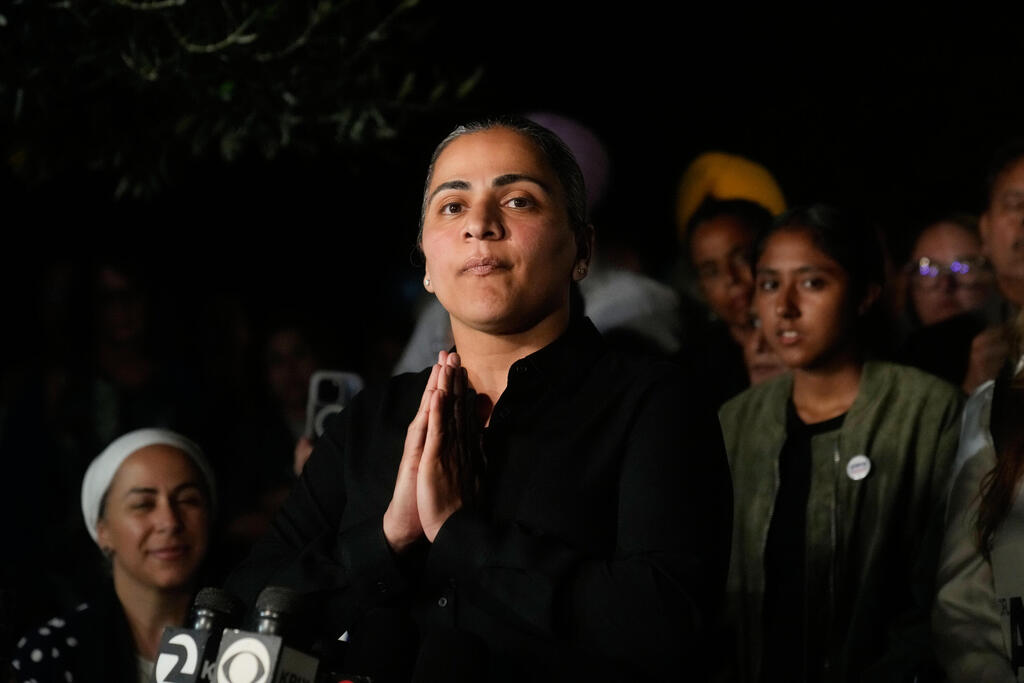
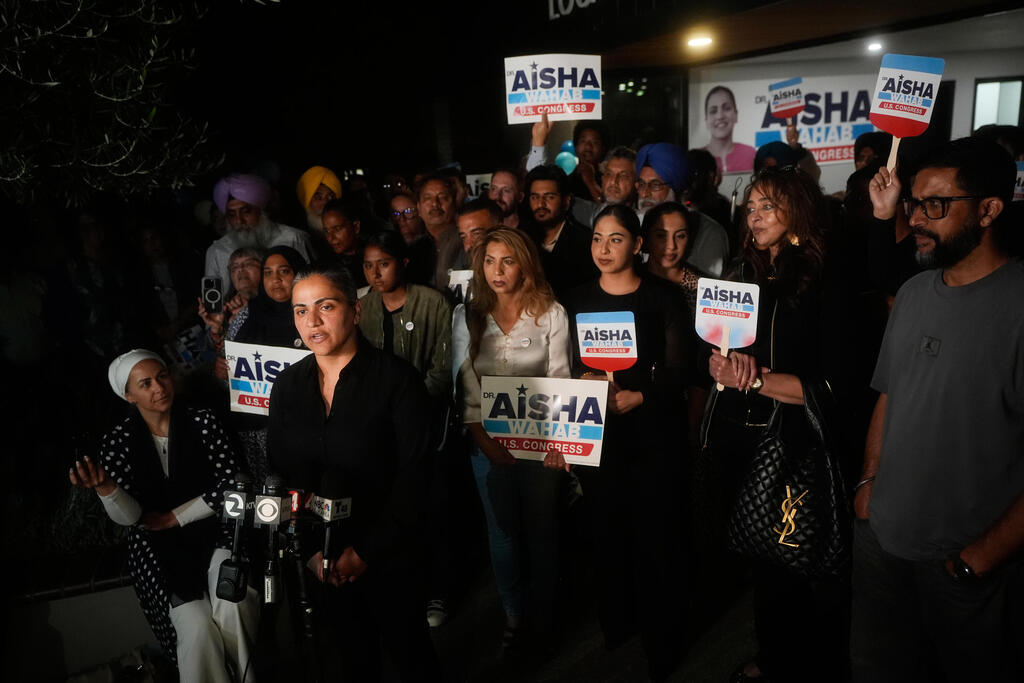
Aisha Wahab; has said she supports ending US military aid to Israel
(Photo: Jeff Chiu/AP)
(Photo: Jeff Chiu/AP)
But the reason for the intervention was clear. Wahab, who could become the first Afghan American elected to the House, has explicitly said she believes Israel committed genocide in Gaza and has supported ending U.S. military aid to Israel.
Her record, however, is more complex than that of some previous AIPAC targets. She has said Israel has a right to exist and worked with Jewish state Sen. Scott Wiener on a resolution calling for an end to the humanitarian catastrophe in Gaza and the immediate release of all hostages. The measure was developed in collaboration with California's Legislative Jewish Caucus.
A local Jewish leader who supported Hernandez described Wahab as more nuanced than some national progressives and said the community's concern was that a massive AIPAC assault could instead push her further away. Liberal pro-Israel group J Street also opposed the AIPAC intervention, while American Priorities, a pro-Palestinian super PAC created as a counterweight to AIPAC, backed the other side.
If Wahab's apparent advantage becomes an official victory, it would close out an especially difficult primary season for AIPAC.
Just two weeks earlier, AIPAC and affiliated groups spent roughly $30 million in an effort to defeat Abdul El-Sayed in Michigan's Democratic Senate primary, only for El-Sayed to win. It was the group's largest investment ever in a single race.
AIPAC also scored important victories during the cycle, so it would be premature to write off the power of pro-Israel money in American politics. But California was its final major wager before the general election, and another defeat against a candidate who turned the spending against her into a fundraising and organizing tool would strengthen the argument that, in some Democratic races, the more the lobby spends, the more its intervention itself becomes a campaign issue for the opposing side.
Wahab and Hernandez, meanwhile, are scheduled to face each other again in November, this time for a full two-year term. So even if AIPAC loses this round, it is unlikely to be its last encounter with Wahab.