

New footage from Iran on Wednesday showed protests in cities across the country for a fourth consecutive day, after demonstrations that initially erupted over the sharp collapse of the Iranian currency and the deepening economic crisis gripping the Islamic Republic. The protests mark the largest unrest in Iran since the end of the 12-day war with Israel six months ago. According to reports, demonstrators have been chanting slogans against regime leaders, including “death to the dictator,” referring to Supreme Leader Ayatollah Ali Khamenei.
In what appeared to be a significant escalation, Iran’s Tasnim news agency reported clashes in the city of Kuhdasht in western Lorestan province. Thirteen members of the security forces were wounded and one member of the Basij militia was killed, according to the report. The Basij is frequently deployed by the clerical regime to suppress protests.
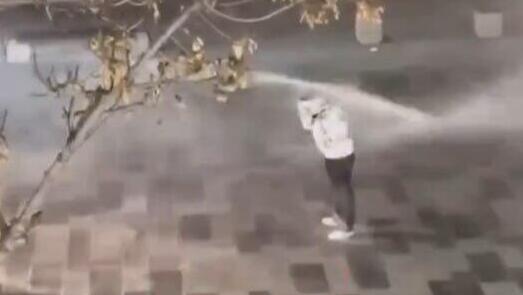
Clashes in Hamedan, western Iran


New footage from last night’s protests in Iran
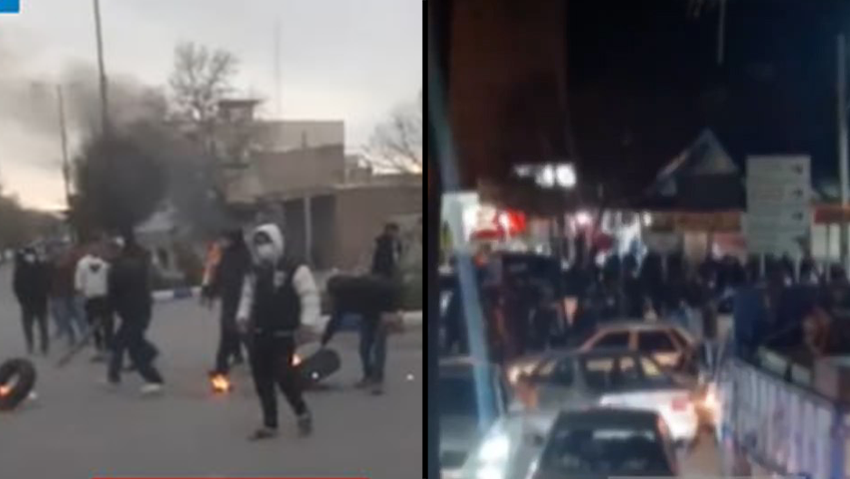
Some of the footage Iran International released from protests in Iranian cities

Tasnim did not specify the circumstances of the Basij member’s death, saying only that an investigation had been launched. The BBC reported clashes as well in Lorestan and the neighboring Hamedan province. Footage from Hamedan showed protesters standing their ground as water cannons were fired at them.
“Iran International,” a London-based Persian-language television channel affiliated with opponents of the Islamic Republic, also reported widespread protests in recent days. For now, the demonstrations remain smaller in scale than past waves of unrest, including the nationwide hijab protests of 2022.
Protests over the economic situation in Tehran on Monday
In footage aired by the opposition channel and said to be from the city of Isfahan, protesters could be heard chanting, “Do not be afraid, we are all together,” as well as “death to the dictator.” Another video from the town of Parsan in Chaharmahal and Bakhtiari province showed demonstrators chanting in support of the deposed shah, saying, “Reza Shah, rest in peace,” as gunfire was heard in the background.
Additional footage from Parsan showed protesters chanting “death to Khamenei,” while police officers confronting them issued threats. Gunfire could again be heard.
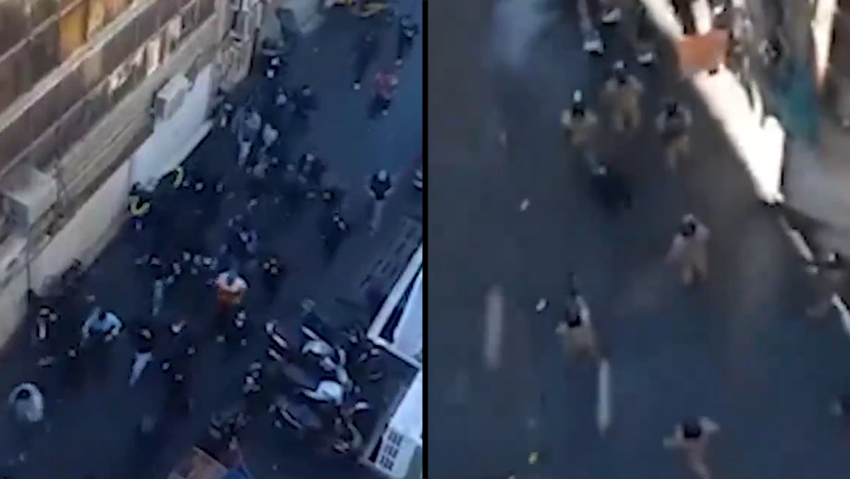
Footage circulated this week from protests in Tehran that appears to show gunfire directed at demonstrators
In Kermanshah, in western Iran, protesters were heard chanting, just ahead of the start of 2026, “This is the year of blood. Seyed Ali will be overthrown,” referring to Khamenei, according to Iran International. In Dorud, demonstrators gathered outside the governor’s office and chanted, “Not Gaza, not Lebanon, my life is for Iran.” Another video from the city showed protesters marching through the streets chanting, “This is the final battle. Pahlavi will return.”
The new footage emerged hours after an unusual incident in the southern city of Fasa, where Iranian authorities said protesters attempted to storm a provincial government building. State media reported that an “organized group” failed in its attempt to breach the site and that a 28-year-old woman described as “the leader of the rioters” was arrested.
Iran International initially reported, citing online claims, that an 18-year-old had been killed in Fasa, but the regime denied the report and no independent confirmation has emerged. The BBC said it had verified video from the city showing security forces opening fire and tear gas spreading among shattered storefront windows.
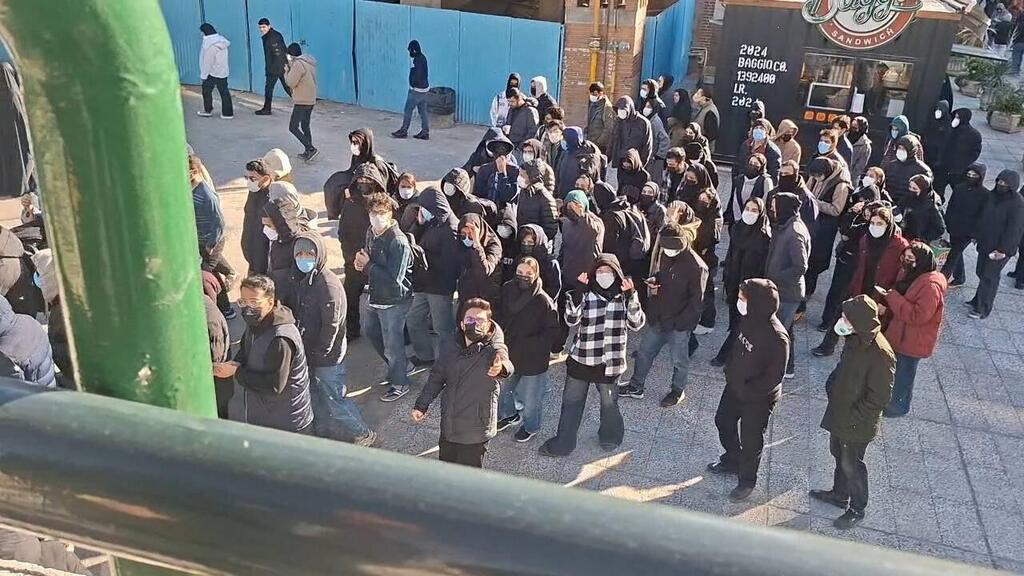
Students protest against the regime this week at Yazd University
Tasnim reported that four “attackers” were arrested in Fasa and that three security personnel were wounded. Later, the agency quoted an unnamed intelligence official as saying seven individuals linked to “hostile groups based in the United States and Europe” had been identified and detained. Preliminary investigations, the agency claimed, indicated their mission was to incite violent gatherings.
In what appeared to be another attempt to calm tensions, the regime-affiliated Fars news agency reported that merchants in Isfahan’s main bazaar issued a statement saying the market would not allow “hostile movements” to exploit the situation. The statement added there was “no place for actions that undermine the security and stability of the market and the nation.”
No new protests were reported Wednesday night in Tehran, after earlier reports of calm in the capital. Authorities had ordered schools, banks and public institutions closed in parts of Tehran and in many other cities and provinces, citing a cold wave and efforts to conserve electricity. Universities including Beheshti and Allameh Tabataba’i announced all classes would be held remotely for the coming week. Officials denied any link between the closures and the protests.
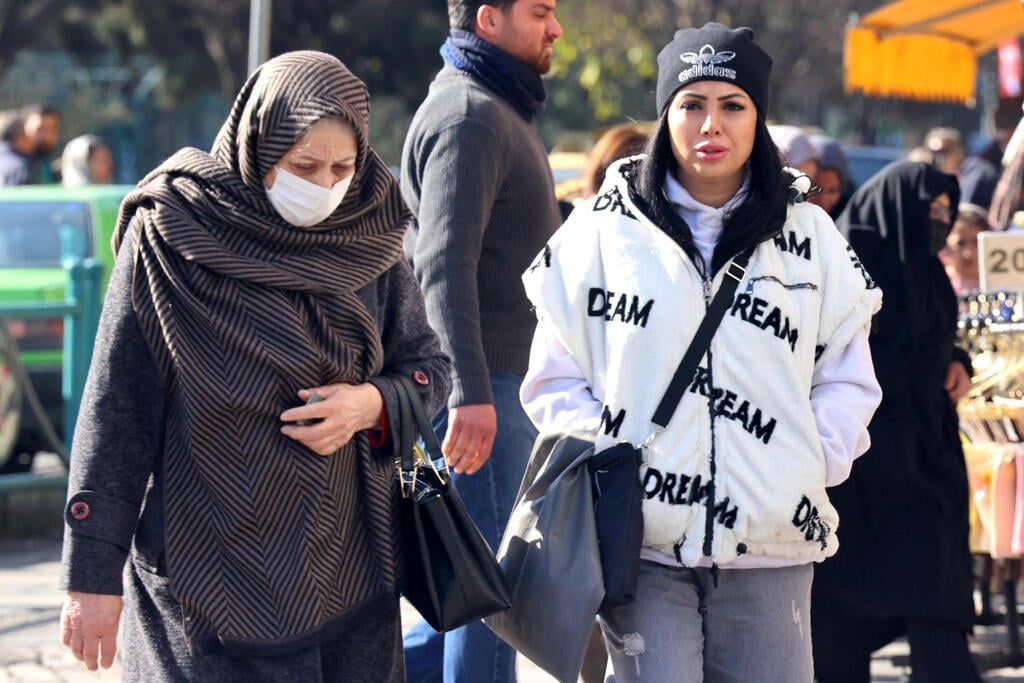
Iranian women walk through the cold in the capital on Tuesday. Public institutions were closed, according to authorities, because of the weather
(Photo: Atta Kenare / AFP)
The demonstrations began Sunday with spontaneous protests by merchants in Tehran’s bazaar and quickly gained momentum as students at at least 10 universities in the capital and other cities joined in. The unrest has been fueled by soaring inflation and the steep devaluation of the rial, which has made basic goods increasingly unaffordable after more than two decades of Western sanctions over Iran’s nuclear program.
Despite a heightened security presence, there have so far been few confirmed casualties. Earlier, Iran’s attorney general warned that the judiciary would take a “decisive stance” against anyone exploiting cost-of-living protests to destabilize the Islamic Republic.
“From a legal perspective, nonviolent protests to protect livelihoods are understandable,” Attorney General Mohammad Movahedi-Azad said. “But any attempt to turn economic protests into a tool for spreading insecurity, destroying public property or implementing plans devised outside the country will inevitably face a firm and proportionate legal response.”
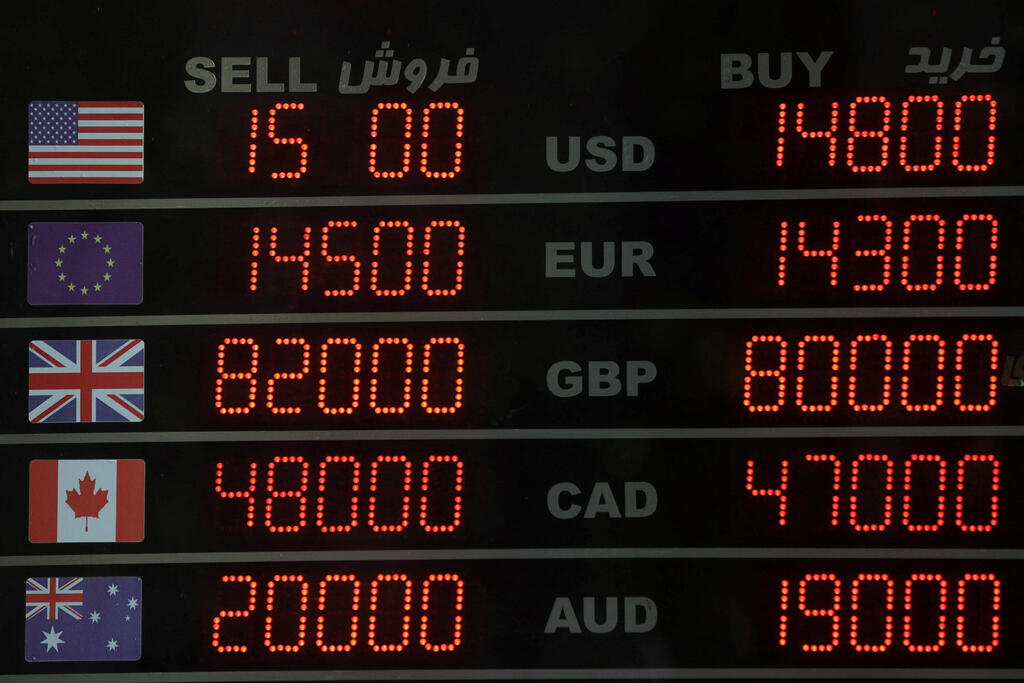
Exchange rates posted at street stalls in Tehran, archive
(Photo: Majid Asgaripour/Wana (West Asia News Agency) via Reuters )
Dollar hits 1.38 million rials
In another move meant to signal responsiveness to public hardship, Iran’s government announced Wednesday the appointment of former economy minister Abdolnaser Hemmati as the new head of the Central Bank, replacing Mohammad Reza Farzin, who resigned Monday.
Farzin stepped down after the rial plunged to a record low against the dollar, a development that helped spark the protests. One U.S. dollar now trades at about 1.38 million rials. When Farzin took office in 2022, the rate stood at about 430,000 rials. At the time of the 2015 nuclear deal, before U.S. sanctions were reimposed, the dollar traded at roughly 32,000 rials.
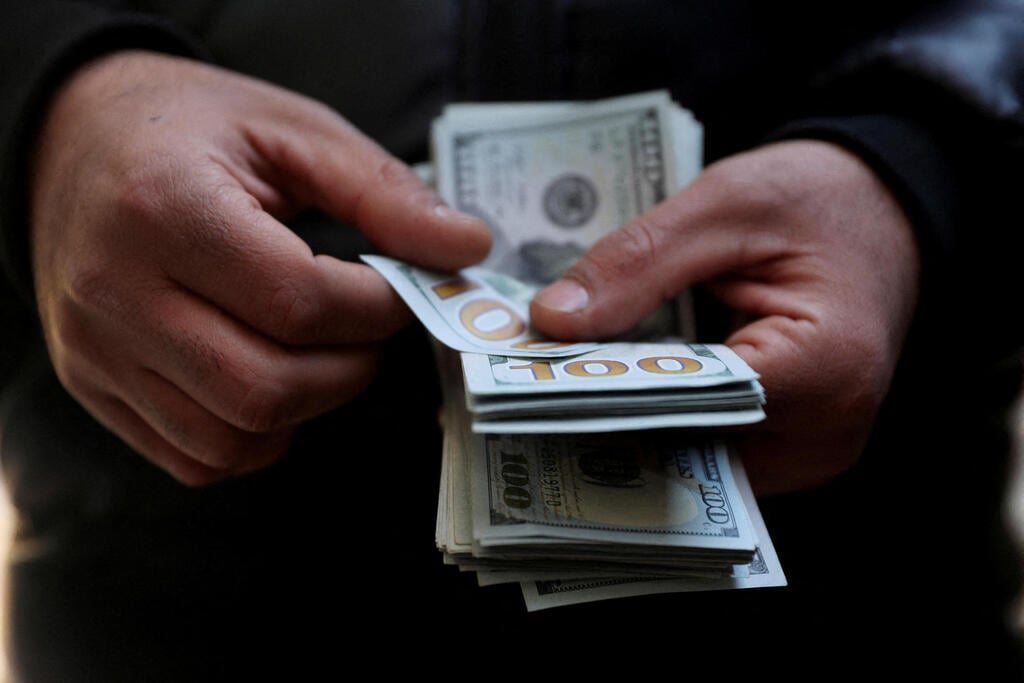
The Iranian rial collapses. In 2015, one dollar was worth 32,000 rials. Today it stands at 1.38 million.
(Photo: Majid Asgaripour/WANA (West Asia News Agency) via Reuters)
Government spokeswoman Fatemeh Mohajerani said the new central bank chief’s priorities would include curbing inflation and strengthening the currency.
The current wave of unrest is the largest Iran has seen in three years, though it remains far smaller than the 2022 hijab protests sparked by the death of Mahsa Amini after her arrest by morality police. It is also less intense than the 2019 protests over fuel price hikes, when security forces killed dozens, if not hundreds, of demonstrators.
First published: 04:47, 01.01.26