

The fate of the “Young Generation” neighborhood, where 11 residents were murdered, and seven were kidnapped by Hamas terrorists, has become one of the most sensitive issues facing communities in the Gaza border region. The burned homes and bullet-riddled walls have turned into painful symbols of the attack.
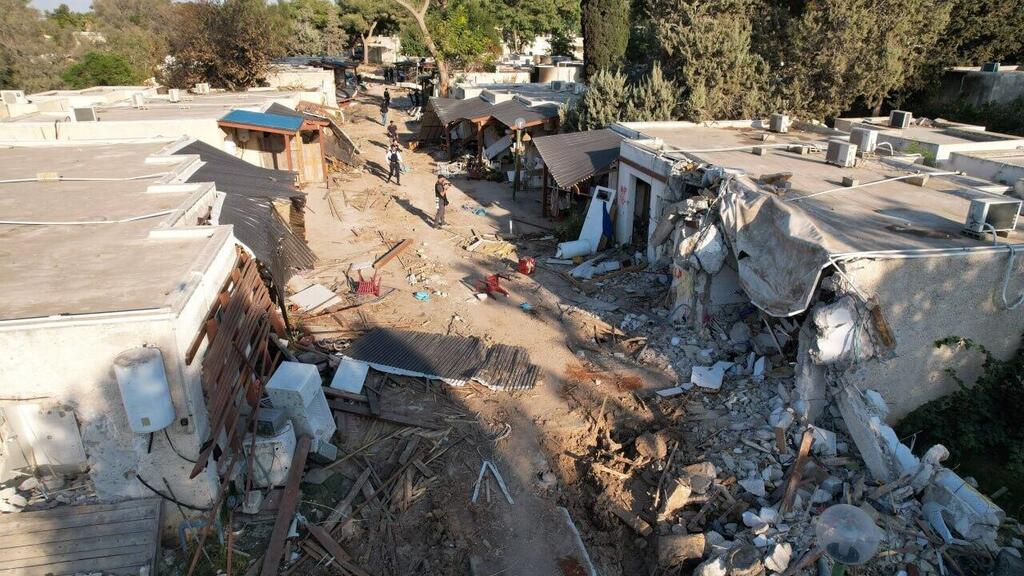
On Thursday, the kibbutz’s general assembly will convene in Ruhama, where most evacuated residents are currently living. Members will review proposals prepared by a memorial and heritage committee established months ago to outline the site’s future. A vote is scheduled for early next week.
The committee has presented two main options. The first would preserve the destroyed neighborhood in its current location and establish a public memorial center. The second would relocate several of the structures to a memorial site at the entrance to the kibbutz, where a monument has already been erected, and demolish the remaining buildings.
Conversations with members indicate that the option of not preserving the neighborhood at the heart of the kibbutz is gaining broader support, though no final decision has been made.
A presentation to be shown on Thursday outlines the proposal to preserve part of the neighborhood “as testimony to the story of the murdered residents, the kibbutz and the national story.” According to the plan, visitors would enter directly from outside the kibbutz, without passing through residential areas.
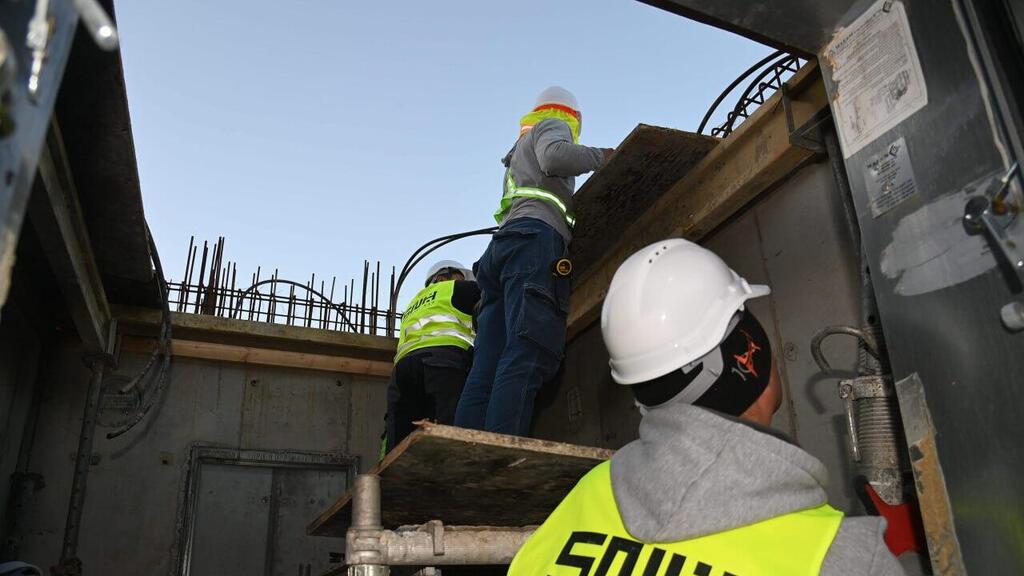
The reconstruction in Kfar Aza
(Photo: Herzl Yosef)
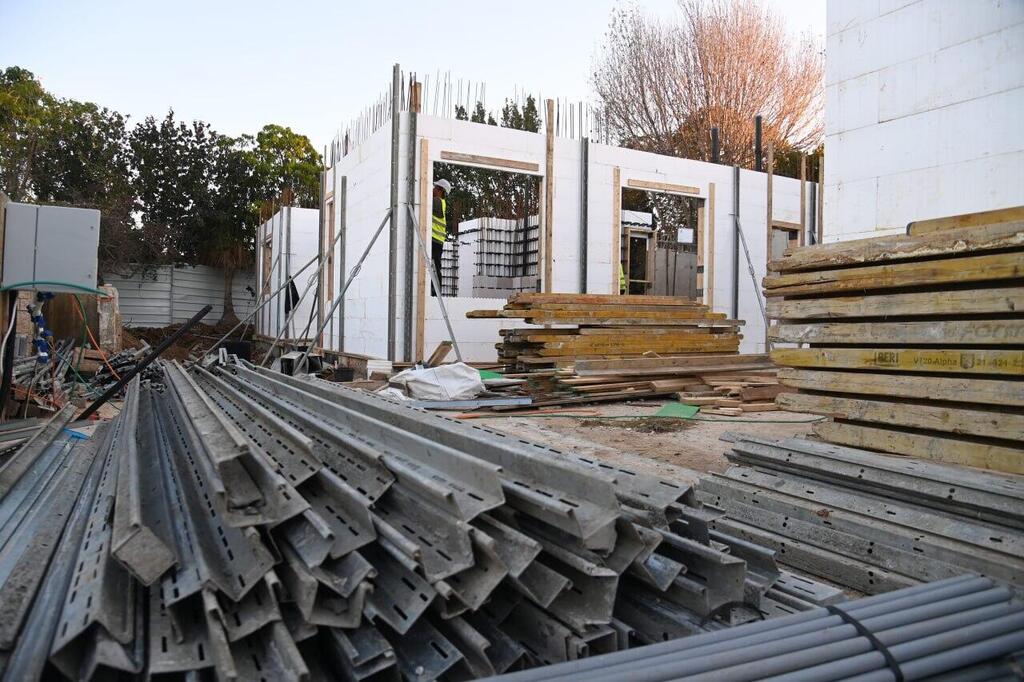
On October 7, 64 of the kibbutz’s roughly 950 residents were murdered
(Photo: Herzl Yosef)
Proposed solutions also include fencing to separate the memorial zone from the rest of the kibbutz. Options range from a living barrier of trees or shrubs to an “artistic fence,” such as a wall with paintings or graffiti, creating a clear physical division.
The stated goal of the process is to reach decisions “on the right path for the Kfar Aza community for appropriate commemoration alongside rehabilitation and growth, through respectful and inclusive community dialogue and reducing areas of disagreement.”
Three central questions are before the community: what role it sees for itself in telling the story of October 7; whether, how and where to preserve evidence from the young generation homes; and what form public commemoration within the kibbutz should take.
Beyond internal debate, there is concern over potential government intervention. Following media reports and advocacy by families seeking full preservation of the neighborhood, some members fear a decision could be imposed from above, though no concrete move has emerged.
“I won’t say what I think about the neighborhood or what should or should not be done,” said Doron, the father of Yuval Solomon, who was murdered in the young generation neighborhood. “What I will say is that the kibbutz alone will make this decision, and we will decide what appropriate commemoration is. Not the prime minister and not any minister on his behalf.”
Proposed solutions also include fencing to separate the memorial zone from the rest of the kibbutz
(Photo: Herzl Yosef)
The kibbutz said in a statement that “members of the Kfar Aza community wish to clarify that only they will decide on the right way for them to tell their story within the kibbutz and commemorate the murdered and the fallen, for themselves and for future generations.”
The memorial team, which includes a broad forum of community members, has been working for an extended period on various commemoration alternatives, including those related to the young generation neighborhood. The proposals are being brought for in-depth community discussion ahead of a vote by all members.
“We expect the government of Israel to assist the community in any way it chooses,” the statement added.
The decision is not merely architectural or planning-related. It touches on a deeper question: how to live with the memory of a disaster so recent and tangible. Whether to leave the scar visible so it can tell the story, or to clear space for rebuilding and move the narrative to a designated site.
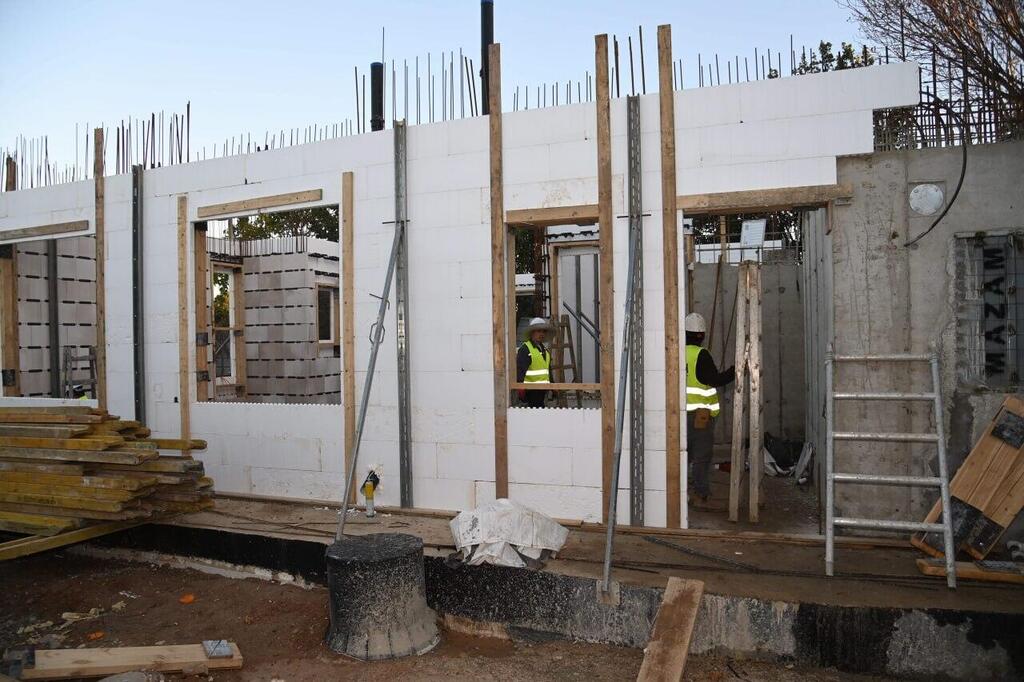
A new young generation neighborhood is already under construction in the center of the kibbutz, rather than in its previous western location overlooking Shijaiyah, and is expected to be completed by the end of the year.
On October 7, 64 of the kibbutz’s roughly 950 residents were murdered. Community members have since dispersed across the country: about 70 percent are living in Ruhama, 20 percent in Shefayim and roughly 10 percent in other locations.
Last week, the first community event was held in Kfar Aza since the massacre. As preparations continue for a gradual return of residents, leaders are focused on how to encourage people to come back.
Community manager Zion Regev said the data show “a significant number of people want to return,” adding: “We are not judgmental and we are not pressuring anyone. In the summer of 2026, Kfar Aza will be amazing. Whoever wants to come, it will be waiting for them. And whoever says they do not want to or cannot, we will embrace them and help as much as we can.”
First published: 07:28, 02.24.26