


“The attack on one country out of the three is considered an attack on all three.” This was how the joint defense agreement between Saudi Arabia, Turkey and Pakistan, signed Friday in the city of Mecca, was described. The agreement was named the “Mecca Joint Defense Agreement.” The three countries said the pact reflects a commitment to further strengthen collective security and is intended to bolster deterrence against any hostile action.
The Saudis sought to make clear that the agreement does not represent any intention to build a military alliance, is unrelated to nuclear ambitions or an arms race and does not come at the expense of relations with Gulf states, other Arab countries or countries around the world. For now, it remains unclear what exactly it includes, and analysts around the world are trying to assess its implications.
The signing of the joint defense agreement between Saudi Arabia, Turkey and Pakistan
(Credit: Reuters)


Saudi Arabia and Pakistan are already parties to a mutual defense agreement that defines any attack on one of them as an attack on both. Turkey sought to reject claims that the agreement somehow contradicts its commitments to NATO. “On the contrary, it is a complementary cooperation mechanism that supports regional security,” Ankara said.
“There is a great deal of ambiguity surrounding this trio, which is not a natural trio,” Dr. Yoel Guzansky, a former National Security Council official, senior researcher and head of the Gulf Program at the Institute for National Security Studies (INSS), told ynet.
“The initial agreement was between Saudi Arabia and Pakistan and was signed last September, almost a year ago. Even in that agreement, which had the strongest commitment [among the three sides], we saw there were problems. For example, Pakistan sent forces to Saudi Arabia only after the ceasefire with Iran took effect. During the war, Saudi Arabia suffered many Iranian attacks and we did not see this alliance helping it very much. There were threats implied from Pakistan toward Iran, but Pakistan had to balance its role as a mediator with its commitment to Saudi Arabia.”
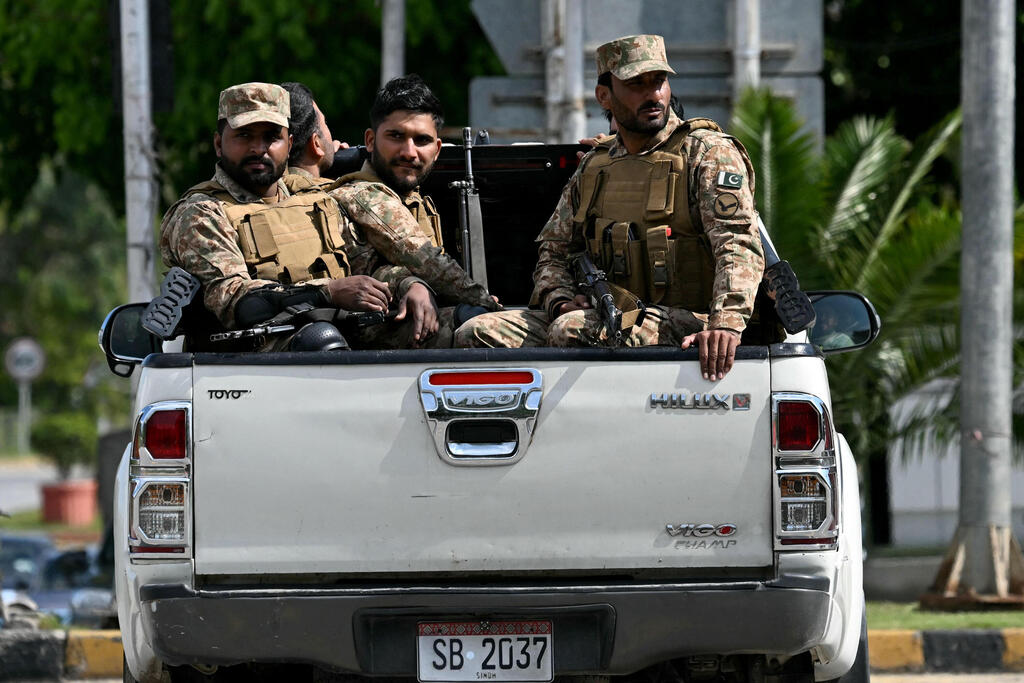
According to Guzansky, even the Saudi-Pakistani alliance, which is supposedly the strongest side of the triangle, is not absolute and is highly dependent on circumstances and Saudi funding. “When the Pakistanis sent the forces, it was reported that the Saudis transferred $3 billion to them,” he said. Pakistan has provided training and technical assistance to the Saudi military for decades and in recent months deployed about 8,000 troops there, along with fighter jets, drones and an air defense system.
“Turkey’s joining is also not natural,” Guzansky said. “Turkey and Saudi Arabia have strengthened their relations in recent years, and we have seen agreements on security cooperation, but Saudi Arabia has concerns and suspicions toward Turkey regarding Erdogan’s regional intentions. It is not free of suspicion.”
“Pakistan and Turkey are the weakest side of the triangle. This trilateral alliance is not natural but rather a product of circumstances. It is connected more to Iran’s weakening and the relative rise, as they see it, of Israel. This is an alliance intended to balance Israel’s power.”
According to Guzansky, “This is not a wartime alliance against Israel, but its orientation is anti-Israeli. Both Erdogan and the Pakistanis are very anti-Israel. The concern is that Saudi Arabia’s entry into such an alliance could cause it to distance itself from Israel and, under pressure from these countries, adopt a more confrontational policy toward Israel.”
'It certainly does not help normalization, but it does not close the door'
A policy against normalization?
“Not completely, but it certainly does not help normalization. It also does not close the door. All three countries are clearly pro-American. Especially the Saudis. One of the reasons they are turning to various alliances like this is precisely the same concern that the US will not stand by them, a lack of confidence in security guarantees.”
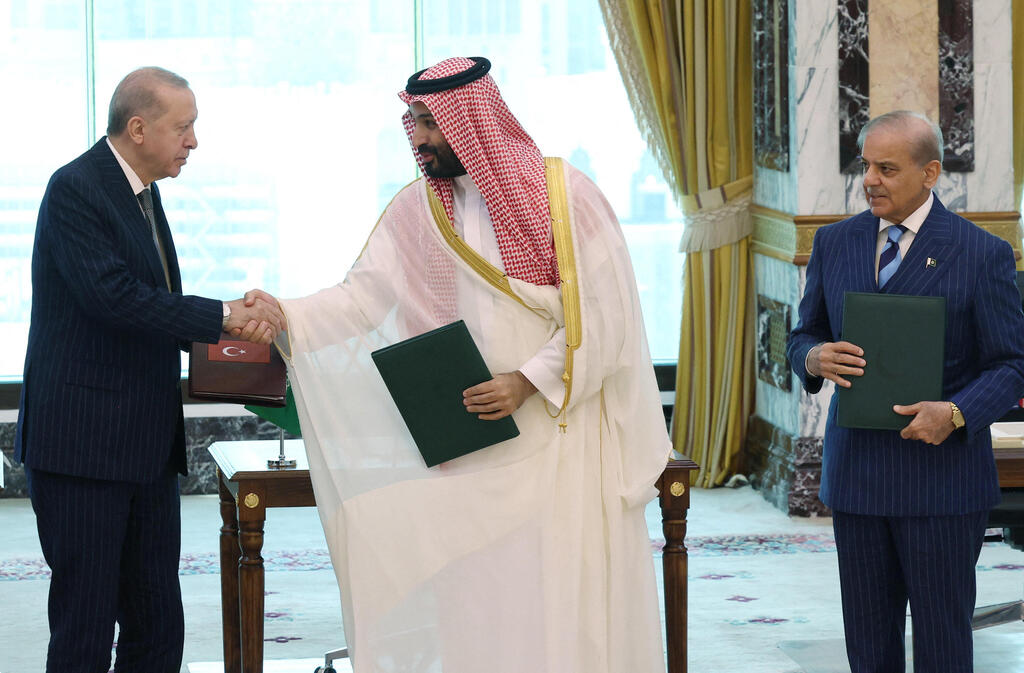
The signing of the joint defense agreement between Saudi Arabia, Turkey and Pakistan
(Photo: Murat Cetinmuhurdar/Turkish Presidential Press Office/Handout via REUTERS)
Pakistan and Turkey are part of a multinational maritime defense coalition that Saudi Arabia announced it was establishing in recent days, alongside other countries including Qatar, Bahrain, Kuwait, Egypt and Jordan. On Wednesday, Saudi Arabia announced the appointment of a commander for the alliance, Abdullah bin Salem al-Shahri. The coalition’s role is, of course, to combat the Houthi effort to block the Bab al-Mandab Strait. In recent days, there has also been a significant escalation in fighting between Saudi Arabia and the Houthis on Yemeni soil. The Houthis have repeatedly attacked concentrations of Saudi forces and forces backed by Saudi Arabia in various Yemeni provinces.
The coalition’s role is, of course, to combat the Houthi effort to block the Bab al-Mandab Strait. In recent days, there has also been a significant escalation in fighting between Saudi Arabia and the Houthis on Yemeni soil. The Houthis have carried out repeated attacks against concentrations of Saudi forces and forces backed by Saudi Arabia in various Yemeni provinces.
“The Pakistanis do not want to get involved in various wars that are not theirs. In 2015, when [Saudi Crown Prince] Mohammed bin Salman invited them to join the war against the Houthis, which had just begun, the Pakistanis did not come and that led to a crisis in relations,” Guzansky said.
The Iranian threat
In recent months, Saudi Arabia has not only returned to fighting the Houthis but has also suffered a number of attacks on facilities inside its territory by Iran. Tehran justified the attacks by saying it had struck targets where American forces were present, but in practice the drones and missiles were launched at Saudi territory.
“Pakistan will be in a very, very sensitive position, and so will Turkey,” Guzansky said. “On paper, if Saudi Arabia is attacked, the burden of proof falls on Turkey and Pakistan. It says this is a defensive alliance, so the maritime alliance the Saudis established a week ago fits that profile and the countries joined it. But what happens with other things? It is not certain the Turks have air defense capabilities they can provide to the Saudis, and neither do the Pakistanis. They can secure the border and things like that, but even that is something the Pakistanis are reluctant to enter.”
According to him, the agreement announced Saturday contains many question marks. It is an ambiguous alliance that gives the countries room for maneuver, and perhaps the emphasis is on political, diplomatic and international support rather than military assistance during wartime.
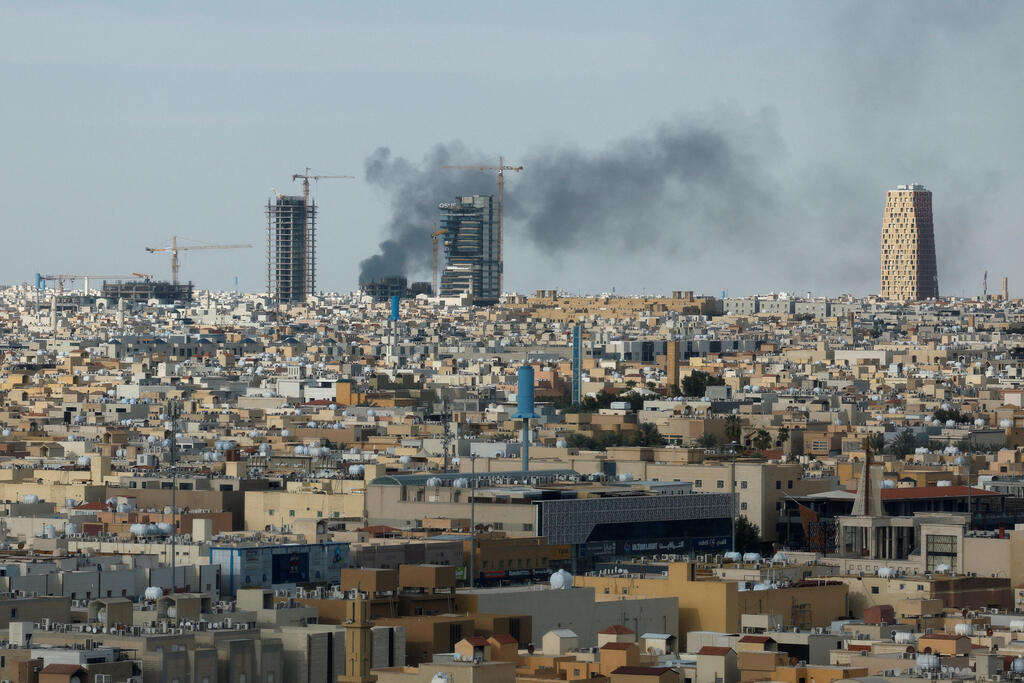
Smoke rises in Riyadh following an Iranian attack, March
(Photo: REUTERS/Stringer)
“It says that each one will view an attack on all as an attack on itself, but it does not say what it is required to do at that moment,” he said. “I do not expect that if Iran attacks Saudi Arabia again with drones and missiles, as it has done, there will be a Pakistani or Turkish attack against Iran. There could be diplomatic steps, calls for a ceasefire, defensive measures, but I do not see these countries attacking Iran.”
Pakistan’s participation in the agreement also raises a particularly sensitive question: whether its nuclear arsenal will be part of the new deterrence mechanism. For now, there is no indication of this in the signed agreement.
An expert from an Australian university quoted by Reuters estimated that the trilateral agreement would likely not include a nuclear component and that Pakistan’s nuclear deterrence remains focused on its historic rival, India.
The question was already raised following the bilateral defense agreement signed by Saudi Arabia and Pakistan last September. Pakistan’s defense minister said at the time that nuclear weapons were not part of the agreement, but a senior Saudi official described it instead as a comprehensive defense agreement that includes “all military means.” The new agreement also does not include published details clarifying what forces or capabilities each country is obligated to provide to the others in the event of war.
Meanwhile, Iran has already issued a response through Ebrahim Rezaei, the senior Iranian official who served as spokesman for Iran’s National Security Committee and was removed from his position in recent days.
“Saudi Arabia must understand that an agreement on paper will not provide it with security, just as years of relying exclusively on the United States failed to do so. Correct your policies so that you will not have to beg others for security,” he wrote in a post on X.
Mohammed al-Farah, a member of the Houthi political bureau, also responded: “We are determined to break the blockade [which the Houthis say Saudi Arabia is imposing on them], regardless of the alliances being formed against us. We call on Turkey, Pakistan and all other Islamic countries not to become a political cover for any aggression, blockade or violation of the sovereignty of a Muslim country. What is required from Islamic countries is not to create alliances to protect aggressors from the consequences of their policies, but to pressure them to stop the aggression.”
First published: 23:20, 08.07.26