


Just eight hours passed between the Houthi rebels' threat to retaliate for the Saudi strike on Sanaa International Airport in Yemen's capital and their launch of attacks on targets in Saudi Arabia. Saudi Defense Ministry spokesman Turki al-Maliki confirmed that the kingdom's air defenses intercepted the threat posed by ballistic missiles launched by the Houthis toward the country's southern region. It is difficult to separate the latest regional developments from the speed of the Houthis' response to the strike on Sanaa earlier in the day.
The Houthis' military spokesman, Yahya Saree, said: "The Saudi enemy carried out an airstrike against Sanaa International Airport at 1:54 p.m., insisting on continuing its unjust blockade of the Yemeni people. The Saudi enemy repeatedly targeted Sanaa airport in an attempt to shut it down to humanitarian flights carrying patients and stranded civilians. We targeted the enemy's aircraft to repel the treacherous attack. In response to the Saudi aggression, we struck Abha International Airport with several ballistic missiles and drones. The operation successfully achieved its objectives."
Gallery
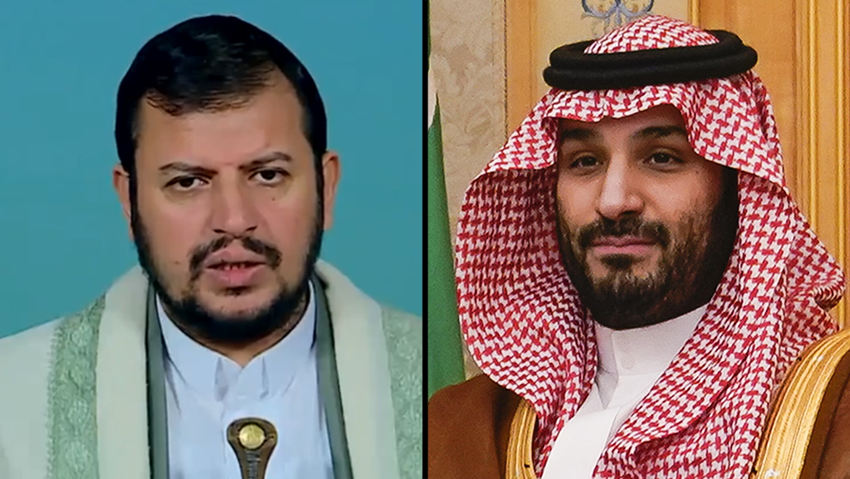
Houthi leader Abdul-Malik Badr ad-Din al-Houthi and Saudi Crown Prince and ruler Mohammed bin Salman
(Photo: Nathan Howard, AP)
A source in Sanaa opposed to the Houthis told ynet that "the airstrikes were a response to an Iranian violation of Yemen's airspace, which the Saudi-led coalition has declared off limits. I believe the strike was intended to restore Saudi honor."
The source said the aircraft had departed Sanaa several days earlier for Tehran carrying hundreds of passengers, including senior officials, and had returned that day to Hodeidah airport. "The strike did prevent it from landing and forced it to divert. But it achieved nothing, and will achieve nothing, other than trying to appease those who support the Saudi-led coalition and the legitimate government."
Saudi Arabia, which backs Yemen's internationally recognized government, and the Houthis have been locked in a long-running conflict. Although the sides reached a degree of calm in 2022, they have failed to reach a final agreement despite negotiations and international mediation, in part because of heightened regional tensions in recent years.
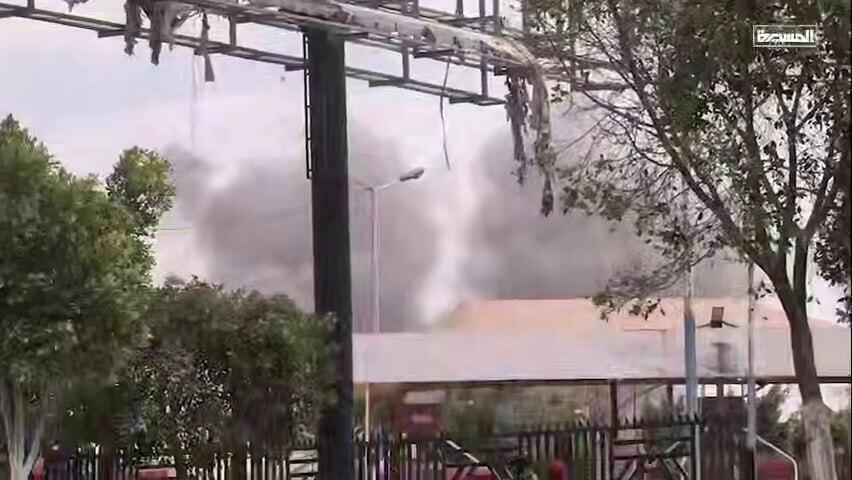
The Saudi attack on Sanaa, Yemen
Tensions between Saudi Arabia and the Houthis have persisted, alternating between periods of escalation and relative calm. Clashes between the sides have periodically been reported, leaving people dead and wounded. In recent weeks, the Houthis have also been preparing on the ground for a possible escalation against what they describe as the Saudi "enemy," including by organizing armed tribal gatherings, just as they are preparing for what they view as the inevitable next round of fighting with Israel.
Once Saudi Arabia launched its strike in Yemen, it was reasonable to expect a response from Iran's proxies in the country, who do not require direct Iranian involvement to handle this front. Iran is currently occupied with its war against the United States and attacks across the Gulf that have already reached Kuwait, Bahrain, the United Arab Emirates, Qatar and Oman. Saudi Arabia, meanwhile, remains the Houthis' arena.
Even though the Houthis are now confronting Saudi Arabia, they know Iran remains behind them. They also saw Tehran come to Hezbollah's aid by attacking Israel last month following the Israeli strike in Beirut's Dahiyeh district. It is reasonable to assume that this confidence influences both the timing of their entry into conflicts and the speed of their responses. That was evident on Sunday, just as it was during the brief recent round of fighting between Iran and Israel, when the Houthis joined in and launched attacks toward Israel.
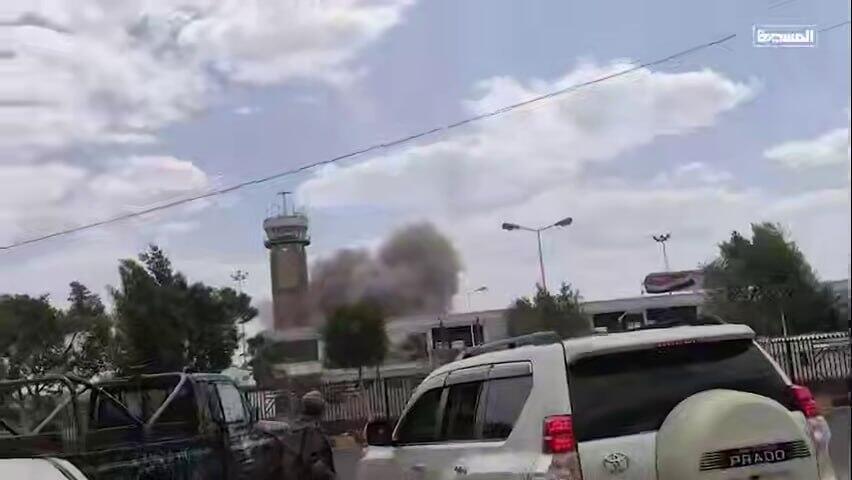
The Saudi attack on Sanaa, Yemen
Another trend now becoming apparent is the erosion of deterrence. Striking Gulf states no longer appears to carry the same level of risk. Very little happens in response. And when retaliatory strikes do occur, such as U.S. attacks on Iran, they are generally directed at sites that have already been targeted. Sanaa airport, for example, was struck by Israel in 2025 and was hit again Sunday by Saudi Arabia after being rebuilt. Whereas there was once significant uncertainty about what would follow attacks in the Gulf, today the outcome is largely predictable — and not much happens.
The Houthi response against Saudi Arabia also reflects what could be described as the Iranian playbook. Just as Iran typically threatens a response proportional to the attack against it or vows to strike the sites from which it was attacked, the Houthis mirrored the Saudi strike on Sanaa airport by claiming responsibility for an attack on Abha airport in Saudi Arabia. They went a step further, warning all airlines against flying through Saudi airspace until what they called "the blockade on Sanaa International Airport is lifted."