


The IDF and Shin Bet security agency said Saturday evening that a key Hamas operative was killed in an Israeli airstrike in Gaza City, with Israeli officials assessing the strike may have targeted Abu Obaida, the spokesman for the terrorist group's military wing.
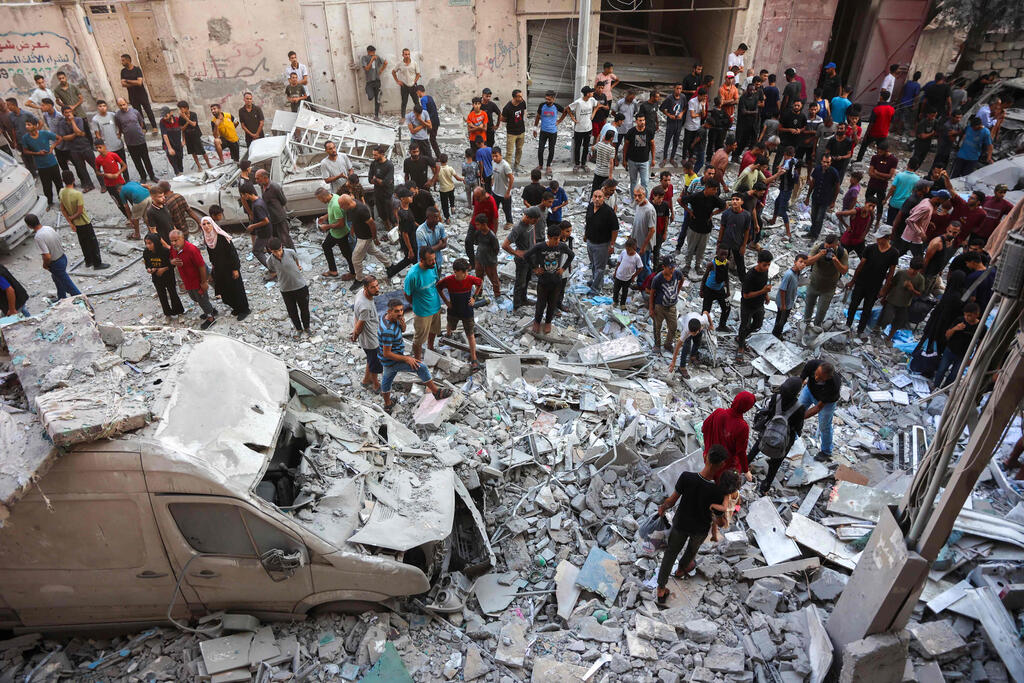
In a joint statement, the IDF and Shin Bet said the strike was carried out in northern Gaza “under the leadership of the Southern Command and directed by Military Intelligence.” AFP reported the strike hit Gaza City’s Rimal neighborhood.
Israeli airstrike in Gaza City's Rimal neighborhood


According to Israeli assessments, Abu Obaida has been a target of multiple Israeli operations. In May, the IDF said it believed he was alongside Mohammed Sinwar, a senior Hamas commander and brother of Hamas leader Yehiya Sinwar, who was killed in a strike in Khan Younis.
The military said it took “numerous steps” to minimize civilian casualties, including the use of precision-guided munitions, aerial surveillance and additional intelligence. It accused Hamas and other terrorist groups of “systematically violating international law” by embedding operations in civilian infrastructure and using residents as human shields.
Hamas, in a statement Saturday, said the Israeli strike “targeted a populated residential building in Gaza City’s Rimal neighborhood,” and claimed it caused “dozens of deaths and injuries.” The group described the strike as “an escalation of the war of extermination and the killing of innocent civilians aimed at spreading fear and forcing residents to leave the city.”
Hamas further accused Israel of carrying out “a declared plan to destroy Gaza City and forcibly displace its residents—a war crime in every respect, openly admitted by Israeli leaders before the world.” It urged the international community, Arab and Muslim states and the United Nations to “intervene immediately to halt the assault, take deterrent measures against Israel and hold its leaders accountable for crimes against humanity.”
The announcement came as Israel prepares for a wider ground offensive in Gaza City. On Friday, an Israeli Namer armored personnel carrier was hit by a roadside explosive in the city’s Zeitoun neighborhood, wounding seven soldiers. One was moderately hurt, while the others sustained light injuries. All were evacuated for medical treatment, and five were released overnight.
On Friday, Abu Obaida claimed in a statement that the IDF's plans to capture Gaza City would endanger the lives of hostages. He said responsibility for their fate lies with the Israeli government and military, warning that “every hostage killed in airstrikes will be named and shown in photographs.” He added that Hamas would keep the hostages “as much as possible” alongside its fighters.
Abu Obaida alleged that Israel had “decided to cut in half the number of living captives and to conceal most of the bodies of the dead.” At the same time, he threatened that “the enemy army will pay in the blood of its soldiers” and warned of additional kidnappings. According to him, Hamas fighters “are on alert, with high morale, and will teach the invaders harsh lessons.”
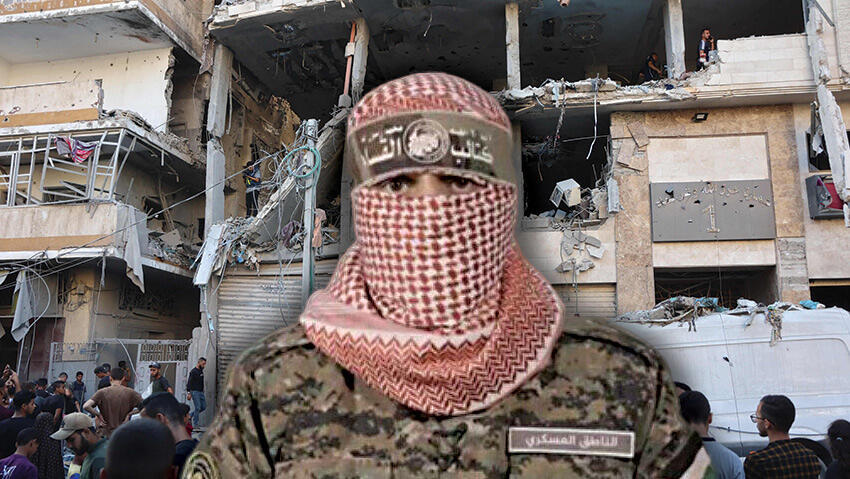
The masked spokesman has become a cult figure in the Arab world, with supporters on social media praising “the man in the mask”—a phrase now commonly used to describe him. Throughout the war, Hamas has used Abu Obaida to deliver televised updates, often via Al Jazeera, summarizing daily events in Gaza while carefully avoiding revealing his identity.
(Photo: Omar AL-QATTAA / AFP)
The IDF, however, has publicly named him as Hudhayfa Kahlout. At the start of the war, the IDF released his name and photo, saying: “He hides behind the alias Abu Obaida and his red keffiyeh, just as Hamas hides behind civilian infrastructure to fire rockets at Israel. He, like the rest of Hamas’ leaders, prefers to hide—in tunnels, behind women and children and behind masks and shadows.”
It was not the first time Israel had sought to expose him. During the 2014 Gaza war, the Arabic-language newspaper Asharq al-Awsat reported that Israel had hacked into Hamas’ Al Aqsa TV channel several times, airing uncovered images of Abu Obaida and urging Gaza residents “not to believe this liar.”
If Saturday’s strike did indeed target Abu Obaida, it would not be the first attempt on his life. In May, following the killing of Hamas military commander Mohammed Sinwar in Khan Younis, the IDF assessed that Abu Obaida had been at his side.
Rumors ahead of the strike
Speculation about an attempt on Abu Obaida’s life followed a night of swirling rumors—likely fueled by Hamas itself—after false reports spread in Arab media claiming that Israeli soldiers had been kidnapped, a claim Israel flatly denied.

(Photo: Omar AL-QATTAA / AFP)
IDF Arabic-language spokesman Lt. Col. Avichay Adraee sharply criticized Qatar’s Al Jazeera network for broadcasting the unverified claims throughout the night. After the network later corrected the reports—stating that Israeli troops were injured when a Namer armored vehicle hit an explosive device, but no abduction had occurred—Adraee accused Al Jazeera of “trying to cover up its big lie.”
“Al Jazeera brought commentators to promote the victory narrative,” he wrote, “and after the lie was exposed, they began broadcasting news based on Hebrew sources.”
First published: 19:42, 08.30.25