


The threat of explosives-laden drones continues to be a major concern for IDF troops on the northern front and inside Lebanon. With no organized military solution in place, soldiers are improvising lifesaving measures through donations collected by service members, local authorities providing soccer goal nets and farmers donating netting from banana plantations.
Six regular and reserve IDF soldiers have been killed by FPV drones carrying explosives in the Lebanon area since the start of Operation Roaring Lion.
Maj. (res.) T., a reservist who recently completed a three-month rotation on the northern front, worked extensively to raise donations to purchase soccer nets for forces in the field. In addition to buying them from a commercial supplier, he contacted local authorities across the country, which provided soccer goal nets.
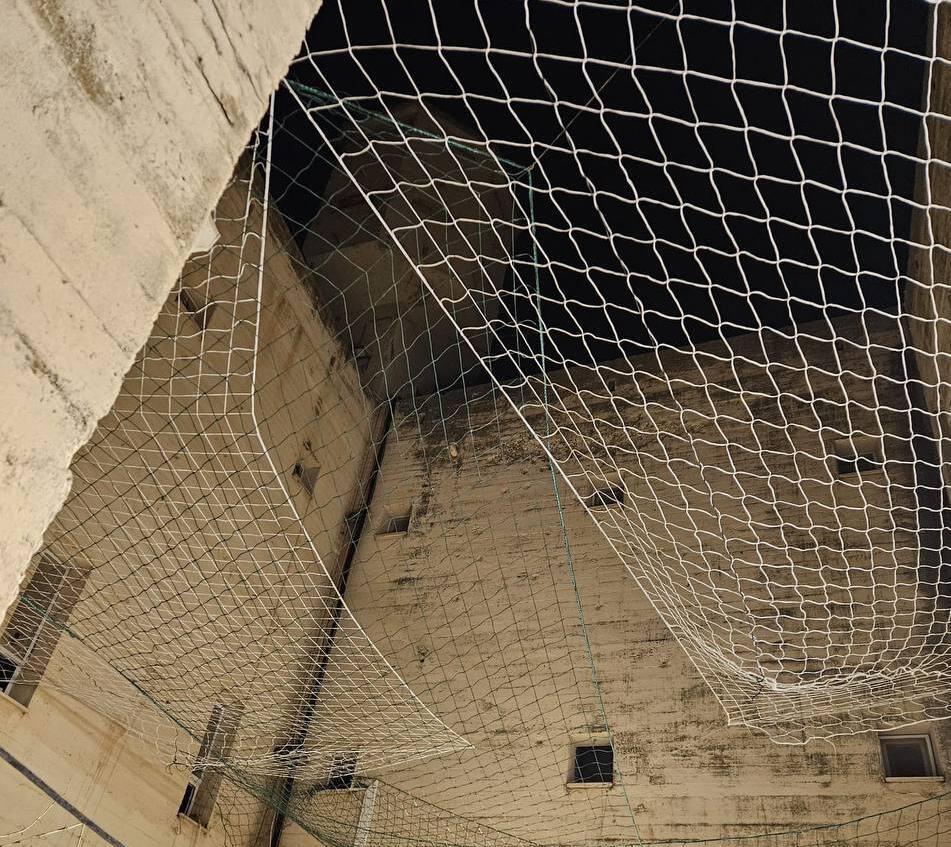
After he circulated word among troops about the nets he had purchased and collected independently, he said he received a surprising call from a senior IDF official.
“He told me to stop distributing them, that they might not meet standards,” T. told ynet.
The reservist added: “The senior official told me he had 200,000 meters of netting in a warehouse, and that anyone who needed it should contact him and he would take care of them.”
But then, after T. contacted him anonymously as a soldier in the field, the same official referred him to someone else.
“I distributed his number to everyone who needed it. I understood that people were having trouble getting the nets, despite his promise,” T. said. “Then I wrote to him myself, supposedly as a regular soldier, and he referred me to someone else in my unit. He claims he has a warehouse with 200,000 meters of netting — and people in the field can’t get it. To me, that is exactly the failure.”
'Real frustration'
T. sought to clarify that “my claim in this whole story is against the government, not the IDF. Instead of holding Foreign Affairs and Defense Committee discussions on the draft-dodging law, hold a committee discussion on the drone threat. Hold a Cabinet meeting and bring solutions. Instruct all the directors-general of government ministries to deal with it. Then, within a week, the entire sector will be protected.”
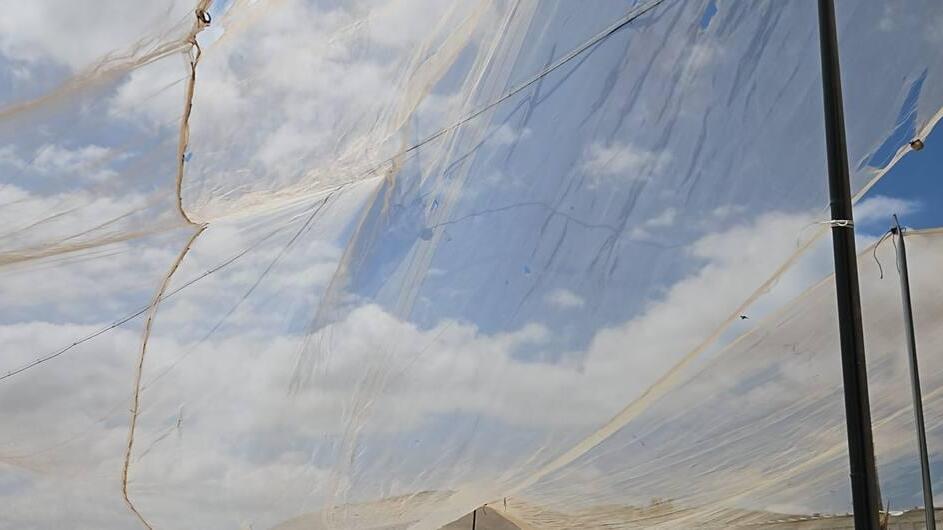
Nets that used to protect banana trees now fend off drones
“This is real frustration," the reservist added. "It is enough to look at Telegram at everything happening in Russia and Ukraine. This threat has existed for five years, and the Ukrainians found tactical solutions for it, exactly like the nets. If there had been some kind of preparation, we could have arrived ready for this deployment in southern Lebanon, and that is why my frustration is directed at the government.”
Because of the helplessness of forces in the field, T. began raising money and buying nets, as well as collecting soccer goal nets.
“It is all from donations by private individuals,” he said. “After we discovered that a standard soccer net stops the drones, we simply went to a supplier and bought them. We distributed close to 200 nets, and more will arrive next week for distribution. Some municipalities also donated nets from their city soccer fields.”
All equipment and ammunition used by the IDF must undergo a process of testing, approval and integration. But in the absence of an immediate solution for units in the field, troops are turning, for lack of any alternative, to temporary solutions. Given the delay in a broad IDF response, one would at least expect an orderly assessment of the solutions forces are obtaining in order to protect themselves from a deadly threat.
“The forces in the field asked for soccer nets. We brought them, and they saw that in real-life conditions, it works. Regulars and reservists,” according to T.
Lt. Col. (res.) S., a volunteer reservist in an armored unit who is now serving another reserve rotation in Lebanon, warned: “The drone threat is one of the things that most affects our activity, whether on the Israeli side near the border or in Lebanon. We deal with it all the time and experience it all the time. It is a very dominant part of daily life. You go into a protected space and wait for it to pass.”
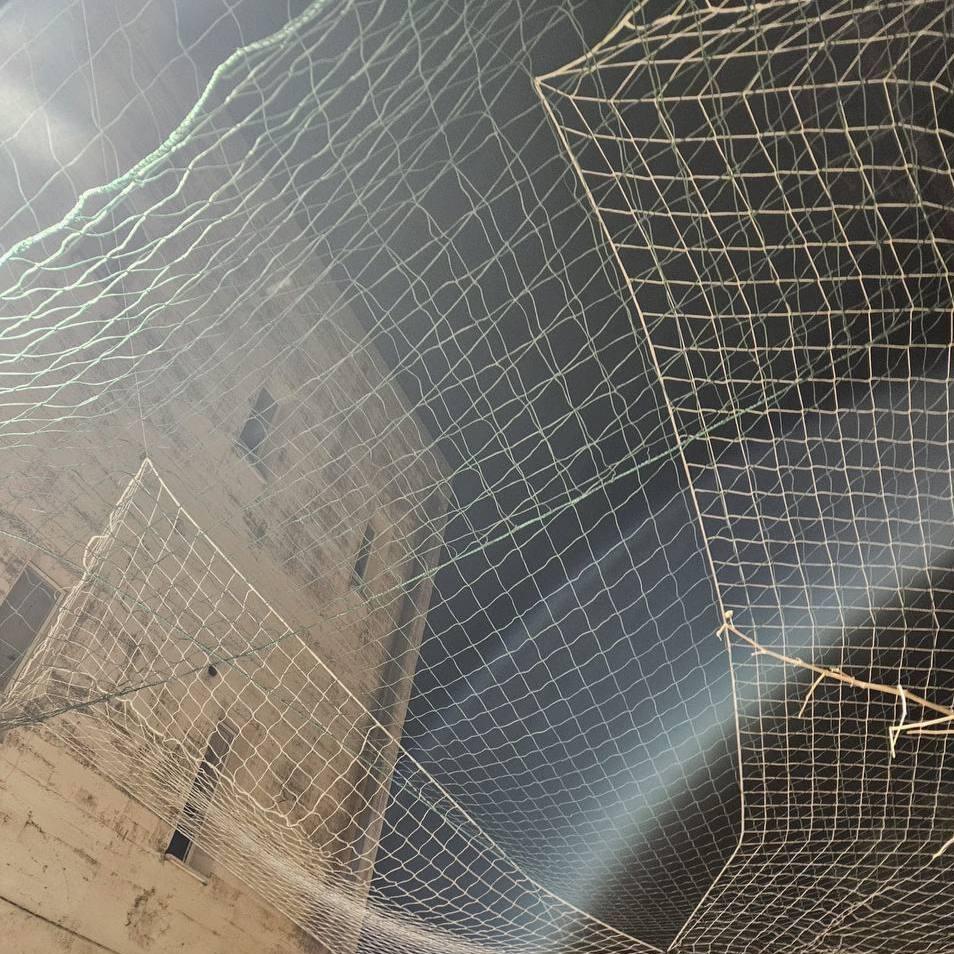
'We received some soccer nets, but of course it was not enough'
In the absence of an immediate solution from the army, S. said, “we did something very Israeli. We called several kibbutzim, some in the north and some in the Jezreel Valley. We spoke with banana growers who were willing to give us plantation nets, and we went to collect them. We sent trucks to the plantations, folded everything up, brought it to the field and spread it out. I personally carried some of it — dozens of kilograms of netting.”
Regarding the response the IDF does provide, S. said: “We received some soccer nets, but of course it was not enough. We prioritized the forces positioned farther forward on the front. That is why we also needed the nets we collected ourselves. It was all a local initiative.”
On raising the gaps with the relevant authorities, he said: “I sent a list of resources I need to carry out an organized project. I told them: Give me A, B and C, and I’ll take it from there. Some of the means I need from you, but the initiative and the work — I’ll do it, I’ll manage on my own.”
S. said that he "also asked for concrete barriers, the blocks that hold the nets, to deploy them. I needed 40 of them for the force. So far I haven’t received them, and no one has even said why they aren’t bringing them to us. So we improvised something else. We are champions of improvisation.”
He referred to past promises by the government. “As a citizen, it is obviously very troubling to me that the army has not come up with a systemic solution," S. said. "Our prime minister said that six years ago he already instructed that this problem be solved. Where is the solution? Either they decided there is no solution, or no one carried out what he asked, or they are still working on development. There are solutions that are not terribly complicated.”