

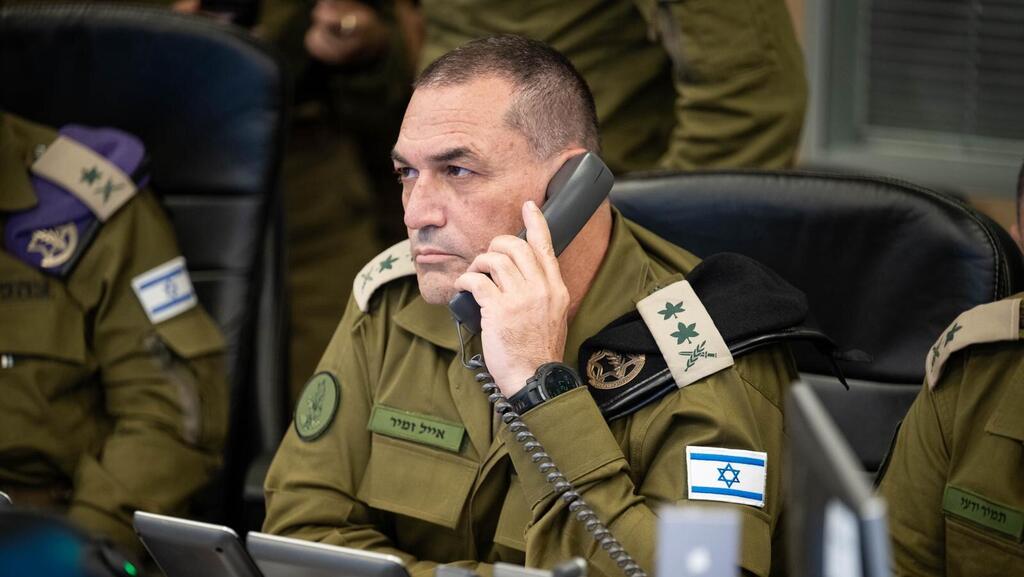
Israel’s regional defense alignment appeared to deepen Sunday as IDF Chief of Staff Lt. Gen. Eyal Zamir held conversations over the past 24 hours with his counterparts in several Arab countries, against the backdrop of Iranian attacks that have reached their territory.
Security officials said the regional defense framework that began operating in practice following Iran’s April 2025 attack has since strengthened significantly. Iran’s latest strikes against Gulf states, they added, have reinforced cooperation further.
The United Arab Emirates announced it was closing its embassy in Tehran and recalling its ambassador and all diplomatic staff after several strikes on its territory.
In an official statement, the UAE Foreign Ministry said the Iranian attacks targeted civilian sites, including residential areas, airports, ports and service facilities, endangering innocent civilians. The ministry described the strikes as a blatant violation of national sovereignty, international law and the United Nations Charter.
“The decision reflects the state’s firm and unwavering position rejecting any aggression that threatens its security and sovereignty,” the statement said, warning that continued escalation risks regional and international stability, energy security and the global economy.
Dr. Yoel Guzansky, a senior fellow and head of the Gulf Program at the Institute for National Security Studies at Tel Aviv University and a former senior official at Israel’s National Security Council, said the Emirati move was expected following what he described as unrestrained Iranian attacks.
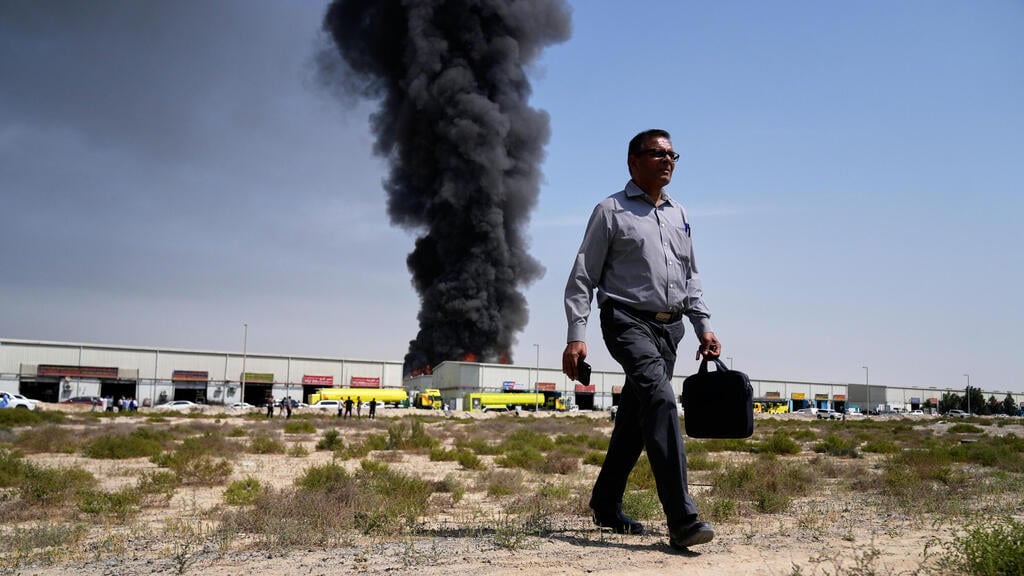
Iranian strike in the United Arab Emirates
(Photo: Altaf Qadri/ AP)
“The UAE has military capabilities on paper, but it is not certain it would want to strike Iran because the response would be far harsher. The balance of forces is not equal,” Guzansky said. He added that additional countries could follow the UAE’s lead in closing embassies.
Relations between Iran and the UAE have historically been complex. Ethnic Persians constitute a significant part of the UAE population, and the two countries have maintained extensive trade ties. At the same time, disputes have persisted over sovereignty claims to islands in the Persian Gulf and amid broader tensions between Iran and Saudi Arabia.