


The Yasser Abu Shabab militia, an Israel-backed force in the Gaza Strip, is struggling to establish any meaningful presence or authority on the field. Despite reports of around 400 Gazans joining its ranks, the militia operates almost exclusively in the buffer zone near Rafah and has failed to expand its influence beyond that area.
Meanwhile, the humanitarian crisis in Gaza is deepening. Daily chaos around food distribution centers has resulted in multiple deaths, with desperate crowds and violent clashes reflecting the growing breakdown in order.
The Yasser Abu Shabab militia


In a recent statement, the militia—whose leader was previously named in a confidential UN memo as being responsible for the systematic looting of humanitarian aid—claimed: “Expect an immediate solution to the problem of stolen aid. Distribution will be based on a new mechanism that ensures every citizen receives what they need.” Yet, the militia’s actual role in aid distribution remains unclear, as U.S.-funded GHF centers continue to lead the effort across the Strip.
The militia’s deputy commander, Hassan Dahini, blamed Hamas for organizing widespread looting of aid and called on Gazans to send him the names, photos and locations of Hamas operatives in areas including Khan Younis, Deir al-Balah, Nuseirat, Shuja'iyya and Sabra. “Every piece of information brings us closer to justice and vengeance for innocent blood,” he said.
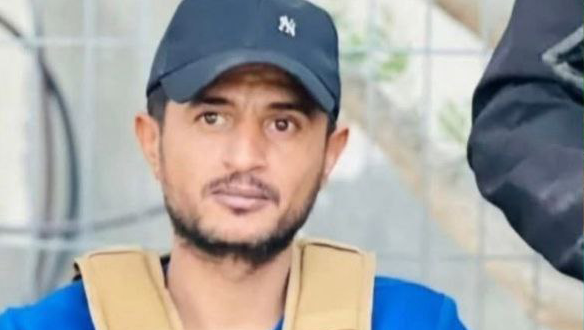
Yasser Abu Shabab
But public trust in Abu Shabab is virtually nonexistent. One father in Gaza told Ynet: “That militia is holed up in Rafah. Who would even dare go there? The road is dangerous and you could be easily killed. And who would trust Abu Shabab? These are people who looted, stole, and murdered. Their leader was even in prison. How do I know he won’t kill me or my kids? It sounds like a death trap.”
The fear among Gazans is rooted in the continued control Hamas exerts in many parts of the Gaza Strip, and the real danger of being branded a collaborator. Just Wednesday, the Hamas-affiliated Quds network reported that three alleged collaborators with Israel were executed. Hamas has previously declared it would carry out executions against both informants and aid thieves.
Get the Ynetnews app on your smartphone: Google Play: https://bit.ly/4eJ37pE | Apple App Store: https://bit.ly/3ZL7iNv
On the ground, Abu Shabab lacks not only legitimacy but also social support. Influential clans and families across Gaza have publicly rejected the group and condemned any affiliation with it. To many residents, the militia is seen as an artificial Israeli attempt to impose a new governing force that has no real acceptance among the local population.
After it was revealed that Israel had armed Abu Shabab, a senior Palestinian Authority (PA) security official told Ynet that the militia is reportedly supported simultaneously by Israel, the PA and exiled Fatah figure Mohammed Dahlan. PA sources added that members of the militia are paid through the PA, under the personal protection of Baha al-Balawsha, a senior Palestinian intelligence official in Gaza.
For now, the Israeli security establishment’s gamble on creating a local alternative to Hamas appears to be a resounding failure. The population is not cooperating, public sentiment is deeply skeptical, and fear continues to grow.