

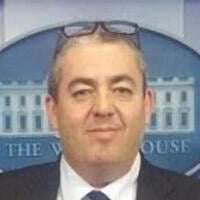
The source of funding for a humanitarian aid initiative in Gaza remains unclear, raising questions about transparency and Israeli involvement. While U.S. Ambassador to Israel Mike Huckabee confirmed that “several parties have committed to providing funding,” those parties have chosen to remain anonymous. Separately, a spokesperson for the Gaza Humanitarian Foundation (GHF) claimed that a "foreign country" had pledged $100 million but declined to name said nation.
Gazans storming aid centers


The uncertainty over funding has persisted, even as two food distribution centers opened in Gaza. Chaos erupted on the first day of operations, further complicating efforts to provide aid. Shortly after operations began, hundreds stormed the distribution center in Tel al-Sultan, Rafah, forcing workers from the U.S.-based company SRS to retreat. While Israeli officials denied reports of looting, witnesses in Gaza and representatives from the company confirmed that the remaining aid packages were taken.
When asked about the funding during the announcement of the new distribution method two and a half weeks ago, Huckabee responded: “It will come from wherever we can secure it. Several parties have already committed to assisting with funding, but they currently don’t want to be identified. When they’re ready, we’ll publish it, or they will publish it themselves.”
GHF, which has faced turmoil following an investigation in Switzerland regarding its activities, recently announced it would now operate through an American nonprofit with the same name. Last week, the organization’s spokesperson reiterated that a foreign country had pledged $100 million for future activities but refused to disclose which country.
Reports and investigations have fueled speculation about Israeli involvement. Opposition leader Yair Lapid accused the Israeli government of covertly funding the aid, suggesting that taxpayer money might be funneled through shell companies in Switzerland and the United States to finance humanitarian assistance in Gaza. In a statement, Lapid asked, “Could it be that Israeli security services were sent by the prime minister and finance minister to transfer Israeli funds abroad, only for them to return to Gaza as humanitarian aid?”
The Prime Minister’s Office denied Lapid’s claims, stating that Israel is not financing the aid, but provided no further details. Separately, Avigdor Liberman, leader of Yisrael Beiteinu, alleged Mossad was funding the initiative. This claim was also denied, with the Prime Minister’s Office issuing a statement: “Israel is not financing the delivery of humanitarian aid to Gaza. Anyone claiming otherwise is simply lying.”
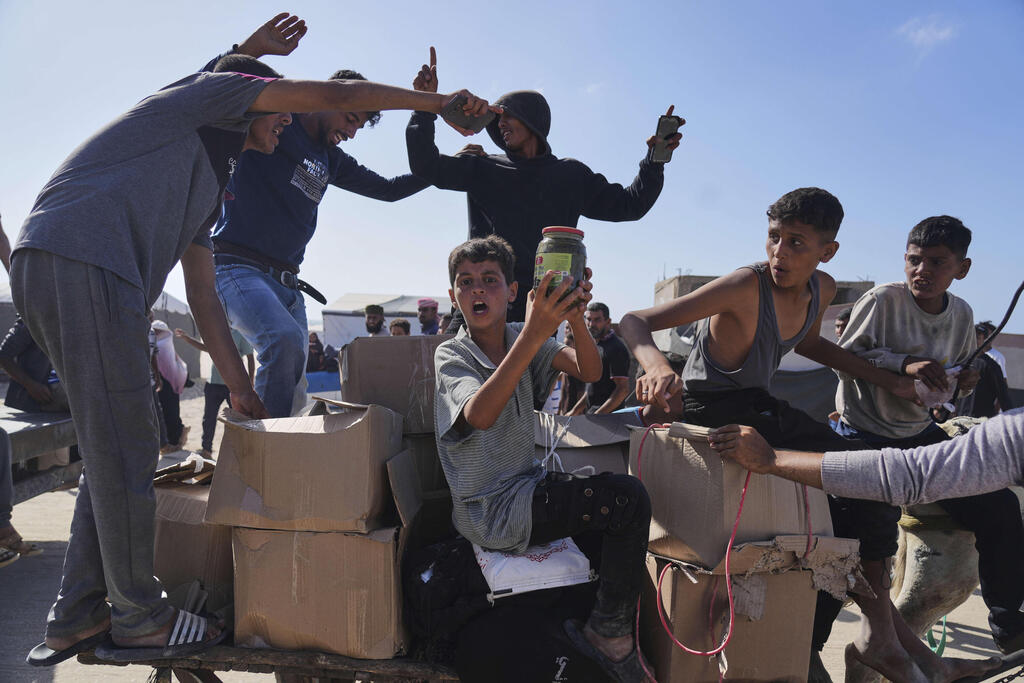
Prime Minister Benjamin Netanyahu addressed Tuesday's chaotic scenes in a speech later that day, calling it “a momentary loss of control.” He added, “Fortunately, we managed to regain control. The idea is to take Hamas’ use of humanitarian aid as a weapon of war and turn it against them. This way, we deprive Hamas terrorists of their governance tools.”
Before the disruption, Bezalel Smotrich, leader of the Religious Zionism party, described the opening of the distribution centers as “a turning point in the war that will lead to Hamas’ destruction.”
Hamas, however, accused Israel of using the aid distribution system in Gaza as “a security control tool,” endangering the lives of civilians. In a statement, the group claimed, “The horrific scenes at the distribution centers, where civilians were shot, prove the failure of this initiative, which is being carried out outside the framework of the United Nations and aims to promote the political goals of the occupation.” Hamas described the initiative as “a humiliating pathway imposed on the needy, used as leverage for pressure and punishment,” and called on the international community to intervene.
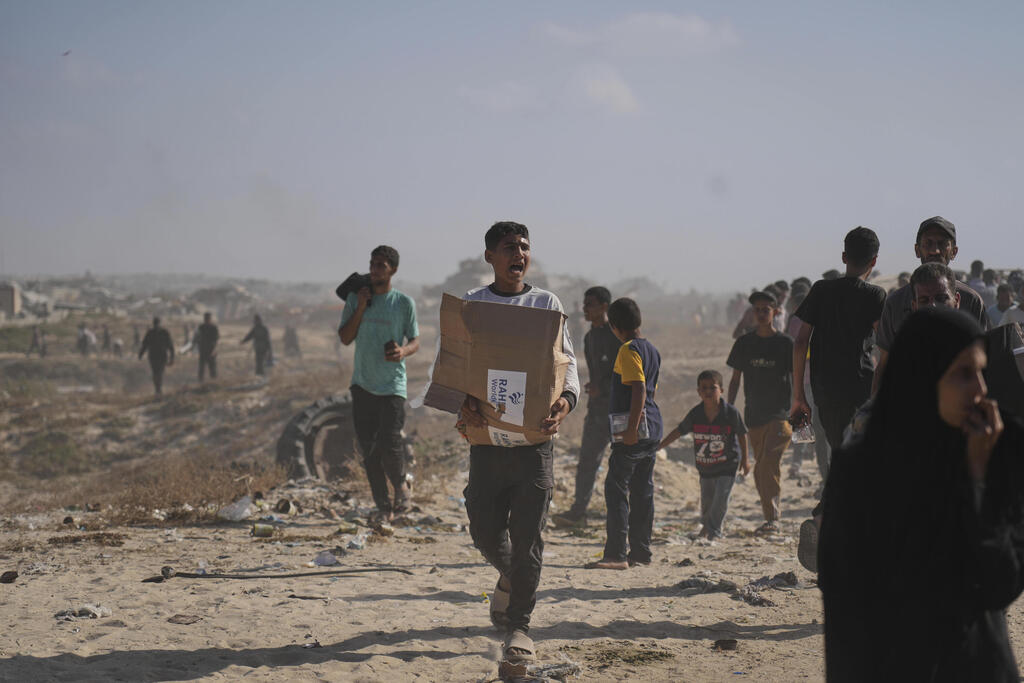
Gazans receive aid in Rafah
(Photo: Abdel Kareem Hana/AP)
Questions about Israeli involvement in the program have persisted, with reports suggesting that what was initially presented as an American-led aid initiative may have deeper ties to Israel. According to The Washington Post, as early as late 2023, the Coordinator of Government Activities in the Territories (COGAT) began promoting a “humanitarian bubbles” program, spearheaded by then-Defense Minister Yoav Gallant, which resembles the current initiative.
A secret document prepared by the GHF foundation, as reported by The Washington Post, outlined strategies to engage Western countries, identified Arab influencers to promote the program, and created messaging guidelines. The document noted, “We need to be ready to answer questions about how a nonprofit that no one had heard of received special approvals from the Israeli government.”
New York Times drops names
The New York Times reported that discussions about the program began approximately 18 months ago in private meetings involving military officers, businesspeople, and other individuals with close ties to the Israeli government. This group, referred to as the Mikveh Israel Forum, held its first gathering in December 2023.
Get the Ynetnews app on your smartphone: Google Play: https://bit.ly/4eJ37pE | Apple App Store: https://bit.ly/3ZL7iNv
The forum reportedly included Yotam Cohen, a strategic advisor who joined COGAT and is the son of retired Major General Gershon Hacohen; Liran Tankman, a tech entrepreneur and investor described as “well-connected”; and Michael Eisenberg, a prominent Israeli venture capital investor.
According to the report, Cohen quickly became an aide to Brigadier General Roman Gofman, then a senior commander in COGAT. Gofman was later promoted to major general and now serves as Netanyahu’s military secretary. In June, Cohen published an article in a journal affiliated with the IDF’s Dado Center for Interdisciplinary Military Studies, outlining a vision for humanitarian aid distribution in Gaza that closely resembles the current program.
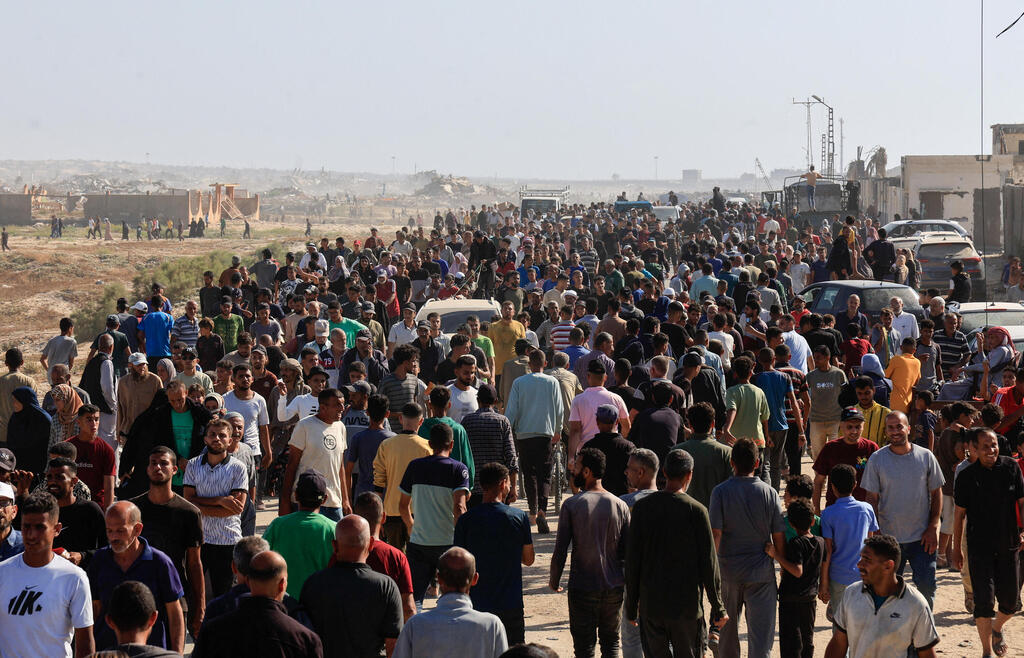
Waiting for aid in Rafah
(Photo: Hatem Khaled/Reuters)
Gofman’s name also appeared in a Haaretz investigation, which revealed that SRS was selected to manage the aid program through a secretive process that bypassed traditional channels, including COGAT. The selection reportedly excluded the IDF and the Ministry of Defense, and was overseen by Gofman alongside a team of reserve officers and businesspeople recruited to advance the initiative.
A separate investigation by Shomrim, published on Ynet, revealed that the individuals behind the Swiss GHF nonprofit, which had previously established a similarly named entity in Delaware, recently decided to permanently shut down both organizations. According to a GHF spokesperson, the foundation will now operate through a third entity registered in the United States in February 2024. This new entity, also named GHF, is expected to receive the donations for the foundation, though the sources of these donations remain undisclosed.