

Just hours before the start of the school year, police decided to provide security at a secular school in Jerusalem’s Kiryat Yovel neighborhood after dozens of ultra-Orthodox protesters entered the school grounds Monday night to protest what they called “immodesty” in the city.
The protesters covered the school’s windows with stickers bearing messages opposing military conscription and wrote on its walls, “Enough with the immodesty in our neighborhood.” They also smeared paint and dumped garbage near the entrance students were expected to use Tuesday morning as they arrived for the first day of classes.
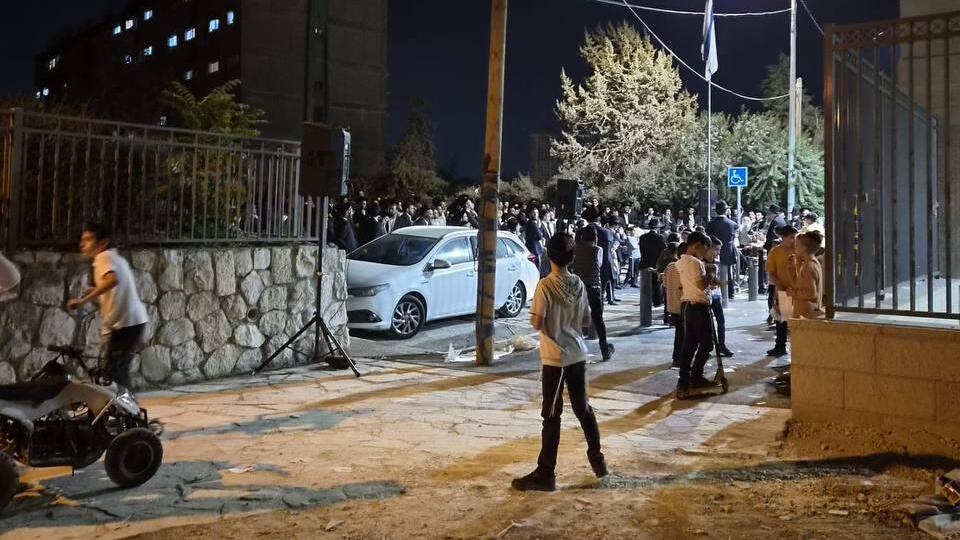
School officials told parents Monday that there had been “attempts to vandalize the premises” and that stickers had been placed on the school’s exterior walls.
“Following the protest and the incidents, police are expected to secure the school tonight and tomorrow as students arrive for the start of the school year,” the message to parents said.
The unusual protest comes amid a series of confrontations over the religious and secular character of Jerusalem, a city with a large and politically influential ultra-Orthodox population alongside secular and other Jewish communities.
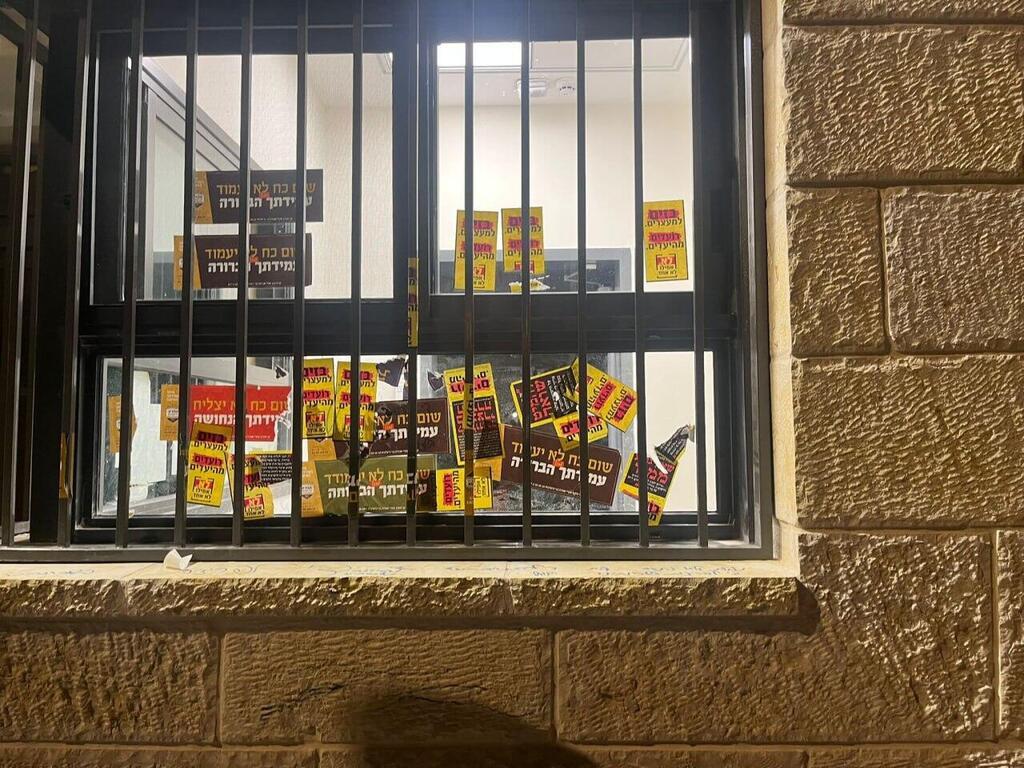
Protesters post anti-draft stickers at the school
On Saturday night, dozens of ultra-Orthodox protesters blocked the main entrance to Jerusalem in an effort to prevent buses from entering the city during Shabbat, the Jewish day of rest, when many ultra-Orthodox Jews oppose public transportation and other activities they consider violations of religious law. The protesters dispersed on their own after Shabbat ended, without police intervention.
There have also been repeated protests outside Cafe Basimta, a cafe on Agripas Street in central Jerusalem that remains open on Saturdays. Last month, after more than a month of demonstrations over the business operating on Shabbat, a woman was filmed arriving before the cafe opened and pouring glue into the lock on its entrance in an apparent attempt to prevent it from opening.
The tensions have extended to construction of Jerusalem’s light rail system. Ultra-Orthodox extremists have repeatedly protested work on the line along Bar-Ilan Street, a major thoroughfare running through predominantly ultra-Orthodox neighborhoods.
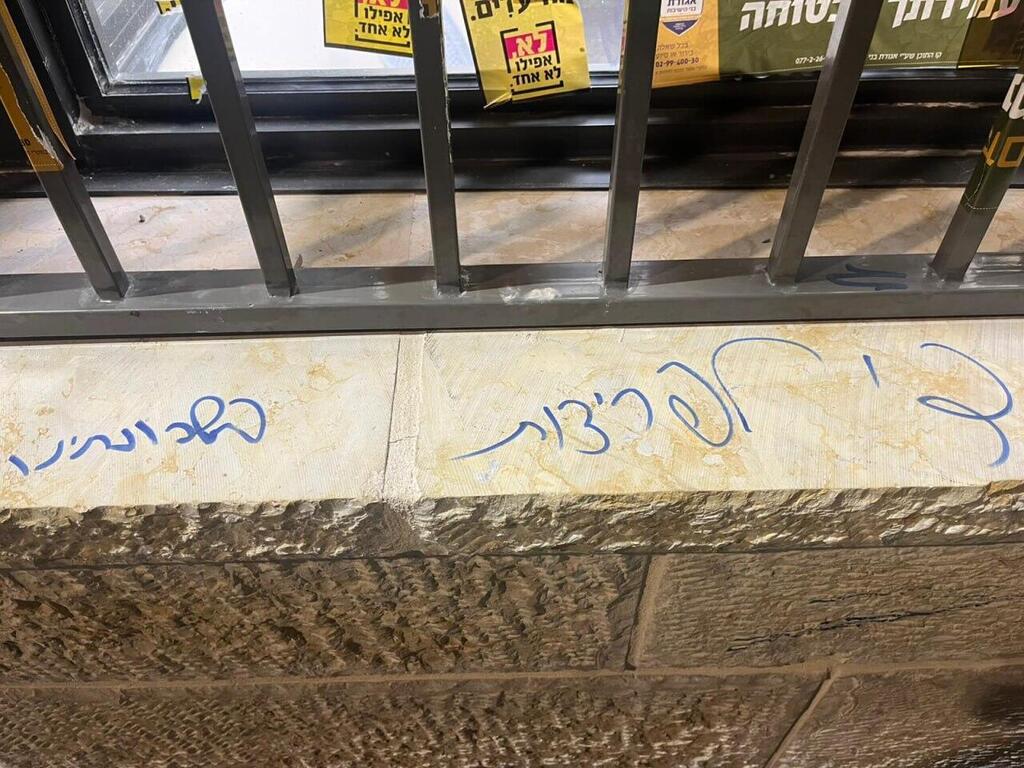
Protesters scrawl anti-'immodesty' messages at the school
Protesters have argued that the light rail would bring secular Israelis through the area, including women whose clothing they consider insufficiently modest.
“Secular people and immodestly dressed women will travel right here in the middle of the street,” protesters have said in explaining their opposition to the project.
The disputes reflect longstanding tensions in Jerusalem over observance of Shabbat, gender norms, public transportation and the use of shared public spaces. They also come as Israel’s ultra-Orthodox community remains embroiled in a separate national dispute over military conscription, following moves to end broad exemptions from mandatory military service for ultra-Orthodox men.