


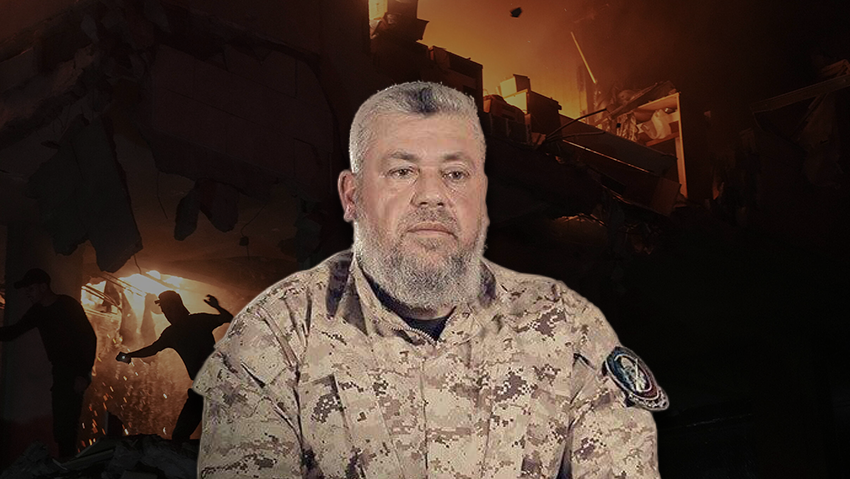
For months during the war, Izz al-Din al-Haddad was a ghost. One of Hamas’ veteran commanders in the Gaza Strip and personally involved in planning and executing the October 7 massacre, he knew how to stay alive. But last Friday, he made the critical mistake and Israeli Air Force (IAF) jets took him out.
The dramatic details behind the assassination are now being revealed, along with testimonies from officers and soldiers who managed the operation out of the spotlight in IDF command rooms.
Funeral of Izz al-Din al-Haddad in the Gaza Strip


Throughout the war, Haddad not only managed the operation holding Israeli hostages but also turned them into his insurance policy. He surrounded himself with them deliberately, knowing they were the only barrier between him and an IAF strike.
“We came very close to eliminating him during the war but he surrounded himself with hostages,” said Major A., an officer in the Operations Division. “He was proud that they were his human shield. That’s why we did not take him out earlier. Since the hostages are no longer in Gaza, we intensified efforts to track down the heavyweights. Haddad was one of the last remaining at the top and we had been tracking him even before October 7.”
The intelligence breakthrough came that Friday. Under a strong sense of being hunted, Haddad made his first and final critical mistake: he returned to a family safehouse. Military Intelligence and the Shin Bet monitoring him closely immediately identified the movement.
At that stage, covert and sophisticated actions were carried out to ensure Haddad would not leave until the strike.
“We realized he had been there for a few days and we carried out preliminary steps to verify it was him and not someone else without burning the operation,” Major A. recalled. “Once we confirmed it, we took it up for political approval. We wanted to wait until he was exactly where we wanted him. From the moment approval was given, it was a matter of minutes until the aircraft dropped munitions. To ensure no escape, we struck from the air. Even a vehicle leaving the house, which turned out to belong to his associates, was targeted.”
Elimination under a ceasefire framework
Haddad's assassination took place under complex political and operational conditions. Gaza is no longer the IDF’s main theater of combat and military resources are divided according to priorities in Lebanon and Iran.
Meanwhile, Israel is operating in Gaza under a ceasefire agreement that significantly limits freedom of action and allows strikes only to remove immediate threats.
“Each target involves dozens of hands assembling the puzzle: IDF intelligence, Shin Bet and oversight bodies,” said Captain L., deputy head of the operational intelligence section in the Southern Command fire center. “The challenge was identifying in real time that he was there and planning a strike that would eliminate him while minimizing collateral damage.”
Captain L. described minutes of extreme tension in the command center during the operation: “We received confirmation from Shin Bet that the target had arrived. I’ve had this happen dozens of times before, you enter a situational assessment ahead of a strike and something always goes wrong and it goes back to routine. This time, once we received confirmed intelligence that he was in the apartment, we immediately activated the system. The aircraft were already in the air and it became a matter of seconds.”
At Military Intelligence, Haddad is described as a unique figure within Hamas. Despite his relatively short time as head of the military wing, just one year and two days, he was seen as an ideologue and a central decision-maker both inside Gaza and with the organization’s external leadership.
“He had a significant advantage. He understood, or at least thought he understood, Israel in depth,” said Lt. Y., an intelligence researcher specializing in Hamas leadership. “He had been in an Israeli prison, spoke Hebrew well and part of his actions stemmed from the feeling he could read Israeli society and the military. The fact that he survived two and a half years in Gaza and led the war increased his standing in the organization. He was one of those who insisted on the movement’s principles in negotiations.”
According to her, his elimination is a severe blow to Hamas’ ability to manage negotiations.
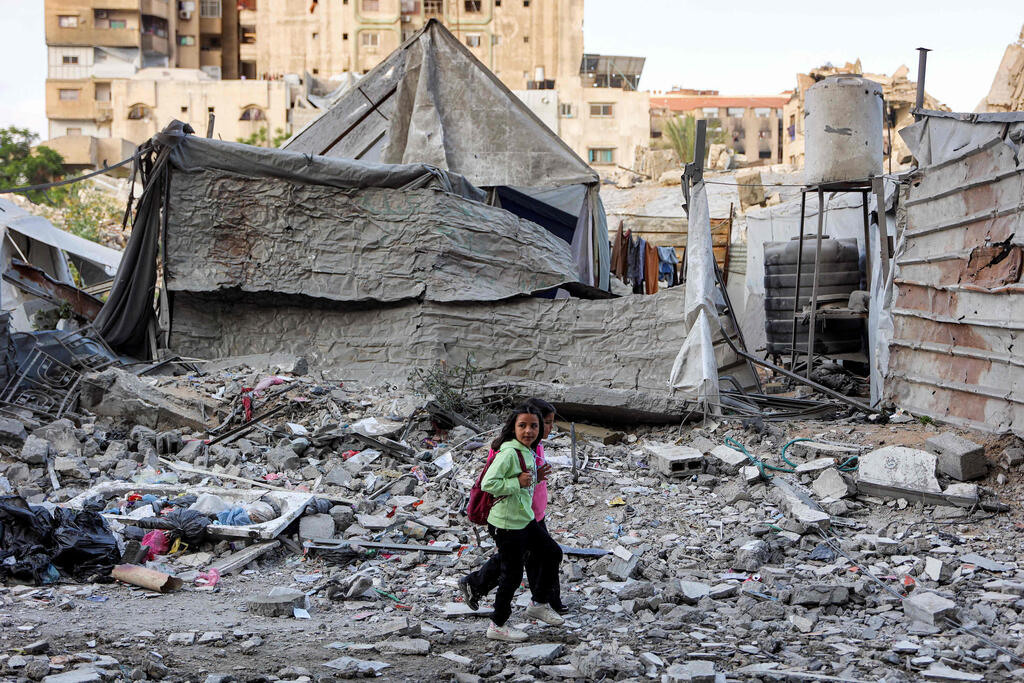
The scene of the strike in Gaza
(Photo: Omar AL-QATTAA / AFP)
“To run negotiations, you need a structured decision-making forum. His removal is another card falling that complicates the process. Successors are less experienced and carry less weight in decision-making.”
The strike comes at a critical moment when the implementation of U.S. President Donald Trump's 20-point plan for Gaza is stalled and it is unclear whether Israel will be forced back into intensive fighting. Hamas, for its part, continues to refuse to begin disarmament, an issue Haddad was considered the main obstacle to resolving.
'He was a major ideologue'
“The military wing is extremely significant in negotiations,” said Major R., head of the military desk in the Palestinian arena in Military Intelligence. “When you talk about disarmament, the armed wing itself must agree. Those sitting in Qatar cannot impose disarmament if the head of the Gaza wing opposes it.”
He added that Haddad had been involved in micro-tactical force-building efforts and continued rebuilding capabilities even after the ceasefire.
Senior Hamas figure Mohammed Odeh has already been appointed as his replacement. However, intelligence assessments suggest the vacuum left by Haddad will be difficult to fill.
“Haddad was essentially the last of the veteran command echelon before October 7,” intelligence officials summarized. “His replacement Odeh is seen as a weaker figure. The stature of Mohammed Deif and Yahya Sinwar and Haddad is not shared by him.”
Whether the dramatic elimination will lead to a breakthrough in negotiations or another round of fighting remains unclear. One thing, however, is certain: last Friday, another major piece in Hamas’ leadership structure collapsed into the ruins in Gaza.