

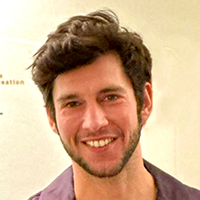
Samir Ousman Alsheikh, a former senior official in the government of Syrian President Bashar Assad, was sentenced Thursday in the United States to 60 years in prison for torturing political prisoners at Syria’s notorious Adra prison and defrauding U.S. immigration authorities by concealing his past.
Alsheikh, 74, is the highest-ranking official from the Assad government to have been prosecuted and convicted outside Syria. Given his age, the sentence means he is likely to spend the rest of his life in prison.
“The message is clear: human rights violators who come to the United States will receive no safe harbor here,” the U.S. Justice Department said after the sentencing. “We will find them, and they will be prosecuted and punished for their heinous crimes.”
The federal judge in Los Angeles described Alsheikh’s conduct as “despicable,” unimaginably cruel and so violent that it was almost beyond description.
Prosecutors had sought a sentence of at least 80 years. Alsheikh’s attorneys asked for five years, citing his age and medical and cognitive condition. His lawyers said after the hearing that they planned to appeal.
A jury convicted Alsheikh on all six counts against him: conspiracy to commit torture, three counts of torture, one count of visa fraud and one count of attempted naturalization fraud. The trial lasted nine days, and jurors took only several hours to return guilty verdicts on every count.
Torture inside Adra prison
Alsheikh, a retired brigadier general, held a series of senior positions in Syria’s police and internal security apparatus and was affiliated with the ruling Baath Party.
From 2005 to 2008, he headed Damascus Central Prison, commonly known as Adra prison, one of Syria’s most notorious detention facilities.
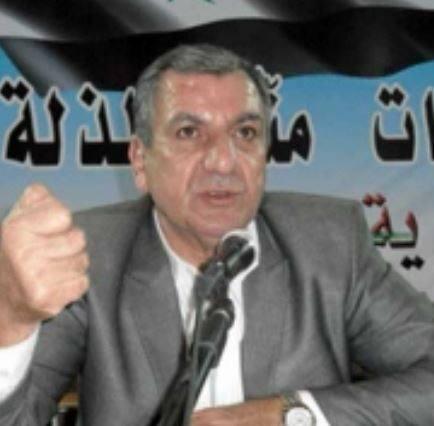
Samir Ousman Alsheikh
(Photo: US Department of Justice)
The prison contained an underground punishment section known as “Wing 13,” which included cramped isolation cells and interrogation rooms. According to evidence presented at trial, Alsheikh ordered prisoners sent to the wing, monitored their torture from his office through surveillance cameras and at times personally participated in their abuse.
Three of his victims testified against him. Two said they were sent to Wing 13 after refusing to abuse political prisoners. A third was punished after guards intercepted a letter of support he had written to a political prisoner.
They described cold, damp cells infested with insects and prisoners being shackled to pipes in the ceiling and suspended by their arms for hours or even days. They said detainees were beaten with cables while hanging in the air. One witness testified that he felt as though his arms were about to be torn from his body.
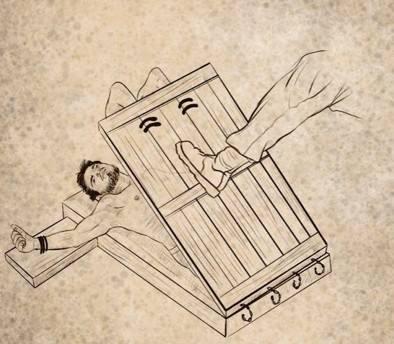
A central focus of the trial was a torture device known as the “flying carpet” or “magic carpet.” It consisted of two hinged wooden boards onto which a prisoner was strapped on his back. Closing the boards folded the victim’s body at the waist, inflicting extreme pain and sometimes causing spinal fractures.
One witness testified that Alsheikh personally stepped on the device while it was being used.
Another prisoner said that after being tortured he was forced to put on a red jumpsuit reserved for prisoners facing execution, leaving him convinced he was about to be killed.
Other testimony described detainees being forced inside automobile tires and beaten while unable to move.
‘He still lives in my memory’
Alsheikh continued rising through the Assad government after leaving his prison post.
In 2011, as the uprising against Assad began and Syria descended into civil war, Assad appointed Alsheikh governor of Deir el-Zour and head of the province’s security committee.
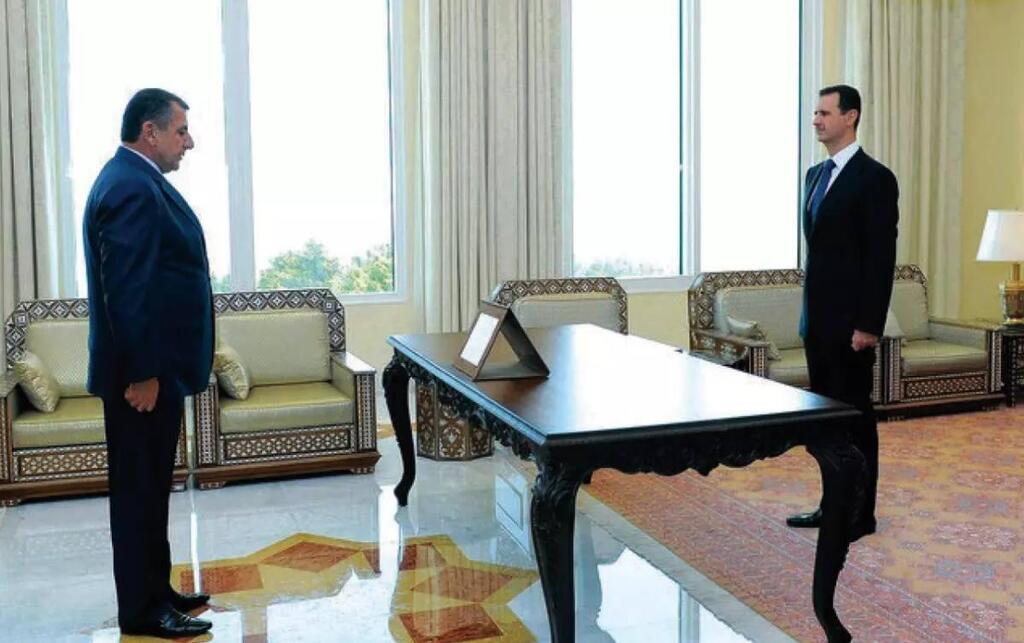
Alsheikh and Syrian President Bashar Assad
(Photo: US Department of Justice)
Syrian documentation groups have accused forces operating under his authority during that period of firing on protesters, carrying out arbitrary arrests and committing torture. Those allegations were not part of the charges on which he was convicted in the United States.
Alsheikh applied for a U.S. immigrant visa in 2018 and entered the United States in March 2020. Prosecutors said he concealed his work at Adra prison, his ties to the Baath Party and his involvement in political persecution and violence on immigration documents.
He obtained permanent resident status, commonly known as a green card, and later applied for U.S. citizenship while continuing to conceal his past, according to prosecutors.
His presence in the United States came to light after a Syrian woman recognized him in a photograph circulated on social media in 2022 and contacted human rights activist Omar Alshogre, himself a survivor of detention and torture in Assad government prisons.
Syrian activists gathered testimony and passed information to U.S. authorities.
Alsheikh was arrested at Los Angeles International Airport in July 2024 as he prepared to board a one-way flight to Beirut.
He was initially charged only with immigration offenses. In December 2024, four days after the fall of Assad’s government, prosecutors filed a superseding indictment adding the torture charges.
Alsheikh became only the fifth person prosecuted under a U.S. law enacted in 1994 that allows authorities to prosecute people found in the United States for torture committed abroad.
German police assisted U.S. investigators in locating and interviewing Syrian witnesses living in Germany.
More than 50 relatives and acquaintances submitted letters to the court describing Alsheikh as generous and compassionate, while his children appealed to the judge for leniency.
His victims offered a starkly different account.
Sultan Abd al-Malik, who was tortured at Adra prison, said that even after 20 years, he still “lives in the prison of memory.”
His brother, Khaled, said he continues to suffer chronic back pain and restricted movement as a result of the abuse. When his son asks to ride on his back, Khaled said, he has to tell him, “I’m no longer strong enough to carry you.”
Assad sentenced to death in absentia
The sentencing comes about a month after a Syrian court sentenced former president Bashar Assad to death for war crimes and crimes against humanity committed by his forces during the country’s 13-year civil war, which began with the 2011 uprising.
Assad’s conviction and death sentence were handed down in absentia. He remains in Russia, where he fled as the collapse of his government became inevitable and where he has been granted asylum by the government of Russian President Vladimir Putin.