

More than four months after the 12‑day war with Iran and the Israeli‑U.S. strikes on Iranian nuclear sites, disagreement between the sides over the fate of those facilities and the broader program is still ongoing. U.S. President Donald Trump repeatedly asserts that the nuclear sites were “completely destroyed,” while Iran insists otherwise—though it acknowledges that significant damage was inflicted.
Ayatollah Ali Khamenei, Iran’s Supreme Leader, once again denied Trump’s claims on Monday, telling a gathering of athletes in Tehran: “The president of the United States says proudly that they bombed and destroyed Iran’s nuclear industry. Good, keep dreaming!” Khamenei, who is 86 years old and no longer appears in public as often as he used to, wondered at the event: “Why should America care if Iran has a nuclear industry or not?” Addressing Trump he added: “Who are you to say whether a country has the right to nuclear power?”

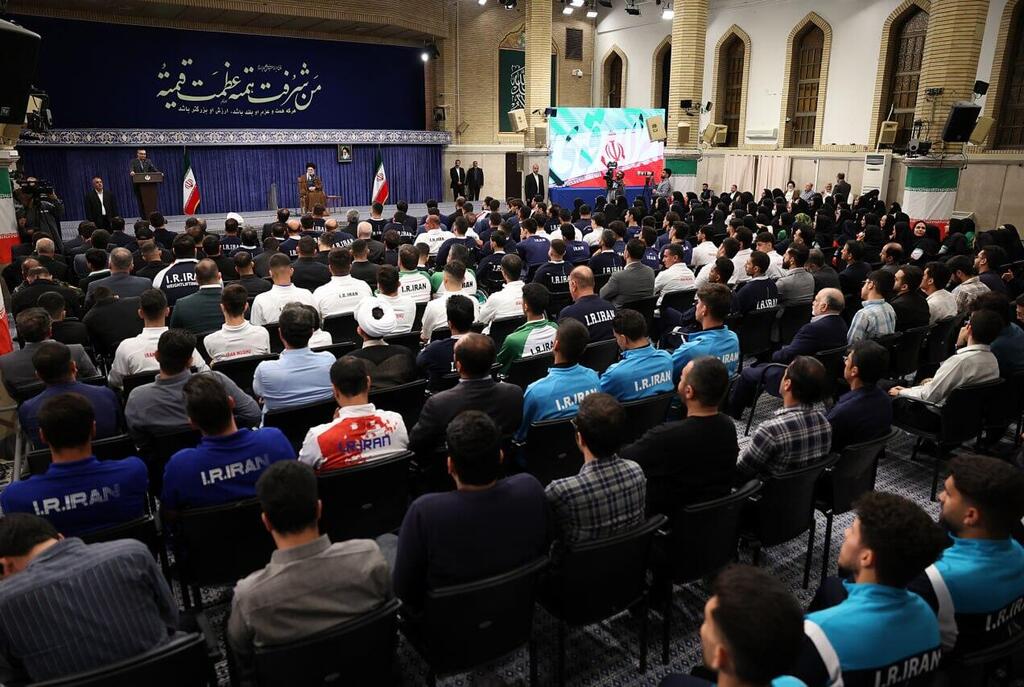
Ayatollah Ali Khamenei addresses athletes in Tehran
Khamenei also contended that although “the enemy boasts about eliminating our scientists – knowledge cannot be destroyed by an attack.”
While Tehran is quick to boast its capabilities, experts have warned that, although senior scientists have been killed and some damage done to the Iranian program, the regime has built a relatively durable knowledge base. This means that Iran may be able to rebuild its program over time. Meanwhile, Trump has explicitly threatened that any attempt by Iran to rebuild the program will trigger another strike. Israeli defense analyst Ron Ben‑Yishai reported this month that so far there are no signs that Iran is trying to fully restart uranium enrichment or proceed to produce a nuclear weapon as it did prior to Israel’s strike in Operation Rising Lion.
The nuclear facilities in question were first struck by Israel under Operation Rising Lion.
The Israeli Air Force avoided bombing the heavily fortified site at Fordow on its own, but near the end of the war the U.S. joined the attack, deploying B‑2 bombers to drop huge bunker‑busting bombs on Fordow and the uranium‑enrichment site at Natanz. The U.S. also fired submarine‑launched missiles at the Isfahan facility, which hosted uranium‑to‑metal conversion labs—a key step toward weaponization.
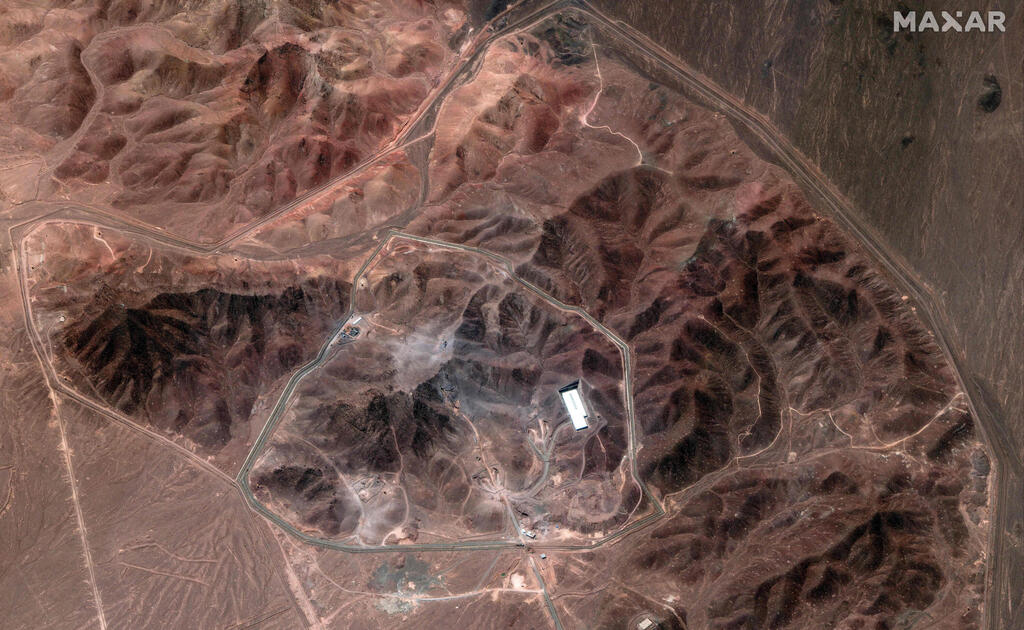
The nuclear facility at Fordow after the US attack in June: 'Mostly destroyed'
(Photo: AFP PHOTO/ SATELLITE IMAGE ©2024 MAXAR TECHNOLOGIES)
Since the strikes, Trump has repeatedly claimed the sites were “totally destroyed,” despite conflicting intelligence estimates. In July the U.S. network NBC reported large damage at Fordow—“mostly destroyed”—but much less at Natanz and Isfahan, suggesting Iran might be able, if it chooses, to restart enrichment within months.
That same month Iran’s Foreign Minister Abbas Araghchi affirmed that Tehran was not forsaking its nuclear program or giving up uranium enrichment—but admitted the program had suffered “severe damage”. Trump eagerly echoed this as proof of his claim: “Of course they were destroyed, just as I said — and we will do it again if necessary!”
A further question involves Iran’s stockpile of enriched uranium: approximately 440 kg of uranium enriched to 60 %—enough in theory for 10 bombs if further enriched to 90 %. There have been reports that Iran buried the uranium in the ground after the strikes, but also claims that it moved the stash to hiding places before the attack.
On Sunday, the head of International Atomic Energy Agency (IAEA), Rafael Grossi, estimated that Iran did not hide the uranium in secret bunkers; it remains at the attacked sites—mainly Fordow and Isfahan, and to a lesser extent Natanz. Iran severed cooperation with the IAEA inspectors after the strikes, and efforts to renew it failed following a resumption of international sanctions against Tehran late last month.