


Israel is increasingly concerned that a new defense pact signed by Saudi Arabia, Turkey and Pakistan is directed not only at Iran but also against Israel, a senior Israeli official said Monday, warning that Egypt could eventually join the alliance.
“This agreement troubles us. This is an alliance aimed against Israel,” the official said of the defense agreement signed over the weekend in Mecca.
The signing of the agreement
(Video: Reuters)


Reports following the signing suggested Egypt could become the next country to join the emerging bloc.
Turkish Foreign Minister Hakan Fidan told the state-run Anadolu news agency that the agreement is effectively modeled on NATO’s Article 5, under which an attack on one member is considered an attack on all.
Fidan said the alliance would also include a ministerial committee and a general secretariat headquartered in Saudi Arabia.
The senior Israeli official said the agreement reflects a broader regional shift.
“The Shiite axis has weakened, and for a long time we have seen the Sunni axis getting stronger,” the official said. “Israel needs to build alternative alliances, especially with the Hellenic axis, Greece and Cyprus, together with India and the United Arab Emirates.”
Gallery
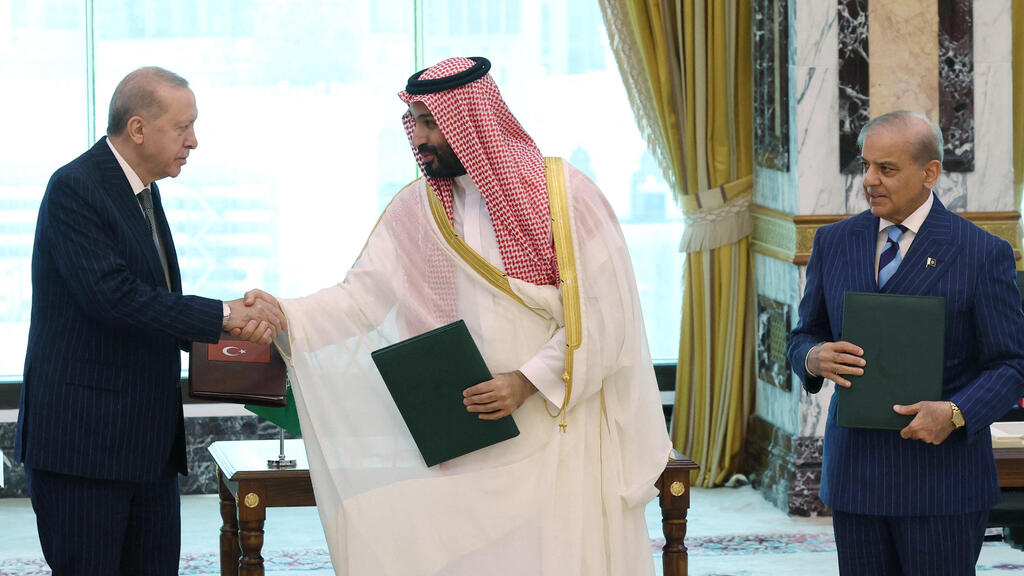
Signing of the agreement between Saudi Arabia, Pakistan and Turkey
(Photo: Murat Cetinmuhurdar/Turkish Presidential Press Office/Handout via REUTERS)
Israel, he added, must become “very, very strong” and make other countries dependent on it.
“Israel needs a massive force-building program,” the official said.
The official singled out Turkey and President Recep Tayyip Erdogan as a particular concern.
“The story of Turkey and Erdogan is dangerous,” he said. “We would not be surprised if the Egyptians join the ‘Mecca Alliance.’ This alliance is aimed against Israel. Who do you think they are doing this against? Allow me to be skeptical when they say it is really aimed at Iran.”
The agreement was signed Friday during a meeting in Saudi Arabia between Crown Prince Mohammed bin Salman, Erdogan and Pakistani Prime Minister Shehbaz Sharif.
Dubbed the Mecca Joint Defense Agreement, the pact is the result of nearly a year of negotiations among the three countries.
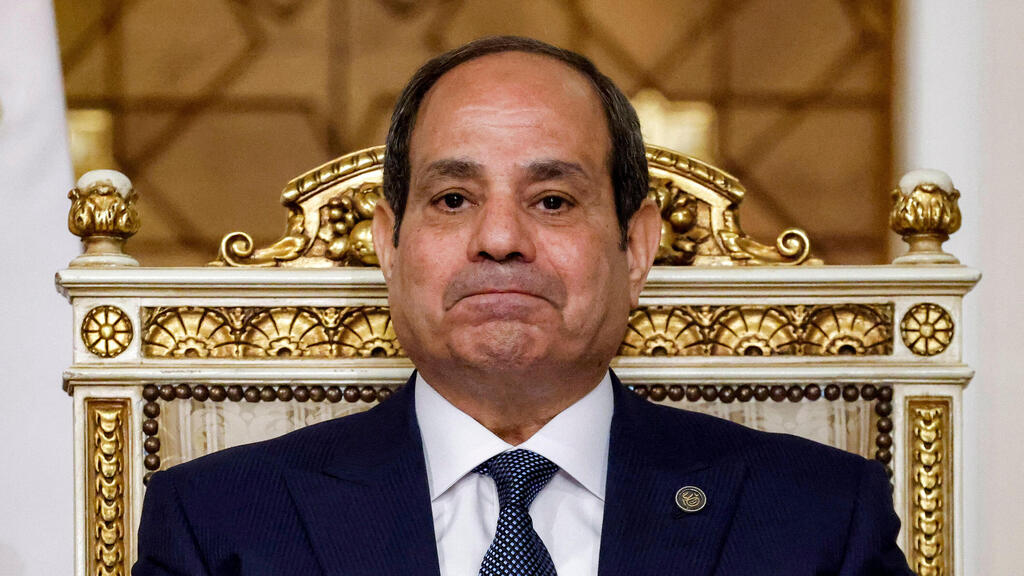
Egyptian President Abdel Fattah el-Sisi: Next to join the defense alliance?
(Photo: REUTERS/Benoit Tessier/Pool)
‘Unite against Israel’
The signing comes as Saudi Arabia, Turkey and Pakistan seek greater strategic independence amid regional upheaval.
Reuters noted that although all three countries remain concerned about Iran and its proxies, they are also increasingly troubled by Israel’s military policies in the region, while doubts are growing over the ability of their longtime ally, the United States, to restrain further escalation.
Pakistan said the agreement also calls for expanding security cooperation across multiple fields.
The alliance brings together three very different powers: Saudi Arabia, a major oil producer; Pakistan, a nuclear-armed state; and Turkey, which has NATO’s second-largest military and a rapidly expanding defense industry.
Turkish media said the pact is likely to lead to joint military exercises and training, as well as increased intelligence and technological cooperation.
Following the agreement, Pakistani Defense Minister Khawaja Muhammad Asif directly invoked Israel, calling on the Muslim world to “unite to confront the common threat posed by Israel.”
“Israel poses a threat to all of us,” Asif said. “Islamic countries must adopt a coordinated approach to confront this threat.”