


As the international community grapples with the fallout from sustained U.S.-Israeli strikes on Iran’s nuclear and military infrastructure in the ongoing 2026 conflict another profound transformation has unfolded largely out of the spotlight. In Riyadh, a quiet but seismic realignment in regional power dynamics is taking shape through a controversial U.S.-Saudi civilian nuclear cooperation agreement. While headlines fixate on Iran’s setbacks, this deal risks rewriting the rules of Middle East security for decades to come.
On March 25, 2026, Senators Edward Markey (D-Mass.) and Jeff Merkley (D-Ore.) reintroduced the bipartisan No Nuclear Weapons for Saudi Arabia Act. The legislation aims to require explicit congressional approval via joint resolution before any U.S.-Saudi “123 Agreement” under the Atomic Energy Act can take effect. This move represents a last-ditch effort by critics to impose stricter safeguards on what many view as a dangerously permissive nuclear pact with Riyadh.
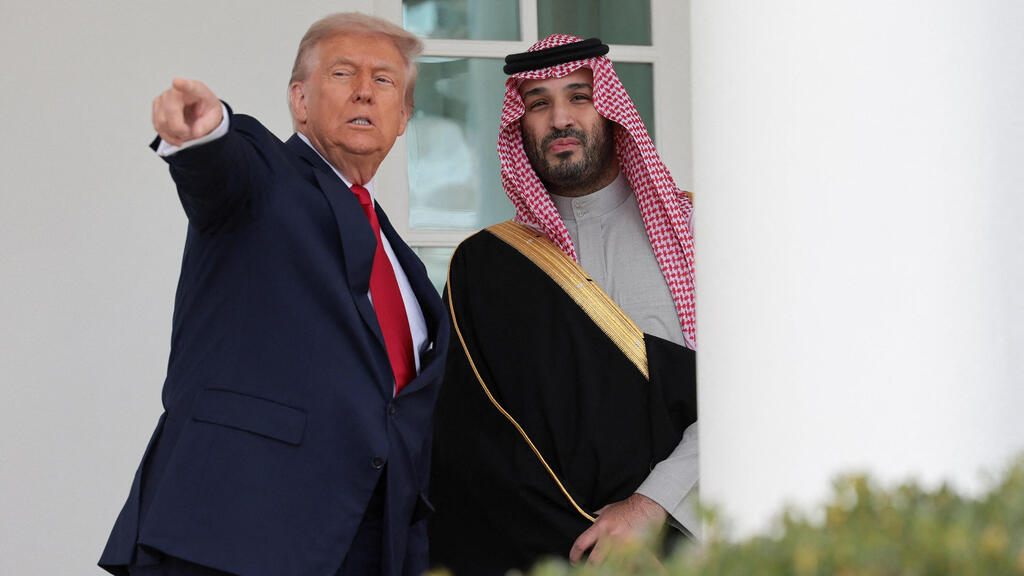
US President Donald Trump and Saudi Crown Prince Mohammad Bin Salman at the White House in November 2025
(Photo: Jessica Koscielniak/Reuters)
At the heart of the controversy is the proposed 123 Agreement, the legal framework for civilian nuclear cooperation between Washington and Riyadh. For years, U.S. policy has upheld the so-called “gold standard” in such deals: partner nations must forswear domestic uranium enrichment and spent-fuel reprocessing—two critical pathways to weapons-grade material—and adopt the IAEA’s Additional Protocol for enhanced inspections.
Saudi Arabia, under Crown Prince Mohammed bin Salman (MBS), has successfully pushed back against these restrictions. Reports from the Trump administration to Congress, dating back to late 2025, indicate the deal may permit some form of uranium enrichment on Saudi soil, coupled with bilateral safeguards rather than the full Additional Protocol. This marks a clear departure from precedents like the U.S.-UAE agreement.
The implications for non-proliferation in the Middle East are far-reaching. Riyadh has long signaled that it would match any Iranian nuclear breakthrough. During the recent Iran conflicts, Saudi Arabia positioned itself as a stabilizing force: intercepting threats, helping maintain oil market stability, and emerging as a reliable Western partner amid Tehran’s fragmentation. In exchange, MBS leveraged the chaos to secure precisely the dual-use technology the international community had denied Iran for two decades.
This is not merely about energy diversification for the Kingdom, though Saudi Vision 2030 envisions nuclear power as part of its post-oil future. Domestic enrichment capability serves as a strategic “Gulf Nuclear Hedge”—a latent insurance policy. It establishes infrastructure, expertise, scientific talent, and material feedstock under the umbrella of U.S.-facilitated transfers. Riyadh need not test a device tomorrow; the optionality itself alters the regional balance.
The precedent is destabilizing. If Washington greenlights enrichment for Saudi Arabia, the diplomatic case for denying it to Egypt, Turkey or even the UAE collapses. Arab states have long decried perceived double standards. A Saudi breakthrough could accelerate a multi-polar nuclear race, eroding the fragile post-Iran-strikes equilibrium. Egypt and Turkey already pursue ambitious civilian programs; loosened U.S. standards risk normalizing sensitive fuel-cycle technologies across the region.
From a Gulf perspective, the deal is a double-edged sword. Formalized U.S.-Saudi ties, potentially tied to broader security guarantees and economic integration, offer Riyadh leverage in a post-Iran landscape where the Kingdom eyes regional primacy. Yet security cabinets in Abu Dhabi, Cairo and Ankara must now balance the allure of deeper Riyadh alignment against the long-term existential risk of a nuclear-capable neighbor. History is littered with cautionary tales: alliances forged in pragmatism can unravel under leadership changes, economic shocks or domestic upheaval.
 Amine Ayoub
The 123 Agreement also intersects with stalled Saudi-Israeli normalization talks. Once envisioned as a grand bargain (U.S. defense pacts, nuclear cooperation, and Israeli ties in exchange for Palestinian concessions), the package has evolved amid Gaza’s aftermath and Iran’s weakening. Proponents argue it cements a pragmatic anti-Iran axis; detractors warn it normalizes proliferation under the guise of civilian energy.
In the end, the Middle East’s nuclear genie was never fully contained. Decades of focus on Iran obscured broader ambitions. The Riyadh deal does not guarantee immediate weaponization, but it institutionalizes latent capacity in a volatile region. For Gulf states, Arabs, Israelis and Iranians alike, the calculus has changed. Stability remains illusory; what was once a binary contest now risks a crowded, multipolar threshold. As Riyadh consolidates its hedge, the forum for Middle East security must expand beyond containment to managing a new era of managed proliferation—however uncomfortable that conversation may be.
- Amine Ayoub, a fellow at the Middle East Forum, is a policy analyst and writer based in Morocco.