

Several senior political and military figures remain at the helm of Iran despite a wave of assassinations in recent days during the ongoing war, continuing to lead the country and issue threats toward Israel, the United States and the region.
Among the most prominent is Mojtaba Khamenei, the son of former Supreme Leader Ali Khamenei, who is widely believed to have assumed leadership after his father was killed. A first message attributed to him was released Thursday, though not in his own voice, vowing that Iran would avenge those killed in the war.
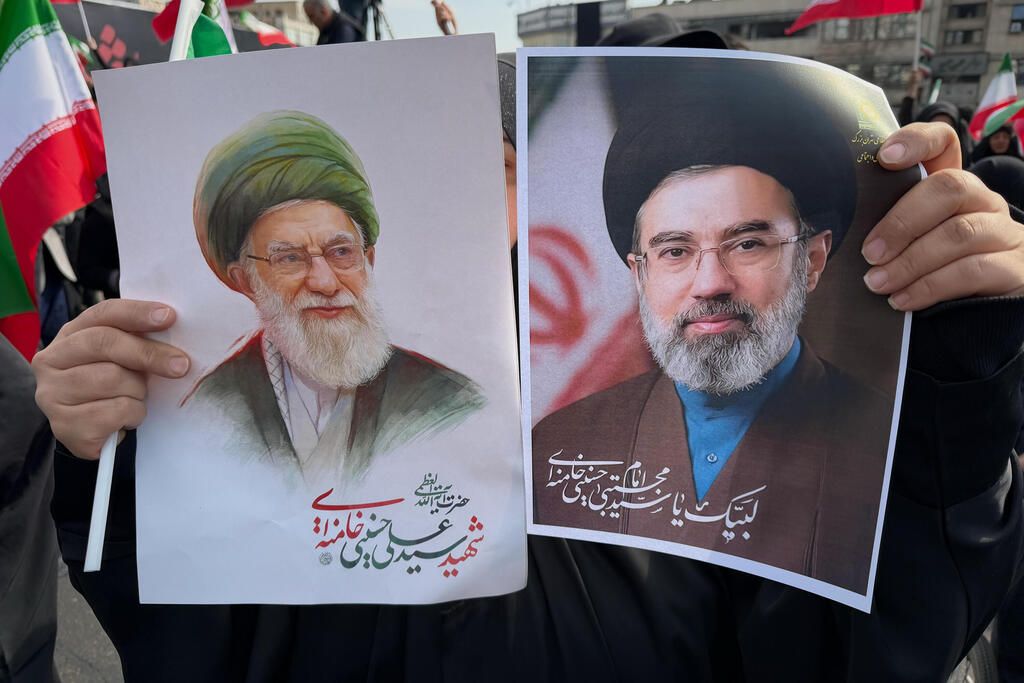
CNN reported that after earlier rumors he had been wounded at the start of the conflict, Mojtaba Khamenei is suffering from a fractured foot, an injury around his left eye and cuts to his face. Iranian opposition groups reported as early as November 2024 that he had secretly been chosen to succeed his father as supreme leader.
Asked earlier about Mojtaba Khamenei’s fate, Prime Minister Benjamin Netanyahu did not say whether Israel would attempt to target him. Referring to Khamenei and Hezbollah Secretary-General Naim Qassem, Netanyahu said: “I wouldn’t take out a life insurance policy on any of these leaders. I’m not going to provide an exact report of what we plan and what we will do.”
He added that “there will be many surprises,” but said he must maintain operational secrecy and could not share details of Israel’s plans.
Another key figure is Ali Larijani, secretary of Iran’s Supreme National Security Council. According to The New York Times, responsibility for managing the country’s affairs was transferred to him from Khamenei several days before the war began.

איראן יושב ראש הפרלמנט האיראני עלי לריג'אני עלי לריג'ני עלי לאריג'ני נדבק ב נגיף קורונה
(צילום: AP)
Larijani has also been involved in contacts with the United States and visited Oman, which has served as a mediator. In recent days he issued sharp warnings, saying that if U.S. President Donald Trump “darkens Iran,” the entire region would be plunged into darkness “within half an hour.”
Ahmad Vahidi has also emerged as a prominent figure within Iran’s security establishment. He was recently appointed commander of the Islamic Revolutionary Guard Corps after the previous commander, Mohammad Pakpour, was killed in the opening strike of the war.
Vahidi previously led the Quds Force and is also known for his alleged involvement in the 1994 bombing of the Jewish community center in Buenos Aires. Since his appointment he has not issued official statements, though before the war he warned that “a miscalculation by the enemies will cause them many problems.”
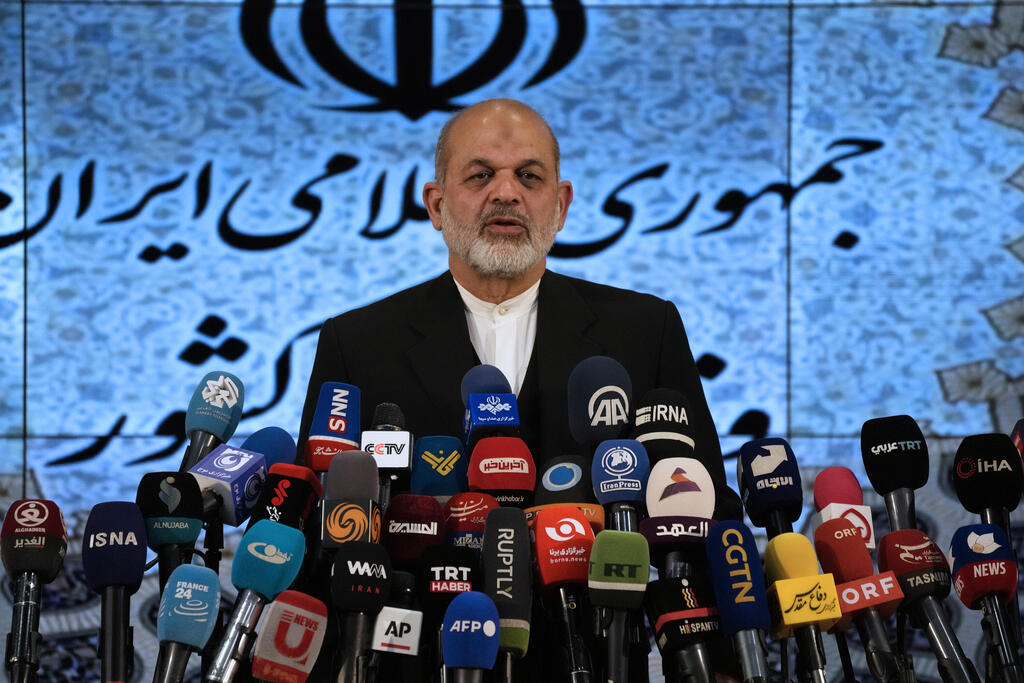
Ahmad Vahidi
(Photo: AP Photo/Vahid Salemi)
On the political front, Iranian parliament speaker Mohammad Bagher Ghalibaf has delivered defiant messages in recent days, saying Iran does not seek a ceasefire.
According to Ghalibaf, the attacker must be struck “forcefully so that it learns not to think again about attacking our beloved Iran.” A former pilot, he was previously photographed in a cockpit during a flight to Beirut. Earlier this year he and several other lawmakers appeared in Revolutionary Guard uniforms in protest after the European Union designated the organization as a terrorist group.
In the military sphere, Amir Hatami remains another prominent figure. He was appointed commander of Iran’s regular army in June 2025 after Abdolrahim Mousavi was promoted to chief of staff before later being killed in the current war.
Hatami, a former defense minister and military adviser to the supreme leader, said this week that Iran would “defend its honor to the last drop of blood.” On the first day of the fighting, rumors circulated that he had also been killed, but those reports were later denied by media outlets affiliated with authorities in Tehran.