

While U.S. Vice President JD Vance projected optimism in the negotiations with Iran in Switzerland, U.S. President Donald Trump issued a series of statements sending mixed messages regarding Washington’s stance toward Tehran, Israel and the Middle East. In an interview on Fox News and in a post on the social network Truth Social, Trump threatened to take control of the Strait of Hormuz, warned against continued uranium enrichment, and declared that at the end of the 60-day period set in the memorandum of understanding, he “could do whatever he wants.”
In effect, Trump is playing the role of the “bad cop.” At the same time, he explicitly threatened that if Iran does not rein in Hezbollah in Lebanon, the United States will strike it “harder” than it has in the past. Yet at that very same moment, Vance was sitting in talks in Switzerland with Iranian representatives, trying to advance the diplomatic track. While Vance projects conciliation, dialogue and continued negotiations, Trump is sending ultimatums, threats and a language of force.
Gallery
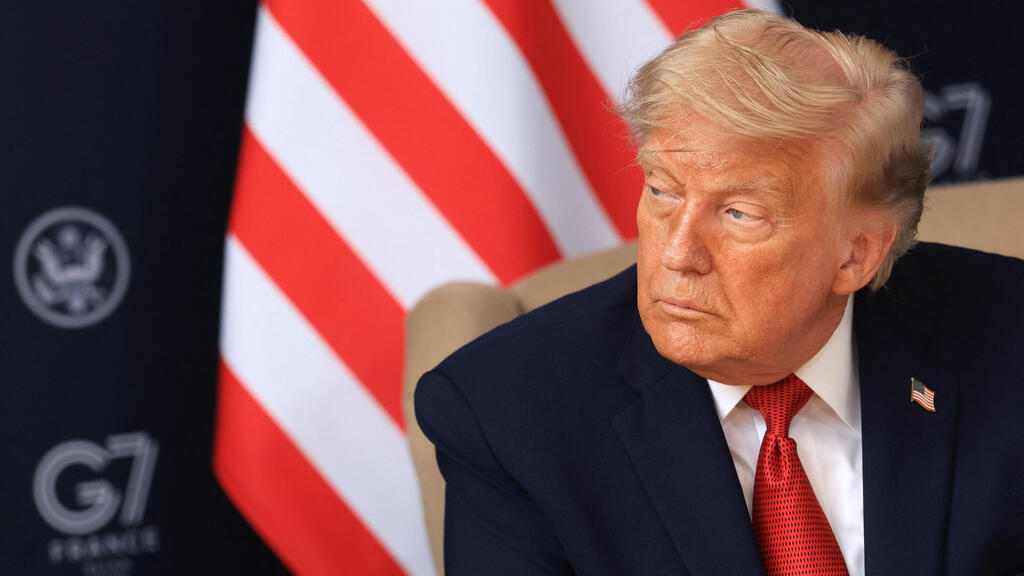
Playing 'bad cop': Trump at the G7 summit
(Photo: Anna Moneymaker / Getty Imags North America / AFP)
This appears to be a deliberate American strategy: Vance holds the carrot, Trump wields the stick. But politics also enters the equation. In recent days, Trump has faced sharp criticism both in Israel and in the United States over the memorandum of understanding with Iran. Critics argued that he granted Tehran a significant reprieve without addressing the core issues that have long concerned Israel and regional states: the ballistic missile program, continued support for terrorist organizations and Iranian proxy forces, and Iran’s attempt to establish a regional “ring of fire” around Israel.
Therefore, his recent remarks can be seen as an attempt at image repair. Trump sought to clarify that the agreement is not a final settlement but only a temporary extension of the cease-fire, that he still retains a military option, and that Iran could pay a heavy price if it violates the understandings.
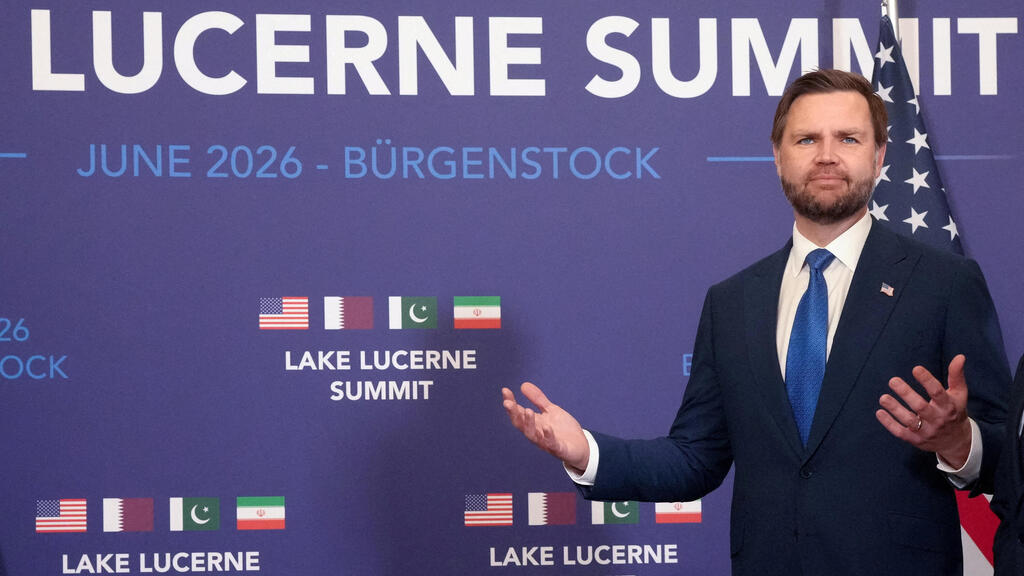
Vice President JD Vance at the US-Iran talks in Switzerland
(Photo: Nathan Howard / Pool / AFP)
What led to the shift in Trump’s position is a combination of several factors: a long conversation with Republican Senator Lindsey Graham and messages from Israel’s ambassador in Washington, Yechiel Leiter, who told the White House that the Iranians are encouraging Hezbollah to violate the cease-fire and attack, knowing that Israel will respond. In doing so, Tehran is trying to make the Americans angry at Israel, which it claims is “sabotaging the agreement,” and is seeking to extract additional concessions from Washington.
Graham said he spoke with Trump last week for four and a half hours and that he believes the agreement with Iran will fail. In a post he published, he explained what he believes will happen next: “Trump will take control of the Strait of Hormuz by force — and the United States will charge a fee from everyone who passes through it to fund the operation. We want diplomacy to succeed. But if Iran tries to test us, we will eliminate it.”
Graham went on to say that “during 2026 we will expand the Abraham Accords and try to bring Saudi Arabia into the Abraham Accords, which is a huge change in the Middle East. And if Iran challenges American control over the Strait of Hormuz — we will wipe it out. If Iran attacks Israel through Hezbollah in Lebanon — the new policy will be that we will attack Iran.”
Does not understand the Middle East
But in trying to fix the situation, Trump created a new problem. The part that particularly shocked Israeli officials was his comments on Lebanon. At a time when IDF soldiers continue to pay with their lives in the fight against Hezbollah, Trump chose to express disappointment that Israel is “unable to move” the terrorist organization, and even suggested that Syrian President Ahmed al-Sharaa could have done a better and more precise job.
From Jerusalem’s perspective, this is an unusual and even offensive statement. It ignores the heavy price Israel is paying in its ongoing fight against the Shiite organization, and also ignores the fact that Hezbollah is first and foremost a strategic arm of Iran, not a tactical problem that can be solved with additional local force in southern Lebanon. Not surprisingly, Israeli officials reacted with shock. As one Israeli official put it: “Complete delusion. We simply cannot understand him.”
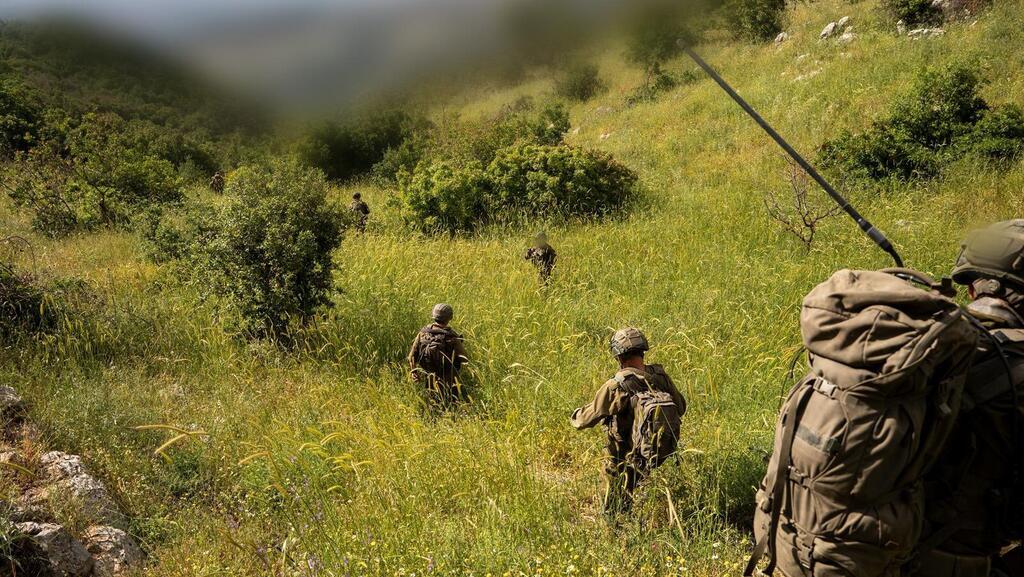
IDF operations in Lebanon
(Photo: IDF Spokesperson's Unit)
Beyond the Israeli offense, these remarks also expose Washington’s real concern — the fear that the emerging agreement with Iran could collapse because of the escalation in Lebanon. Trump is effectively sending a direct message to Tehran: if you want to maintain the understandings with us, make sure Hezbollah calms down. In his view, Lebanon has become a test of Iranian seriousness. If the proxy continues to escalate, it puts the entire diplomatic process at risk.
But this is also where the central flaw in his approach lies. Trump continues to view the Middle East through the lens of deals, leverage and personal threats. He believes that raising his voice, threatening forcefully and convincing the other side that the price will be too high is enough. But the regional reality is far more complex — Hezbollah is not always a switch that Tehran flips on demand. Not all crises in the region are solved through tweets, threats or 60-day deadlines. In the Middle East, words are not always a substitute for action.
Therefore, if Trump’s goal was to calm critics and prove he remains tough on Iran, he did succeed in projecting strength. But at the same time, he also harmed Israel, created confusion about American policy in Lebanon, and reinforced the perception that on many issues he still struggles to understand the true complexity of the Middle Eastern arena.
In other words: Trump tried to fix the impression left by the Iran agreement. He went to the media with a hammer in his hand, but instead of clarifying the picture, he mostly made it more distorted.