

Iran's supreme leader, Mojtaba Khamenei, has granted his government "certain powers" regarding peace talks with the United States, Iranian President Masoud Pezeshkian said Monday. He added that Tehran would "try to resolve the issue through dialogue."
The Wall Street Journal reported that talks between the U.S. and Iran through their main diplomatic channel, mediated by Qatar, have stalled. According to the mediators, the discussions are focused on which country should be the first to make concessions to move negotiations forward. Meanwhile, several Arab countries have warned Iran that they may retaliate, either jointly or individually, if it targets their infrastructure, the mediators said.
Gallery
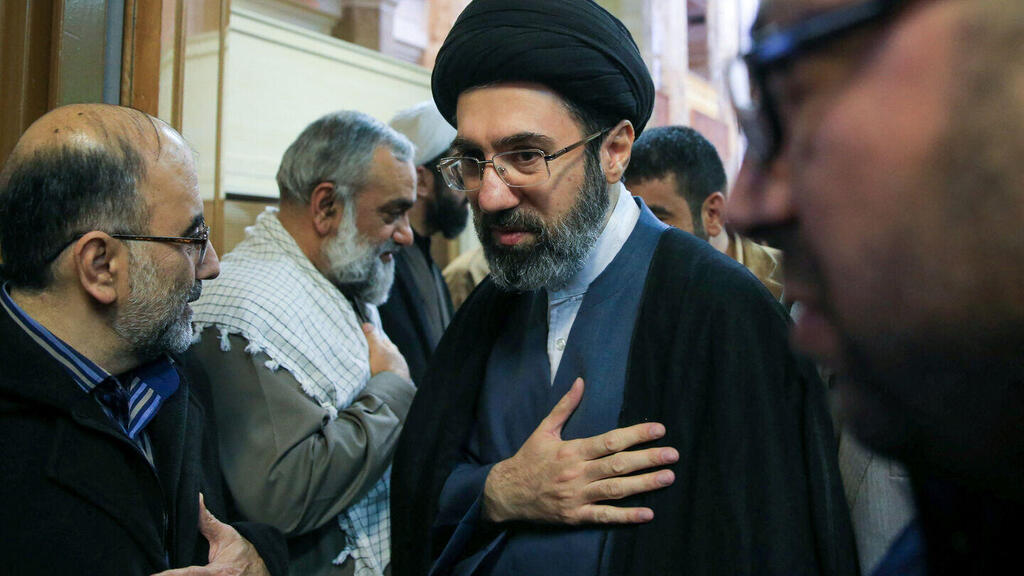
Supreme Leader Mojtaba Khamenei. Iran will not agree to transfer its enriched uranium abroad
(Photo: Rouhollah Vahdati/ISNA/WANA (West Asia News Agency)/AFP)
Iranian Foreign Minister Abbas Araghchi said the Islamic Republic was engaged in intensive consultations through mediators, including Qatar and Pakistan, in an effort to reach a possible agreement to reopen the Strait of Hormuz and resume negotiations with Washington.
"If the U.S. accepts our conditions, the Strait of Hormuz will reopen and negotiations will resume," Araghchi said.
Tehran said talks with Washington were continuing, even though days of discussions with Qatar ended without a breakthrough, but with revised proposals on the table.
"We are doing our best in this process, and we hope that there is rationality on the other side so that they prioritize diplomacy over other paths," Araghchi said.
Several Iranian sources said they believed U.S. military action was now a more likely scenario than reaching an agreement.
Iranian Foreign Ministry spokesman Esmaeil Baghaei said the talks were centered on Tehran's seven-point plan to end the war, which it submitted in September. He added that the plan had since been scaled back after U.S. President Donald Trump rejected it that same month.
However, Baghaei stressed that narrowing the proposal would not change Iran's fundamental position: Talks on its nuclear program could resume only after Tehran had confirmed that all its conditions had been met.
Asked whether the possibility of transferring the Islamic Republic's stockpile of enriched uranium to another country had been raised during negotiations, and whether Iran would agree to such a move, Baghaei said no.
Under the plan, the U.S. would end its naval blockade of Iranian ports, the Islamic Republic would reopen the shipping route through the Strait of Hormuz, Washington would permit Iranian oil sales and newly imposed sanctions on Iran would be lifted. The sides would then discuss additional issues.
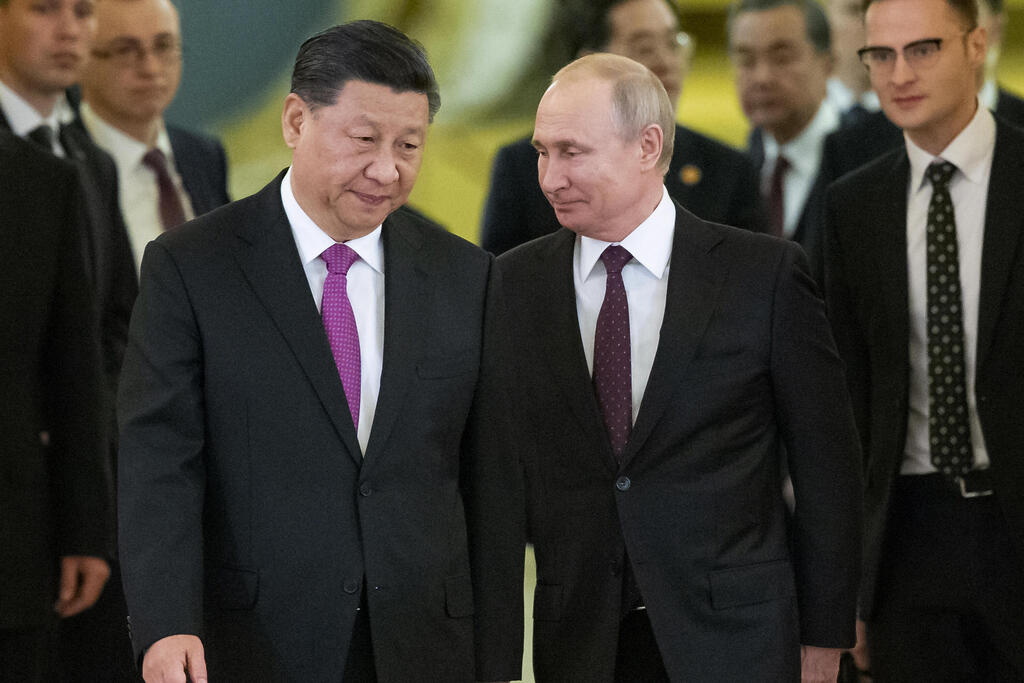
Opposed to renewed fighting: Chinese President Xi Jinping and Russian President Vladimir Putin
(Photo: SPUTNIK POOL, AFP Pool, Alexander Zemlianichenko, ALEXEI DRUZHININ / KREMLIN / SPUTNIK / POOL)
An official briefed on the talks said Iranian negotiators left on Sunday, but not because of difficulties in the negotiations. The official added that a draft proposal was being circulated, without providing further details.
Concerns in China, Russia and Iran
Amid concerns that fighting between the U.S. and Iran could resume after the U.S. midterm elections, which begin Tuesday, China and Russia voiced opposition to renewed military strikes in the Middle East.
Chinese Foreign Minister Wang Yi said all parties involved in the war should focus on political solutions rather than returning to hostilities. He made the remarks after meeting senior Iranian official Ali Bagheri Kani in Beijing.
Russia's Foreign Ministry also addressed developments in the Middle East, saying reports of renewed military activity against Iran were "a cause for great concern" and calling for intensified diplomatic contacts between the sides.
According to Iranian reports, Mohsen Rezaei, secretary of Iran's Supreme National Security Council, held a telephone conversation with Russian President Vladimir Putin as part of ongoing consultations between Tehran and Moscow, following recent meetings between senior officials from the two countries.
The two discussed the current regional and global situation, "with particular emphasis on the West Asia region," according to the reports.
In Tehran, residents expressed concern about the possibility of renewed fighting, with some describing a sense of helplessness.
Mohadese, a 27-year-old health inspector who lives in the Iranian capital, told AFP: "The news coming in is truly worrying. However… there is nothing I can actually do about it."
Other Tehran residents, including Ebrahim, a 48-year-old merchant from the city center, saw little reason for concern.
"We do not fear another war; we have been at war for 48 years now — we are always at war," he said.