


With less than two weeks until Israel's October 27 election, the battle to emerge as the country's largest party is getting underway, putting both political blocs on high alert. In the opposition's change bloc, Yashar party chairman Gadi Eisenkot has begun signaling his intentions, drawing criticism from other parties in the alliance. On the other side, Prime Minister Benjamin Netanyahu, who has so far concentrated on managing his political bloc and cooperating with Religious Zionism leader and Finance Minister Bezalel Smotrich, is receiving indications that Smotrich's party is no longer in danger of falling below the electoral threshold. Netanyahu is now turning his attention to expanding Likud's strength.
Both Netanyahu and Eisenkot want to emerge from the election with parties substantially larger than those of their political allies. As a result, their campaign messages are becoming increasingly personal rather than focused on strengthening their respective blocs. Each, however, has a different reason for adopting that strategy.
Gallery
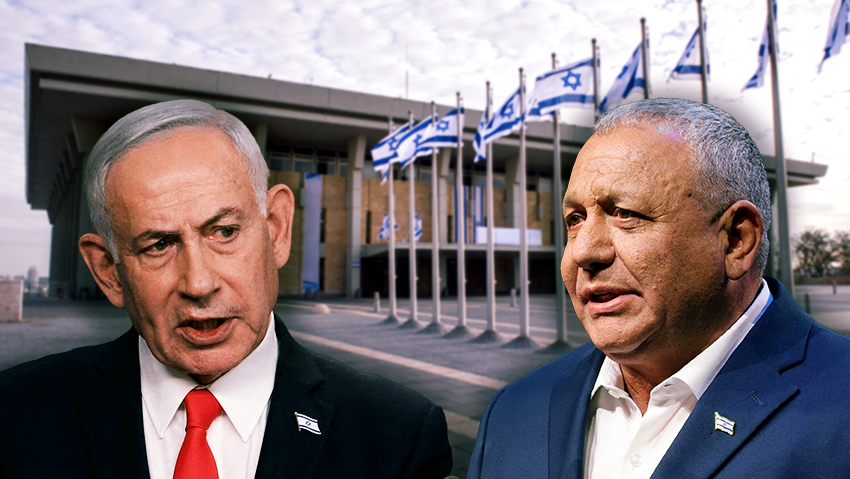
Prime Minister Benjamin Netanyahu and Yashar party chairman Gadi Eisenkot
(Photo: shutterstock, REUTERS/Ronen Zvulun, AP Photo/Ariel Schalit)
For Eisenkot, who is still contending with fellow opposition leaders unwilling to endorse him as their candidate for prime minister, the challenge is particularly important. If the Yashar chairman hopes to receive the mandate from President Isaac Herzog to form the next government, despite the objections of other figures in his bloc, he believes he must emerge as the clear leader of its largest party.
But his allies are warning of a significant risk: Eisenkot's campaign could weaken the opposition bloc as a whole. He may succeed in winning a large number of Knesset seats for his own party while drawing votes away from other opposition parties, leaving the bloc collectively worse off.
Netanyahu faces a very different situation. His leadership of the right-wing bloc is not in dispute, nor is the expectation that he would be the bloc's candidate to form a government after the election. His concern is instead the bargaining power of his potential coalition partners, particularly Otzma Yehudit chairman and National Security Minister Itamar Ben-Gvir.
Netanyahu is seeking to weaken Ben-Gvir politically to prevent him from demanding senior cabinet portfolios, particularly the Defense and Justice ministries, both of which Ben-Gvir has identified as targets in his election campaign.
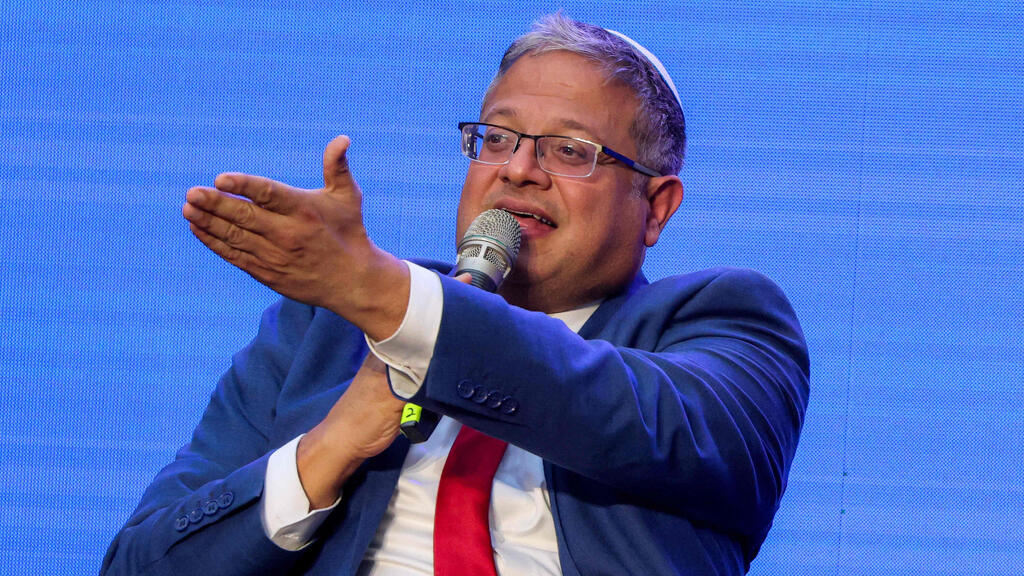
National Security Minister Itamar Ben-Gvir
(Photo: Jack GUEZ / AFP)
This week, hundreds of thousands of coordinated, paid text messages were distributed to voters as part of the largest-party campaign. The messages presented a poll asking whether recipients would support Likud or Eisenkot. Likud has identified Eisenkot as a principal rival since the beginning of the campaign and believes the contest between the two will become increasingly pronounced as election day approaches.
Opposition leaders, meanwhile, are working intensively to prevent the election from turning into a two-man race.
Avigdor Liberman, Naftali Bennett and Yair Golan understand that such a contest could reduce their parties to significantly fewer seats than current polls suggest. Each is therefore sharpening his campaign messages and targeting a different segment of the electorate to prevent a last-minute shift toward Eisenkot.
Golan and his Democrats party are significantly expanding their activity among left-wing voters and in Arab communities, where they believe substantial electoral potential remains.
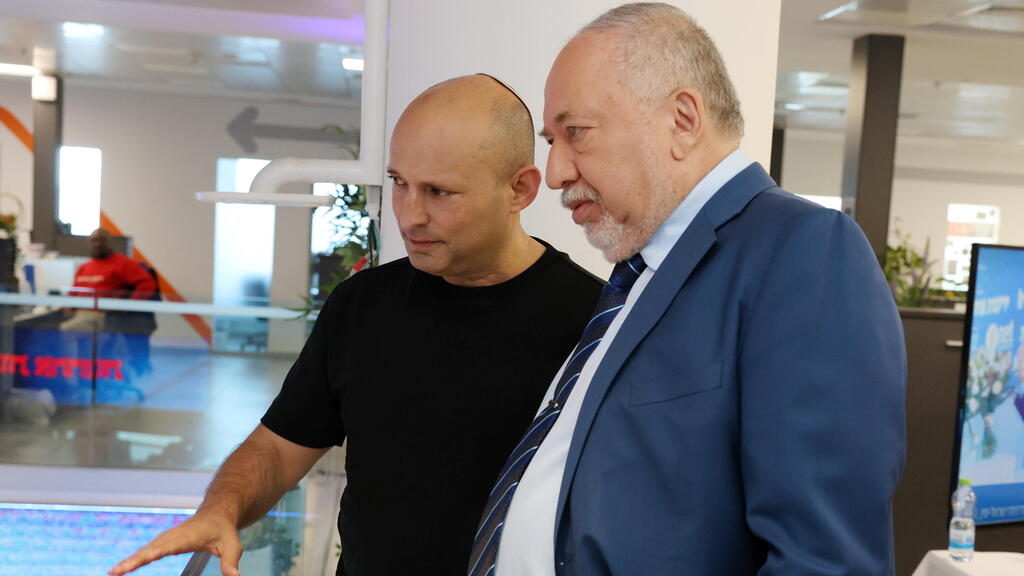
Avigdor Liberman and Naftali Bennett
(Photo: Shaul Golan)
Bennett is focusing on cities traditionally considered Likud strongholds, seeking to attract voters disappointed with Netanyahu as well as those who remain undecided.
Liberman, meanwhile, is appealing to right-wing voters and trying to win support from the religious Zionist electorate. His candidate list includes a relatively high proportion of religiously observant Jews and former Likud voters, a composition intended to strengthen his appeal among those groups.
On Thursday, Liberman sharpened his message that he would not support a minority government of the kind Eisenkot intends to establish. The declaration forms part of Liberman's effort to communicate with Likud's core electorate and other firmly right-wing voters.
The resulting campaign presents both leading candidates with a strategic gamble. Eisenkot hopes a decisive advantage over his allies will establish him as the opposition's undisputed candidate to lead the next government, even if that means taking votes from parties he would need as coalition partners. Netanyahu, whose leadership of his bloc is already secure, wants a larger Likud faction to reduce the leverage of Ben-Gvir and other potential coalition partners in negotiations over the next government.