


The United Nations has significantly expanded its database of companies it says conduct business activities linked to settlements in the West Bank, adding 61 new companies to its “blacklist.”
Among the new additions are some of the best-known companies in the Israeli economy, including Tnuva, Netafim, Taavura, Africa Israel, Alony Hetz, Energix and Maman Cargo Terminals. Companies behind well-known consumer brands were also added, including Aroma Espresso Bar, Burgeranch, Café Joe and Carmel Winery, as well as English Cake and Teperberg Winery.
For the full list — click here
Also added were agrochemical giant ADAMA, which appears on the list through both its Israeli company and the Chinese company ADAMA Ltd., and Mexico’s Orbia, which owns 80% of Netafim. Other additions include Meshek Energy, Teralight, Hagihon, Psagot Winery, Jerusalem Wineries and the City of David. Hadiklaim, the Israeli Date Growers Cooperative, returned to the list just one year after the UN removed it.

The new database contains a total of 214 companies from 11 countries, compared with 158 last year. Five companies were removed. Prominent international companies including Airbnb, Booking.com, Expedia, TripAdvisor and Motorola remain on the list.
Israel condemned the database, calling it a “political tool” and a “distorted mechanism” that it said was being used to wage a smear campaign against companies that have committed no wrongdoing.
The “blacklist” was first published about six years ago and also includes various banks, cellular and internet providers and public transportation companies. Other well-known companies on the list include Delta, Electra, Mekorot, Rami Levy, Shikun & Binui and Shufersal.
The updated report said it “provides an update of the database following the review of allegations concerning an additional group of 126 business enterprises, identifies business enterprises involved in activities related to Israeli settlements in the Occupied Palestinian Territory, and reflects the outcome of the analysis undertaken by the Office of the United Nations High Commissioner for Human Rights regarding the nature of the involvement of the listed business enterprises, applying the ‘involvement framework’ in accordance with the Guiding Principles on Business and Human Rights.”
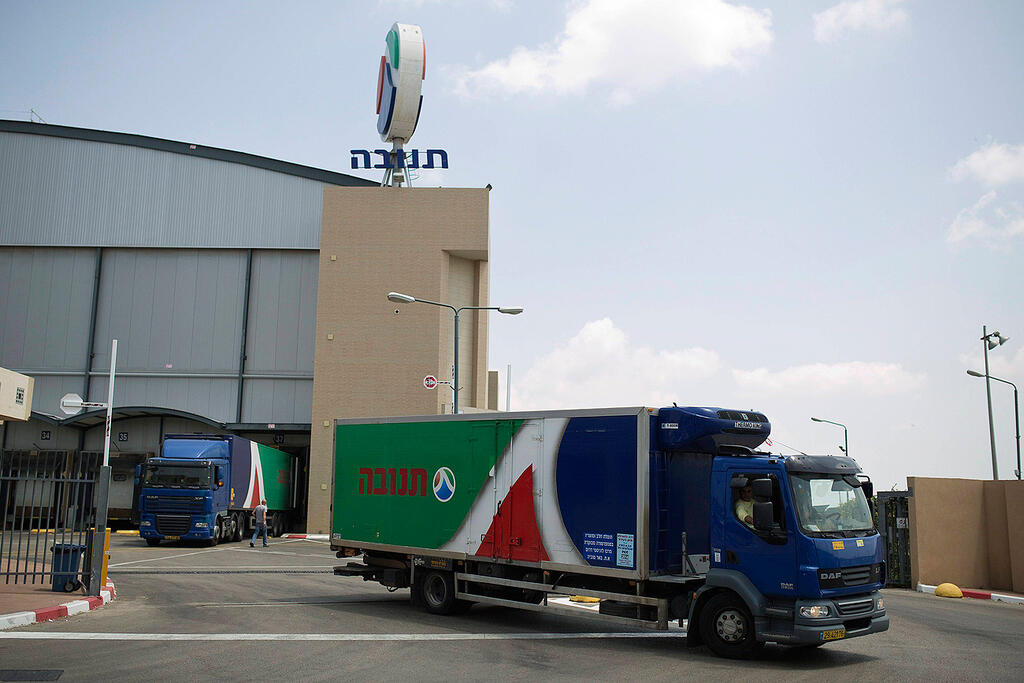
Added to the list: Tnuva
(Photo: Reuters)

Aroma Espresso Bar
(Photo: Yariv Katz)
The report also noted that the request to compile the original database was made by the UN Human Rights Council, following "the independent international fact-finding mission to investigate the implications of the Israeli settlements on the civil, political, economic, social and cultural rights of the Palestinian people”
That mission identified the following activities by companies as raising particular concerns:
- The supply of equipment and materials facilitating the construction and the expansion of settlements and the wall, and associated infrastructure;
- The supply of surveillance and identification equipment for settlements, the wall and checkpoints directly linked with settlements;
- The supply of equipment for the demolition of housing and property, the destruction of agricultural farms, greenhouses, olive groves and crops;
- The supply of security services, equipment and materials to enterprises operating in settlements;
- The provision of services and utilities supporting the maintenance and existence of settlements, including transport;
- Banking and financial operations helping to develop, expand or maintain settlements and their activities, including loans for housing and the development of businesses;
- The use of natural resources, in particular water and land, for business purposes;
- Pollution, and the dumping of waste in or its transfer to Palestinian villages;
- Captivity of the Palestinian financial and economic markets, as well as practices that disadvantage Palestinian enterprises, including through restrictions on movement, administrative and legal constraints;
- Use of benefits and reinvestments of enterprises owned totally or partially by settlers for developing, expanding and maintaining the settlements.
Among the conclusions published in the report, it said states should “fully respect their legal obligations under international law; implement their duty to protect and ensure respect for human rights; [and] act with diligence to ensure that business enterprises operating in conflict-affected areas are not involved in or otherwise materially contributing to serious human rights violations or abuses.”
The report also said businesses should “meet their own responsibility to respect human rights under widely accepted international standards; here business enterprises are involved in listed activities, they should take appropriate action to address the adverse human rights impacts with which they are involved; [and] the responsibility to respect human rights requires that business enterprises have in place policies and processes through which they can both know and show that they respect human rights in practice.”