


The United States is urging European countries to contribute troops to a planned international security stabilization force for Gaza, Israeli and U.S. officials said, as Washington faces difficulty recruiting soldiers from Arab and Muslim nations.
The force is envisioned as part of the second phase of President Donald Trump’s “20-point” plan for Gaza, with deployment expected to begin early next year. An Israeli senior official said the original idea of relying solely on Arab and Muslim countries has been broadened, and at least one European country has expressed willingness to send troops. U.S. officials are now seeking additional European commitments.
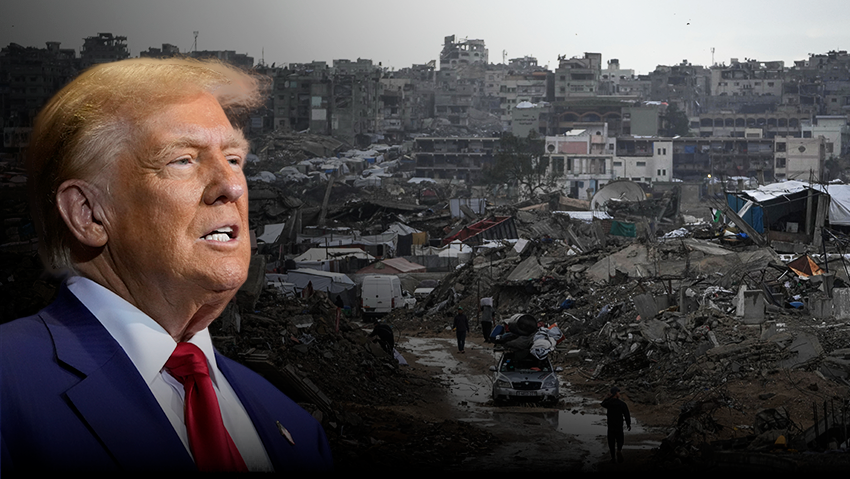
(Photo: AP Photo/Alex Brandon, AP Photo/Jehad Alshrafi)
Several European governments have offered training, advisory support or funding but remain wary of deploying troops over concerns about possible confrontations with Hamas, designated by Israel and the United States as a terrorist organization. Planners say the force would initially deploy in limited areas, such as parts of Rafah and other locations where Hamas’ presence is assessed to be lower and where local populations are less aligned with the group.
According to a Wall Street Journal report, U.S. officials hope to recruit about 5,000 troops by early next year, with the force potentially expanding to 10,000 by the end of 2026. The U.S. State Department has approached more than 70 countries to seek military or financial contributions, and officials say 19 countries have so far expressed interest in participating in some capacity.
Washington aims to begin deploying the force as early as next month, initially in areas under Israeli control. Despite the accelerated timeline, many countries remain reluctant to commit troops, even though the mission is not intended to directly fight Hamas.
U.S. Central Command will host a planning conference in Doha on Tuesday with representatives from more than 25 countries to discuss the force’s structure and command arrangements, according to two U.S. officials who spoke on condition of anonymity. A U.S. general, yet to be named, is expected to command the force.
“There is a lot of quiet planning happening behind the scenes ahead of phase two,” White House press secretary Karoline Leavitt said this week. “The goal is to ensure a durable and sustainable peace.”
Prime Minister Benjamin Netanyahu has voiced skepticism about the force’s ability to carry out Gaza’s core security tasks. Speaking earlier this week, he said Israel’s allies were interested in establishing an international force but acknowledged limits to what it could accomplish.
Netanyahu said he plans to discuss the next phase of the plan with Trump when the two meet later this month, adding that broader regional normalization agreements remain a key strategic goal for Israel.