


On Monday, when IDF Chief of Staff Eyal Zamir reportedly described the "Yellow Line"—the security perimeter currently bisecting the Gaza Strip—as a "forward defensive line," the condemnation was immediate.
The United Nations and various Western chancelleries view this demarcation as a violation of territorial integrity, a prelude to permanent occupation, and an obstacle to the theoretical "Day After" unification of the enclave.
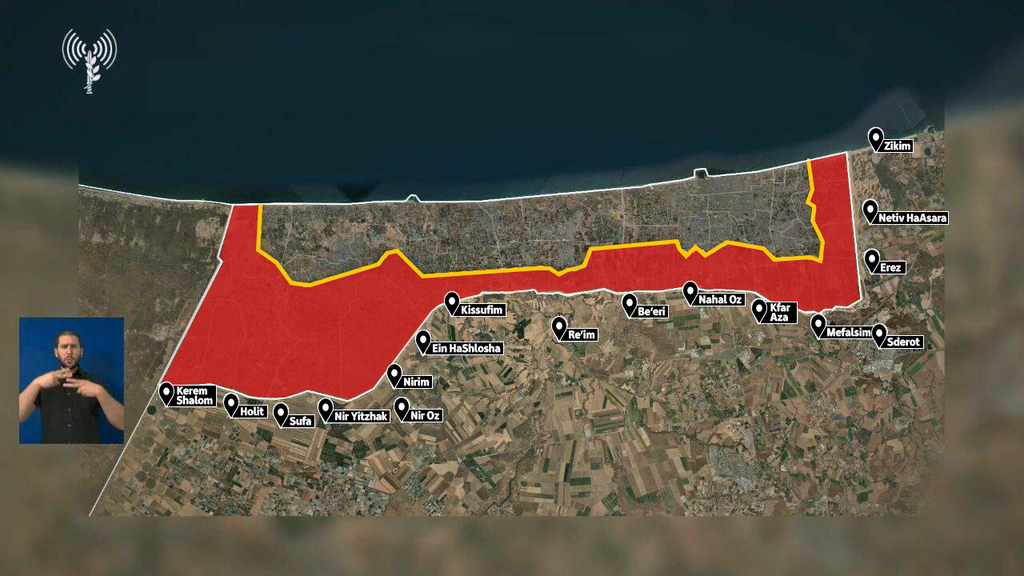
This outrage betrays a fundamental misunderstanding of counter-insurgency (COIN) dynamics in a hyper-dense urban theater. The Yellow Line is not a political border designed for annexation; it is an operational necessity designed for sanitation. It represents the shift from a failed doctrine of "containment" to a necessary doctrine of "active segmentation."
For two decades, Western policy regarding Gaza was predicated on the "perimeter defense" model. The assumption was that a high-tech fence on the 1967 armistice line, combined with economic inducements, would contain the threat. October 7 demonstrated the catastrophic failure of that binary approach. We learned that allowing a terror state to metastasize just meters from civilian communities creates an intolerable risk. The Yellow Line corrects this strategic depth deficit. It acknowledges that security cannot be maintained from the outside looking in; it requires internal lines of control that prevent the adversary from achieving strategic mass.
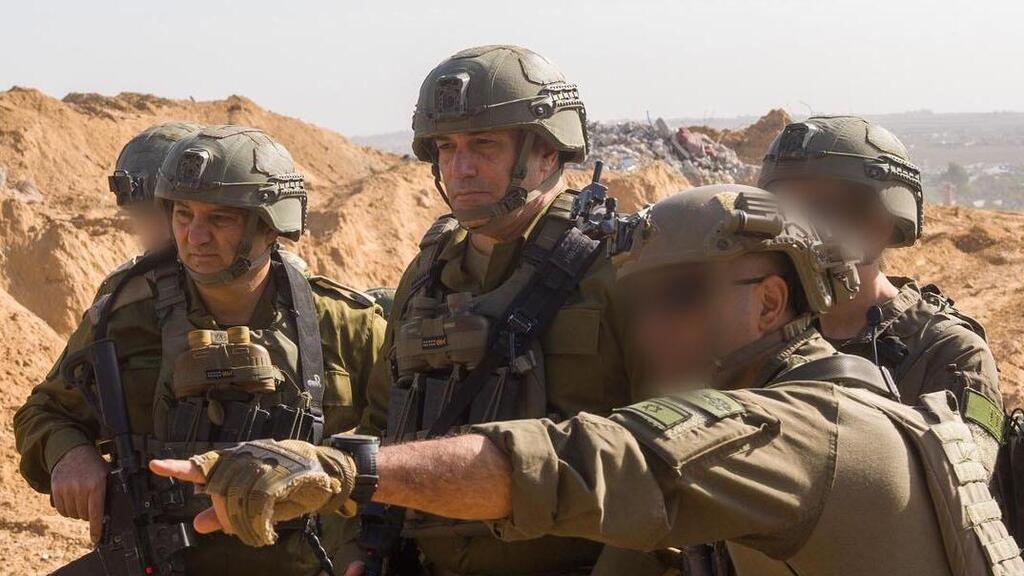
IDF Chief of Staff Eyal Zamir
(Photo: IDF)
Critics who argue for an immediate IDF withdrawal to the pre-war lines are effectively arguing for the restoration of the vacuum that Hamas filled in 2007. If the IDF withdraws its forward positions today, there is no "revitalized" Palestinian Authority capable of stepping into the breach. The only organized force with the logistical capacity and the will to seize control of the northern sector is the remnant of the Hamas battalions, currently melting into the civilian population.
Without the Yellow Line to physically segment the Strip, these dispersed cells would rapidly reconnect. The line functions as a crucial "firebreak," preventing the movement of men and materiel between the southern humanitarian zones and the northern security sectors. It denies the enemy the interior lines of communication necessary to reconstitute their brigades. From a strictly military standpoint, removing this segmentation before the total capitulation of Hamas would be operational malpractice.
Furthermore, the Yellow Line is the only mechanism that makes the inspection of dual-use materials feasible. We have seen repeatedly that "remote monitoring" of aid is a failure. Without physical choke points where the IDF can inspect vectors of entry and internal movement, the reconstruction of Gaza will inevitably become the reconstruction of the Hamas tunnel network. The Yellow Line creates a sterile field where aid can be vetted and distributed without being commandeered by the syndicate that caused this war. It is a filter, ensuring that cement goes to housing foundations rather than attack shafts.
The diplomatic obsession with the "Day After" often ignores the reality of the "Day Present." Stabilization is impossible without security, and security in a post-conflict zone requires area denial. The Yellow Line provides the IDF with the operational flexibility to conduct intelligence-driven raids against re-emerging threats without necessitating a full-scale re-invasion of the entire territory every few months. It transforms the conflict from a high-intensity war into a manageable security operation, which is the only environment in which any alternative civil administration could survive.
 Amine Ayoub
To demand the dismantling of the Yellow Line is to demand that Israel voluntarily surrender its leverage and its security for a return to the status quo ante. That is not a policy for peace; it is a recipe for a third war. The line serves as a physical declaration that the era of "containment" is over.
The Yellow Line will likely remain until the reality on the ground changes fundamentally. It is not a permanent punishment of the Palestinian population, but a permanent protection against the terror infrastructure that holds them hostage. If the international community wants the line to fade, they should stop pressuring Israel to withdraw and start pressuring Hamas to surrender. Until the ideology that necessitated the Yellow Line is eradicated, the line must hold.
- Amine Ayoub, a Middle East Forum fellow, is a policy analyst and writer based in Morocco.