

A threatening message aimed at former IDF chief Gadi Eisenkot was recently left on the grave of his son Gal, who was killed fighting in Gaza in December 2023, Eisenkot revealed for the first time in an interview with Yedioth Ahronoth. “Someone made the effort to go to the cemetery and leave a threatening message aimed at me on Gal’s grave,” said Eisenkot, who now heads the Yashar! party. “I debated what to do about it, and in the end I decided to do nothing. At this stage of my life, it is very difficult to frighten me.”
The revelation came during an interview in which Eisenkot also made serious allegations over the record of Prime Minister Benjamin Netanyahu’s conduct before the October 7 massacre. He said he suspects documents provided to investigators were falsified. “I see something here with potential criminal implications,” Eisenkot said. “In my assessment, reports were falsified.”
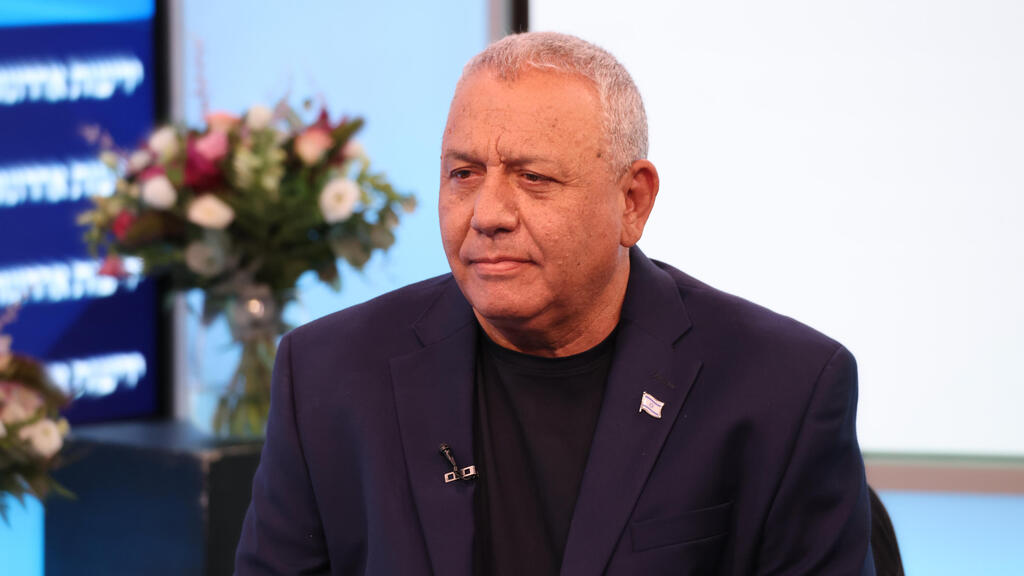
Eisenkot said his suspicions were based partly on material provided to the state comptroller, which he compared with information he had seen as a member of Israel’s wartime Cabinet and a parliamentary intelligence subcommittee. “When I take what was distributed to the state comptroller, and I know as a Cabinet member and a member of the intelligence subcommittee what material was there, I have a very deep suspicion of document falsification,” he said. “In my view, this is a document that someone cooked.” His allegations have not been established as fact, and the material presented does not identify who may have altered any document.
The document on Netanyahu’s desk
One document at the center of the dispute concerns possible action against Hamas’ senior leadership. According to the material cited in the interview, it was prepared by Netanyahu’s military secretary following a security assessment convened by the prime minister on October 1, 2023, six days before the Hamas-led attack. It included the instruction: “Advancing operational readiness for the recommended targeted killings, Hamas leaders, with emphasis on an emergency scenario.”
The document appears to indicate that senior security officials had recommended preparing for strikes against Hamas leaders shortly before October 7, potentially conflicting with Netanyahu’s account of what he was told before the massacre. Eisenkot also said he believes Netanyahu’s opposition to a state commission of inquiry stems from a desire to avoid scrutiny over the information available to his office before the attack. A broader investigation by Yedioth Ahronoth journalists Ronen Bergman and Yuval Rubovitch into Netanyahu’s version of events is due to appear in the newspaper’s 7 Days weekend supplement.
‘My youngest son will fight there’
The interview then turned personal when Eisenkot produced an April 2004 article from Yedioth Ahronoth, written when he was a young brigadier general commanding IDF forces in the West Bank.
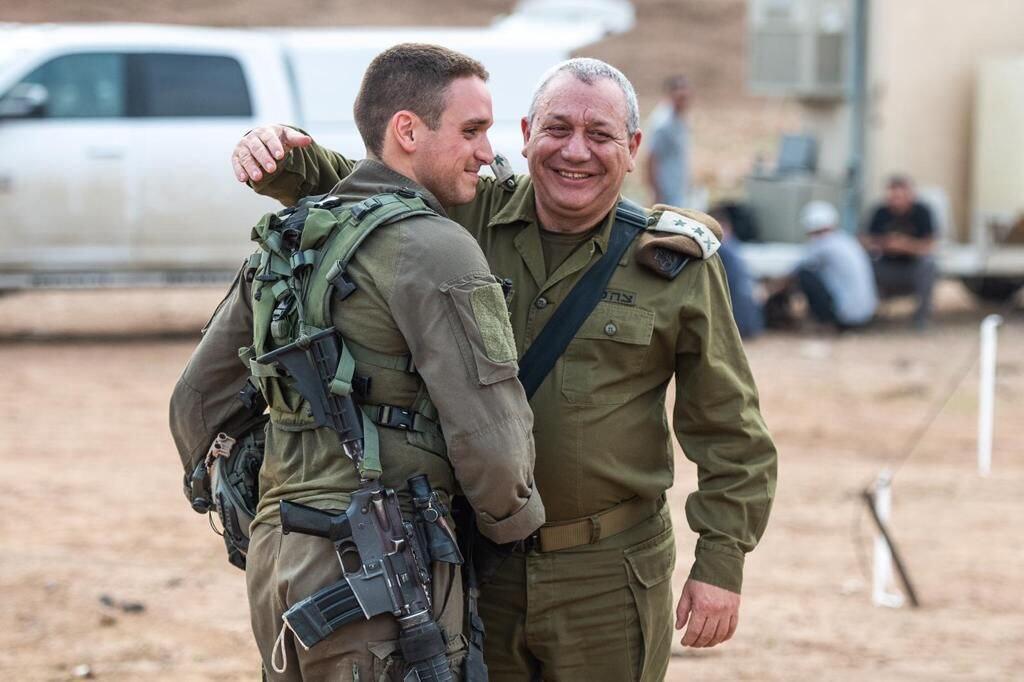
Gadi Eisenkot and his son Gal in 2018
“Terrorism will continue for many more years,” he said at the time, before adding: “The bitter truth is that there is no ‘total victory’ in this struggle. Our role is to minimize Palestinian achievements.”
He made another prediction in that interview that would later prove painfully personal: “I expect that even my youngest son, who is now 5, will fight in the West Bank or Gaza.” That child was Gal Meir Eisenkot, who was killed nearly two decades later while fighting in Gaza. Now, Eisenkot says, even his son’s grave has become a target in the political battles surrounding him.