

President Donald Trump has reportedly put on hold a strike he had been considering against Iran. The largest protest movement ever seen against the ayatollahs’ regime has ebbed after a brutal crackdown on thousands of demonstrators. Yet even this evening, Friday, Iran’s internet remains shut down by the authorities for an eighth consecutive day.
The prolonged blackout has made it difficult for international media to gain a clear picture of events on the ground. Still, international news agencies report that the protests appear to have been successfully suppressed by the regime, with no significant demonstrations recorded in Iran for several days, only sporadic and relatively small protests.
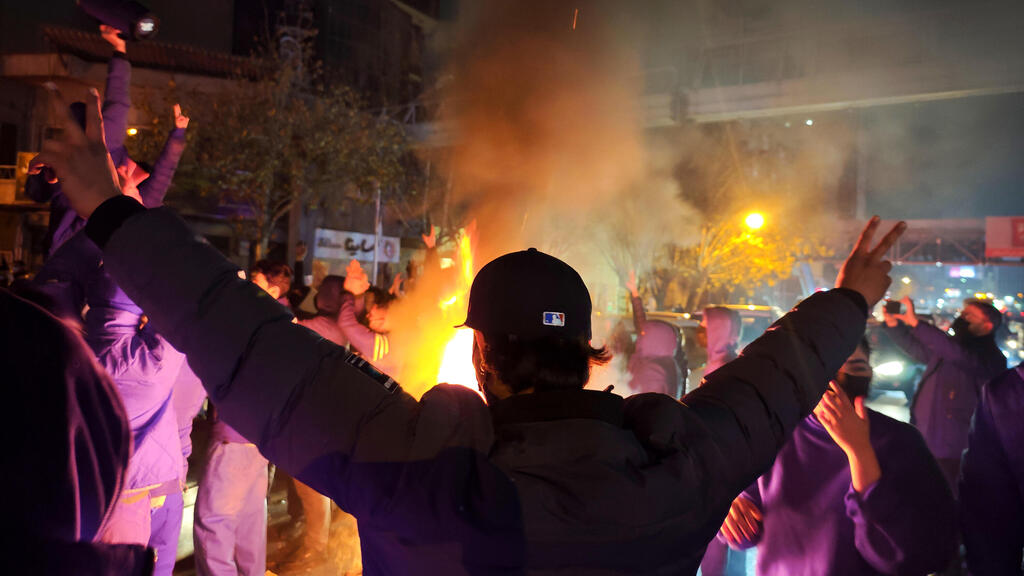
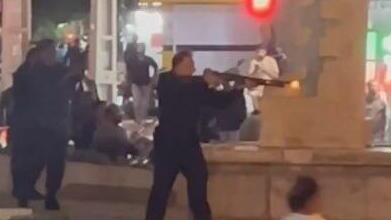
Footage of gunfire at demonstrators in the city of Kangan in southern Iran last week
Despite the extended internet shutdown, Reuters reported on Friday that it managed to speak with several residents of Tehran, who said the city has been “quiet” since Sunday. They said drones can still be seen flying overhead, apparently as part of the authorities’ surveillance efforts to locate protesters and disperse them immediately, often violently. Human rights organizations reporting from outside Iran stressed that there is a heavy security presence in cities that is preventing demonstrations from taking place. Reuters noted that small protests are likely still occurring in a few locations, and that the authorities themselves reported the arson of a government facility yesterday in the Isfahan area.
The Institute for the Study of War, a US-based research institute that provides reporting on developments in Iran, also said Friday that the protests have likely been suppressed “for the time being.” However, it deliberately stressed that maintaining the heightened presence of Iranian security forces deployed to the streets, particularly members of the Revolutionary Guard Corps and the Basij volunteer militia, cannot continue for long. That could eventually allow the protests to resume, the institute said.
It remains unclear exactly how many people were killed in the crackdown, but it is already evident that the number stands in the thousands. Iran Human Rights, a Norway-based organization, said its activists have verified the deaths of 3,428 protesters, while warning that the true number may be far higher. Other unverified reports have put the figure at as many as 12,000.
In any case, these numbers dwarf the death tolls of all previous waves of protests against the ayatollahs’ regime, and recall only the period of repression in the early years after the 1979 Islamic Revolution, when the regime executed thousands of opponents as part of consolidating its rule. Mahmood Amiry-Moghaddam, director of Iran Human Rights, accused the authorities of committing, on the direct orders of Supreme Leader Ali Khamenei, “one of the greatest crimes of our time.” He said he had received horrific testimonies of protesters being shot while trying to flee, of the use of military weapons against demonstrators, and of wounded protesters who were later executed in the streets.
Lama Fakih, a senior official at Human Rights Watch, said the crimes committed by the regime over the past week are “unprecedented” in the current century.
The wave of protests in Iran erupted on December 28 as a spontaneous protest by merchants in Tehran’s bazaar over runaway inflation and the sharp devaluation of the currency. These developments have made it increasingly difficult for citizens, already suffering from more than 20 years of Western sanctions over Iran’s nuclear program, to buy food and basic goods. The protests gradually gained momentum and, as in previous protest movements, such as the 2022 hijab protests sparked by the death of Mahsa Amini after her arrest by Tehran’s morality police, or the 2019 protests over a spike in fuel prices, they quickly turned into demonstrations against the ayatollahs’ regime itself and against the widespread suppression of civil and human rights under the Islamic law it strictly enforces.
Large crowds of protesters chanted slogans including “Death to the dictator,” directed at Supreme Leader Ali Khamenei, and “This is the final battle. Pahlavi will return,” referring to the exiled crown prince Reza Pahlavi, son of the shah who was toppled in the 1979 Islamic Revolution.
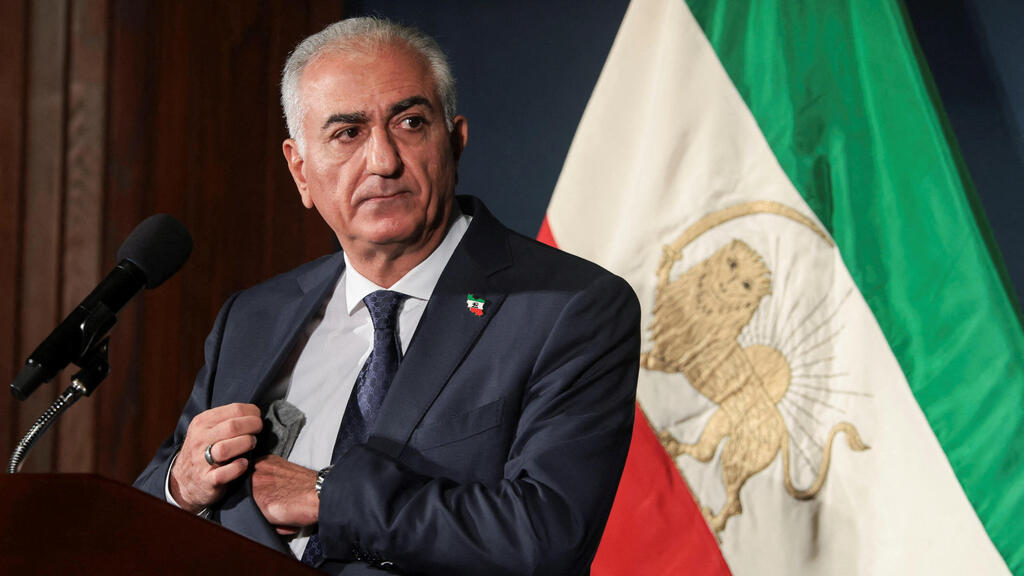
Reza Pahlavi at the press conference he convened this evening
(Photo: REUTERS/Jonathan Ernst)
The significant escalation began last Thursday, when masses responded to Pahlavi’s call and took to the streets at exactly 8 p.m. A European diplomat told the opposition channel Iran International on Friday that at least 1.5 million people took part in demonstrations that day. That evening, the internet was shut down across the country and has not been restored since, eight days later, although there have been reports in recent days of limited easing that allowed Iranians to place international calls.
Iranian media have signaled that the internet blackout will continue for at least several more days, and possibly longer, likely reflecting fears that the protests could resume, especially since the economic hardship that fueled the unrest has not been resolved. That hardship could likely be addressed only if Iran reaches a new nuclear deal with the United States that would lead to the lifting of crushing sanctions, an agreement whose talks may now resume following the removal of the immediate threat of a US strike.
The exiled prince Pahlavi, who, unlike in past protests, emerged this time as a relatively prominent figure in the movement but is still viewed as controversial by some Iranian exiles and regime opponents who remember the repression under his father, called on the world to act quickly to support the protest movement. The ayatollahs’ regime, he said at a news conference, “is on its last legs, it is about to collapse, and the free world must act now in the face of this brutal repression. Instead of talking, we need you to act.”
He expressed hope that President Trump, who promised protesters that “help is on the way” but has so far appeared to back away from military action, would keep his word and provide the necessary assistance.
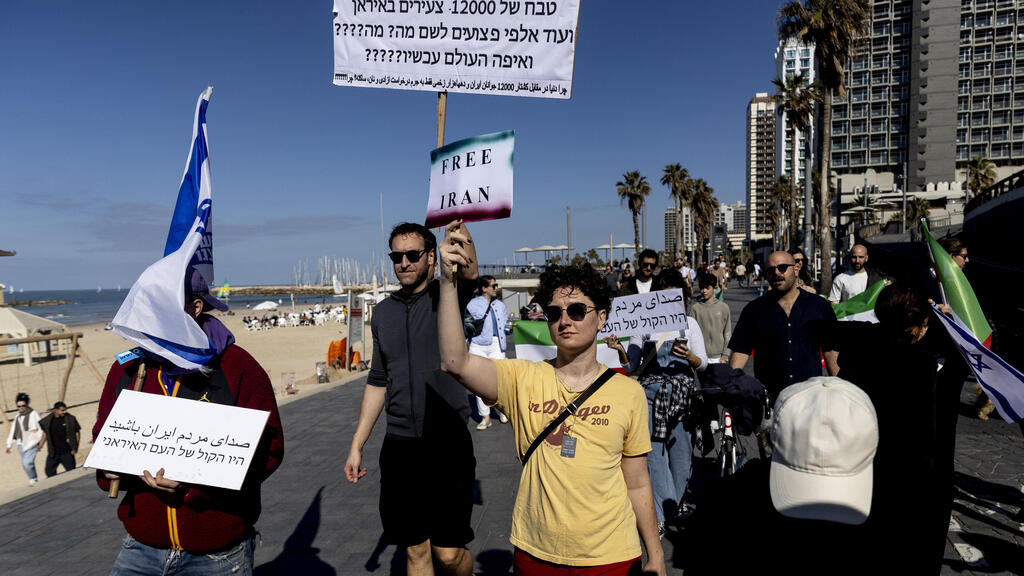
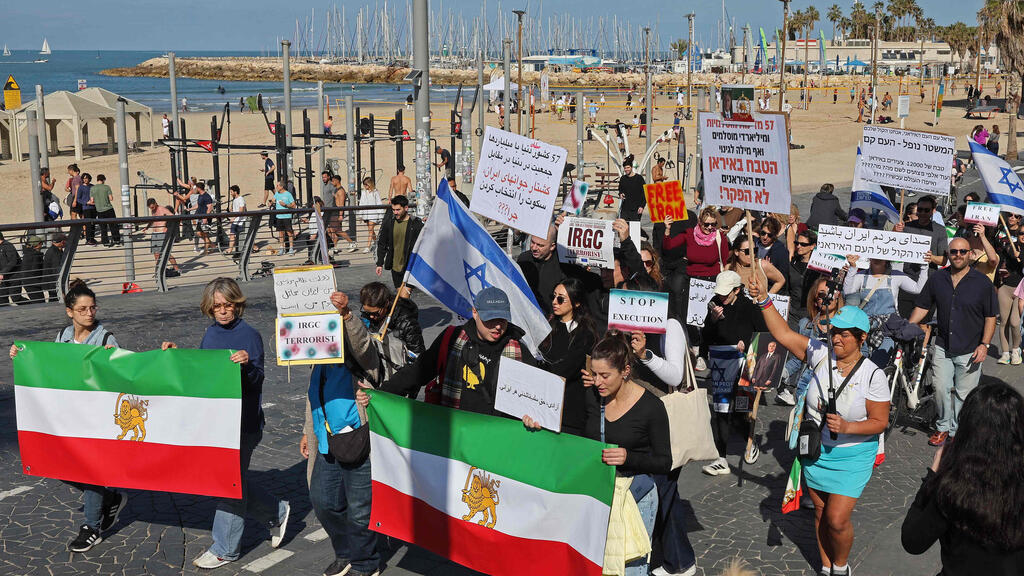
A demonstration in support of Iranian protesters, held this morning in Tel Aviv
(Photo: Amir Levy/Getty Images)
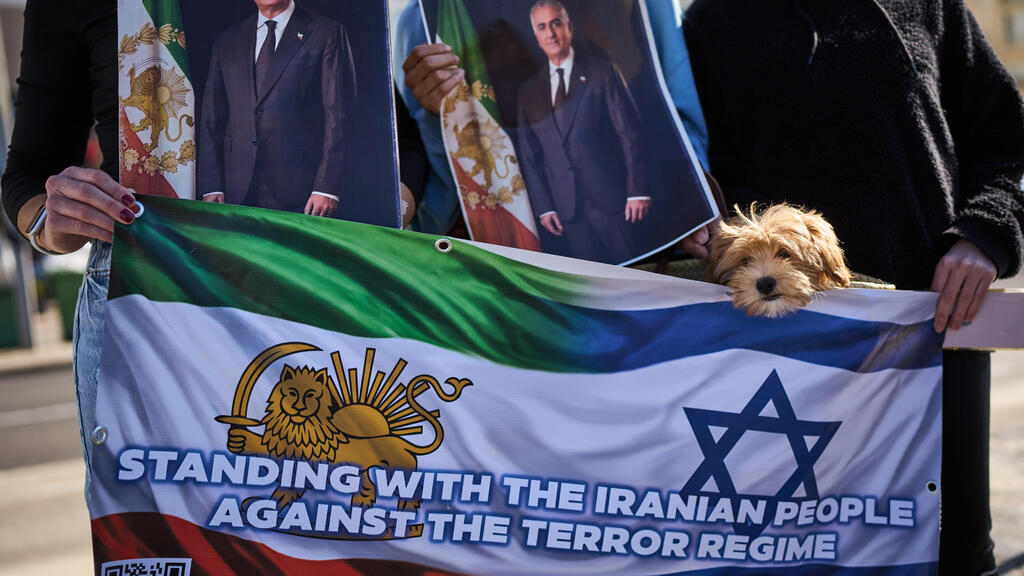
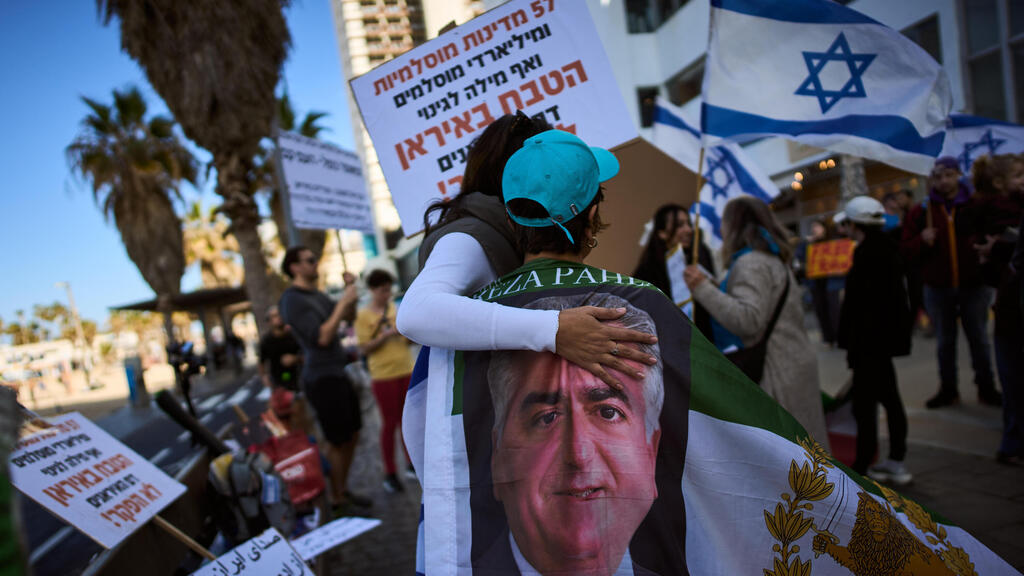
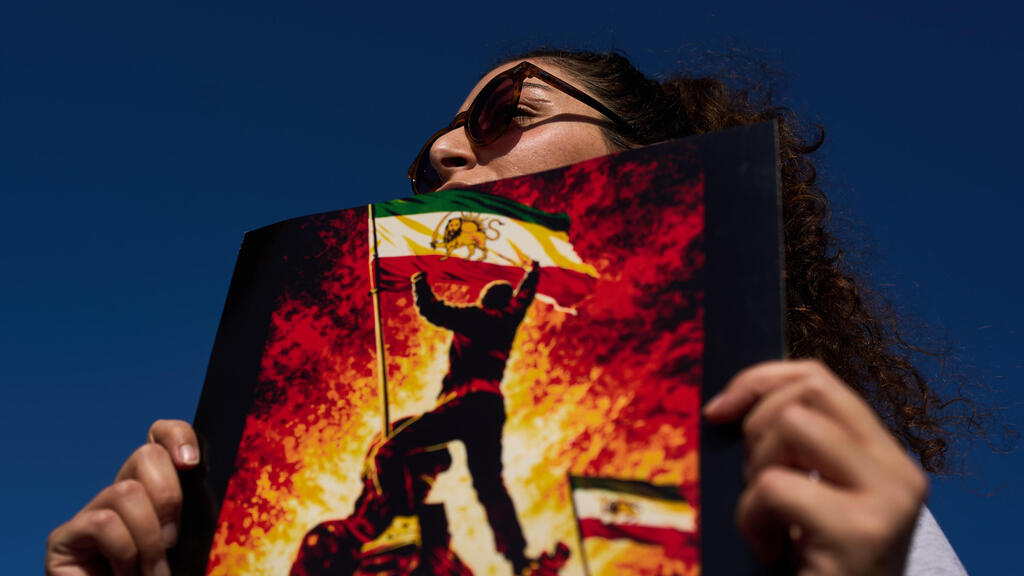
The Israeli flag and the shah’s flag were flown together in Tel Aviv
(Photo: AP Photo/Oded Balilty)
(Photo: AP Photo/Oded Balilty)
(Photo: Amir Levy/Getty Images)
(Photo: AP Photo/Oded Balilty)
Pahlavi said it was now impossible to deny that the Islamic Republic does not represent Iran, describing it instead as a foreign occupying force that has hijacked the country. He argued that after intervening militarily in multiple countries and spreading instability across the region, the regime had effectively turned that aggression inward, using foreign fighters, including Hezbollah operatives, Iraqi militias and other mercenaries, to kill Iranian citizens.
He said the situation had gone beyond repression and amounted to an occupation cloaked in religion. Drawing comparisons to Saddam Hussein and Bashar Assad, Pahlavi accused Supreme Leader Ali Khamenei of committing mass crimes against his own people and against humanity, and predicted that the Islamic Republic would ultimately collapse, saying it was only a matter of time. He stressed that the struggle in Iran was no longer about reform versus revolution, but about occupation versus liberation, and said the Iranian people had already made their choice, remaining defiant despite the bloodshed.
The Iranian regime, which at the start of the protests attempted to placate demonstrators and promoted a series of limited measures to improve economic conditions, has since the escalation been careful to portray protesters as “rioters” and “terrorists” allegedly spreading destruction in the service of Israel and the United States. On Friday, the authorities claimed that 3,000 protesters were arrested during the unrest, although human rights organizations say the number exceeds 19,000.
Despite Trump’s warning that the United States would respond harshly if Iran executes protesters, Ayatollah Ahmad Khatami, a senior cleric appointed by Khamenei to lead Friday prayers in Tehran, called on Friday for the execution of protesters, whom he described as “servants” of Prime Minister Benjamin Netanyahu and “Trump’s soldiers.”
In his sermon, Khatami, who is also a member of the Guardian Council and Iran’s Assembly of Experts, two highly influential bodies within the regime’s power structure, promised that revenge for the alleged foreign involvement in the protests would come. “They should await a severe revenge,” said Khatami, who has for years taken an especially hawkish line against Israel and the United States and in 2007, for example, promised to “wipe Tel Aviv and Haifa off the map” with Iran’s missile arsenal. “The Americans and the Zionists should not expect peace.”
During the prayer he led, worshippers in Tehran chanted, “Execute the armed hypocrites,” referring to the arrested protesters.
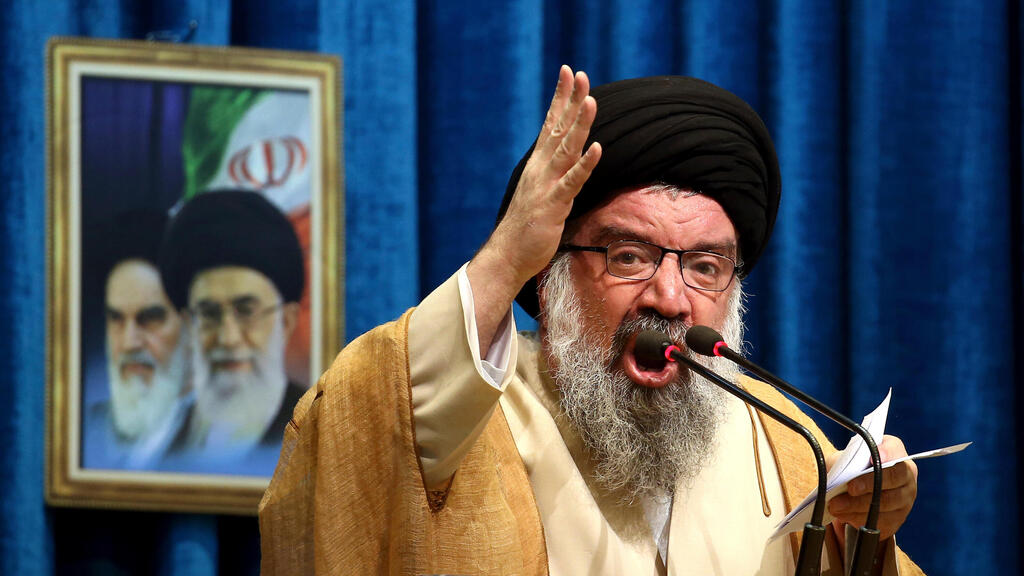
Ayatollah Ahmad Khatami during Friday prayers in Tehran, vowing 'revenge'
(Photo: AP Photo/Ebrahim Noroozi)
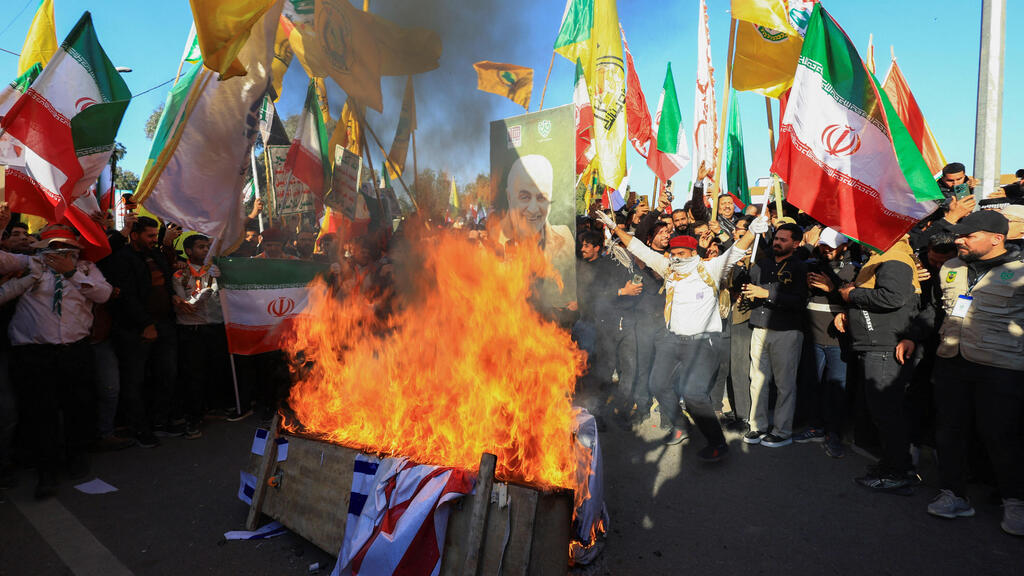
Supporters of the ayatollahs’ regime burn Israeli and US flags in Baghdad at midday
(Photo: REUTERS/Thaier al-Sudani)
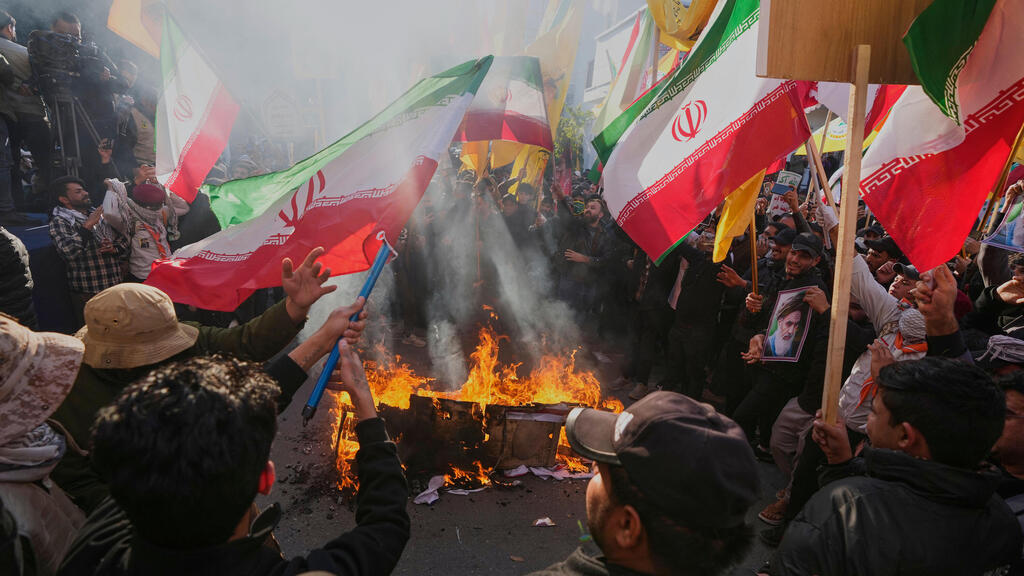
(Photo: AP Photo/Hadi Mizban)
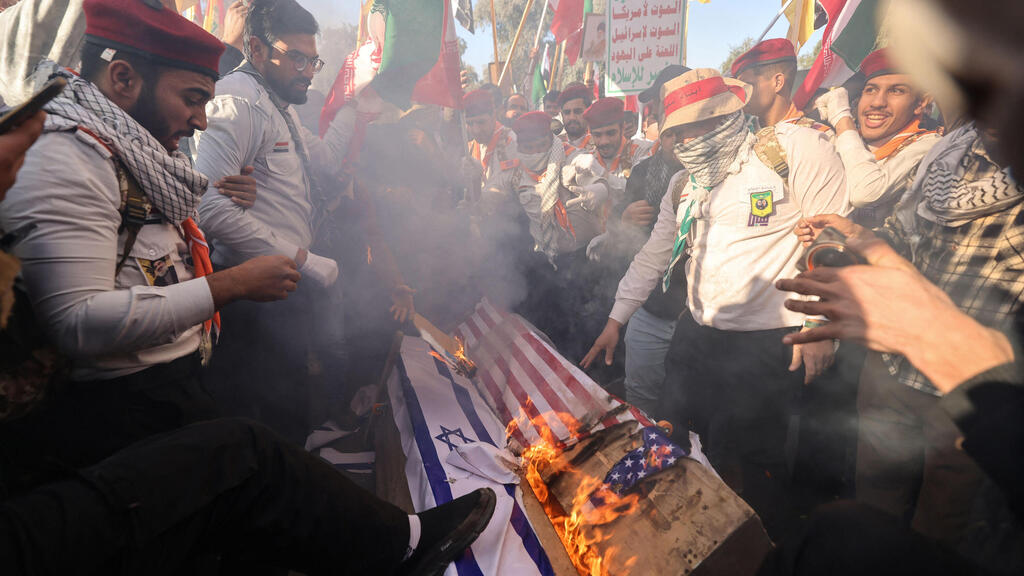
(Photo: AHMAD AL-RUBAYE / AFP)
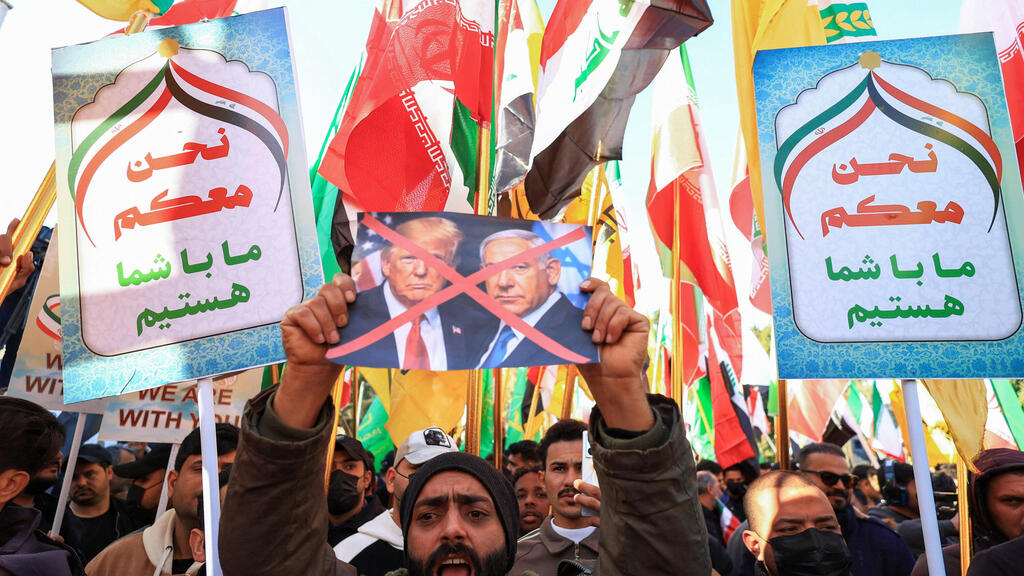
(Photo: REUTERS/Thaier al-Sudani)
Khatami also provided initial figures from the regime on the extent of the damage caused during the protests, claims that should be treated with great caution. He said protesters damaged 350 mosques, 126 prayer halls and 20 other “holy” sites. He also claimed that 80 homes of Friday prayer leaders, a significant religious role in the Islamic Republic, were damaged. If accurate, this would likely reflect the protesters’ intense anger toward the ayatollahs’ rule and its religious coercion.
Khatami further claimed that 400 hospitals, 106 ambulances, 71 fire engines and 50 other emergency vehicles were damaged. “They want us to abandon religion. They planned these crimes long ago,” he said.
First published: 19:21, 01.16.26