

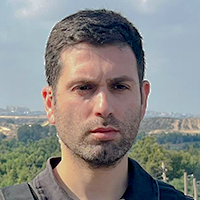
IDF Chief of Staff Lt. Gen. Eyal Zamir has chosen to remain publicly silent about the potential consequences for Israel’s security if the United States were to strike Iran following growing Israeli pressure in recent weeks.
In closed-door discussions, however, Zamir has presented and emphasized to the political leadership both the opportunities and the risks of such a campaign, particularly the scenarios that could unfold. This comes as political officials have repeatedly briefed Israeli media since mid-January about the possibility of war with Iran.
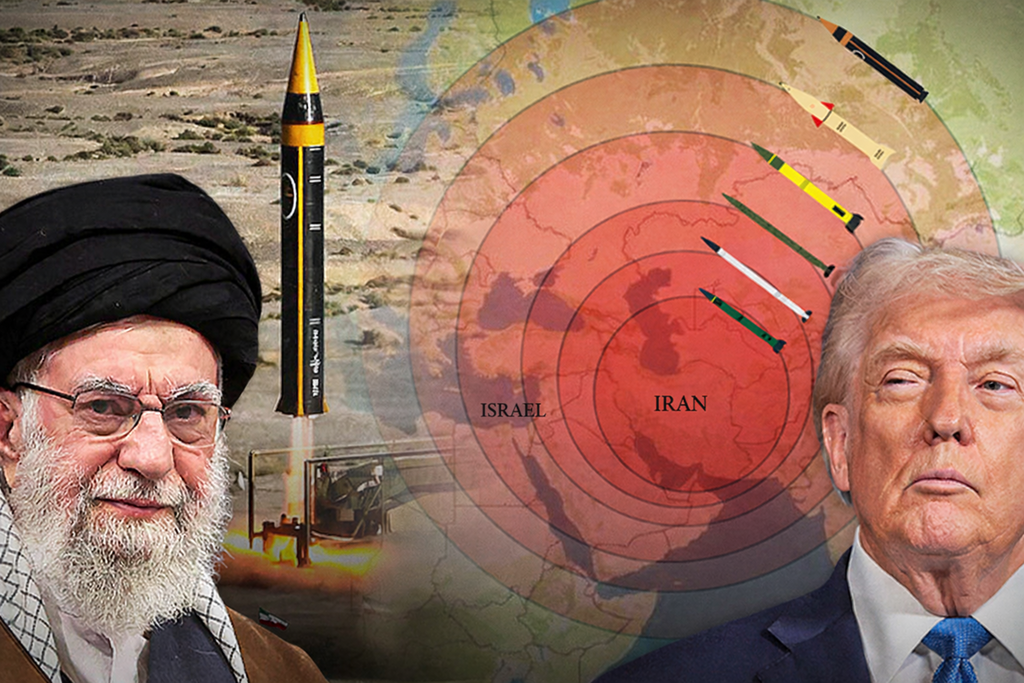
Despite mounting public anxiety fueled by the reports, the military has refrained from public briefings on the matter, amid pressure from the political echelon not to disclose to the public the potential implications and dangers of such a move.
Apart from general remarks by Zamir about Iran in speeches at various ceremonies, the military has kept detailed scenario planning confined to discussions with political leaders.
Unlike the current situation, Operation Rising Lion, Israel’s air campaign against Iran last June, was meticulously planned for more than two years, down to the finest details, and in coordination with U.S. military officers who took part in Israel’s air defense umbrella. The operation expended Israeli technologies developed in secrecy over decades and reserved for that campaign. Rebuilding some of those capabilities will take years.
The Israeli-initiated operation resulted in 30 Israeli fatalities and dozens of sites damaged. It concluded with a U.S. strike on Iran’s underground nuclear facility at Fordow, alongside high missile interception rates and near-total success in downing swarms of drones launched toward Israel.
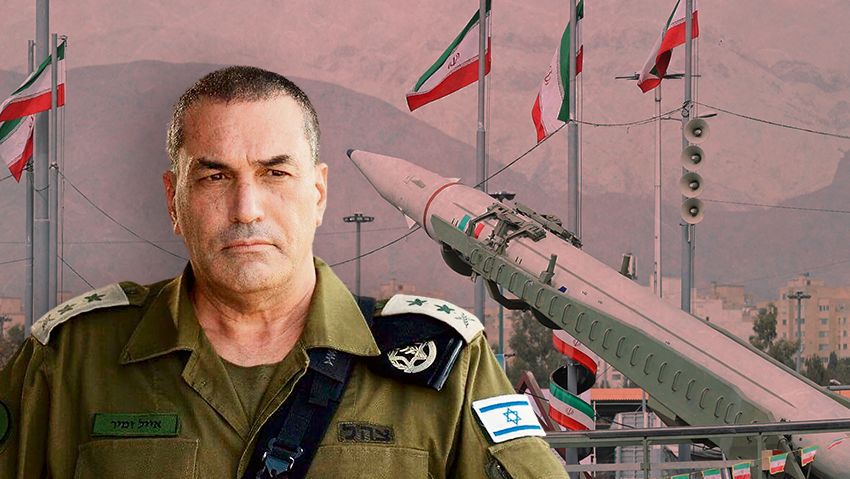
IDF Chief of Staff Lt. Gen. Eyal Zamir
(Photo: Majid Asgaripour/WANA (West Asia News Agency) via REUTERS, IDF)
Stockpiles of Arrow, David’s Sling and Iron Dome interceptors were also depleted, and replenishment efforts continue around the clock.
Above all, however, a joint U.S.-Israeli war with Iran at this time was not part of the military’s planning. Zamir had envisioned 2026 as a year of stabilization for the IDF following the prolonged war that began Oct. 7 — a period to restore readiness, refresh forces and equipment and launch a new multi-year plan to strengthen the military.
At the start of the year, planners did account for the possibility of a sudden flare-up with Iran, a major operation in Lebanon against Hezbollah or another round against Hamas, which has refused to disarm. Zamir also instructed the IDF to prepare for “a surprise war initiated by the enemy,” though more in the context of a scenario resembling Oct. 7.
None of those scenarios, however, included a full-scale campaign against a regional power such as Iran, which has drawn lessons from the 12-day war and is working intensively to replenish its missile stockpiles and rebuild its air defenses.
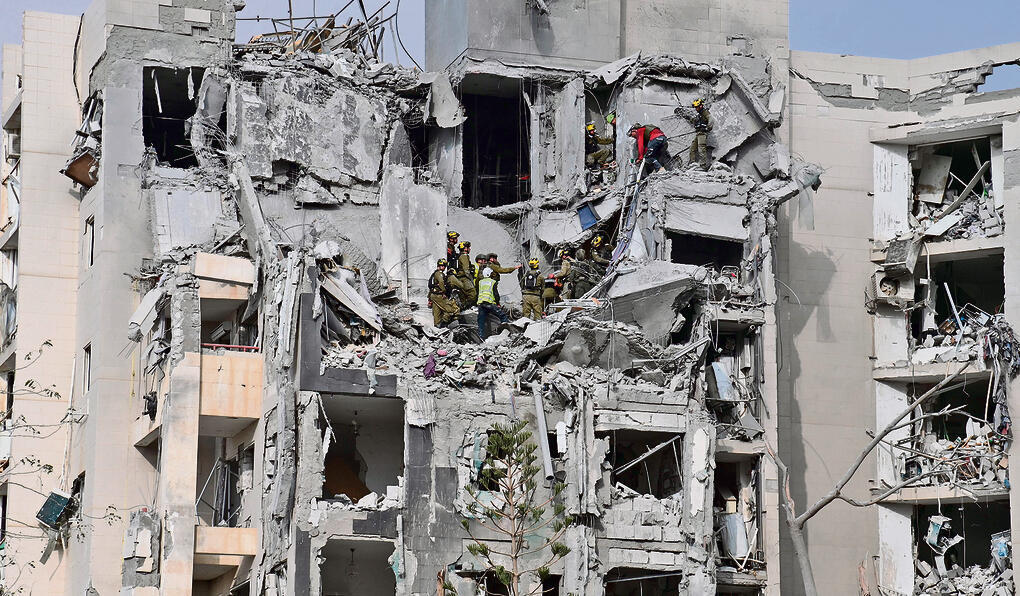
Rescue workers search through the rubble of a residential building in Be'er Sheva after an Iranian missile strike killed four people during last year’s war
(Photo: Herzl Yosef)
Military officials are said to be weighing not only tactical scenarios — such as the downing of an Israeli fighter jet over Iran or a greater number of strike sites inside Israel — but also the possibility of mass-casualty events involving dozens of civilians.
Another concern is a drawn-out war of attrition, involving sporadic launches of heavy missiles from Iran at a slow pace of several per week or month, disrupting operations at Ben Gurion Airport and causing intermittent damage to Israel’s home front. Such a campaign could last for months, with the Israeli economy bearing much of the cost.
Officials have likely presented Prime Minister Benjamin Netanyahu with the possibility that Hezbollah could join the fighting. The Shiite terrorist group did not participate in last June’s war, as it was still recovering from an Israeli campaign eight months earlier.
Since then, Hezbollah’s restraint has reportedly worn thin, even as it has refrained from responding to repeated Israeli airstrikes in Lebanon, including strikes over the weekend on three of its command centers in southern Lebanon that killed at least 10 operatives preparing to move missile launchers.
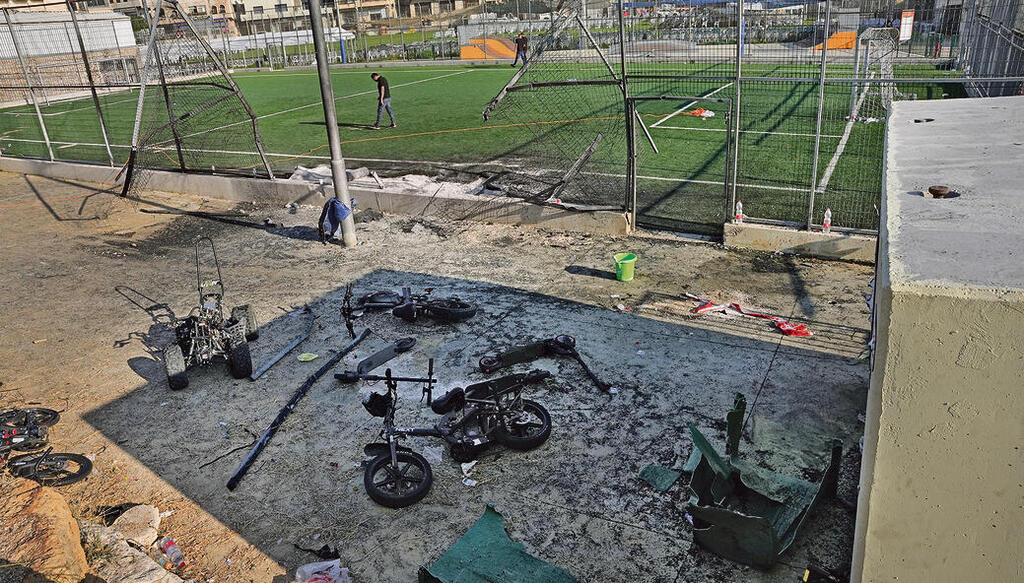
Bicycles and debris lie near a damaged fence at a soccer field in Majdal Shams after a Hezbollah rocket strike that killed 12 children, in the Golan Heights, 2024
(Photo: Efi Sharir)
Hezbollah could decide to enter a new conflict, particularly after Iran reportedly funneled millions of dollars in cash to the group over the past year. Despite efforts by the Lebanese army to limit its activities, Hezbollah remains the most powerful military force in Lebanon, with tens of thousands of precision-guided missiles, rockets of varying ranges, explosive drones and tens of thousands of armed fighters prepared for combat against Israeli forces operating in Lebanon.
Launches from Lebanon would pose a greater interception challenge due to shorter flight times compared with missiles from Iran.
Simultaneous launches from multiple fronts — from Iran and its allies in Iraq and Yemen, combined with coordinated barrages from Lebanon — represent a scenario for which the Israeli Air Force has trained but never experienced in practice.
A nearby U.S. aircraft carrier would be expected to assist, though even U.S. munitions stockpiles have limits, as suggested in media reports this week citing U.S. Joint Chiefs Chairman Gen. Dan Caine.
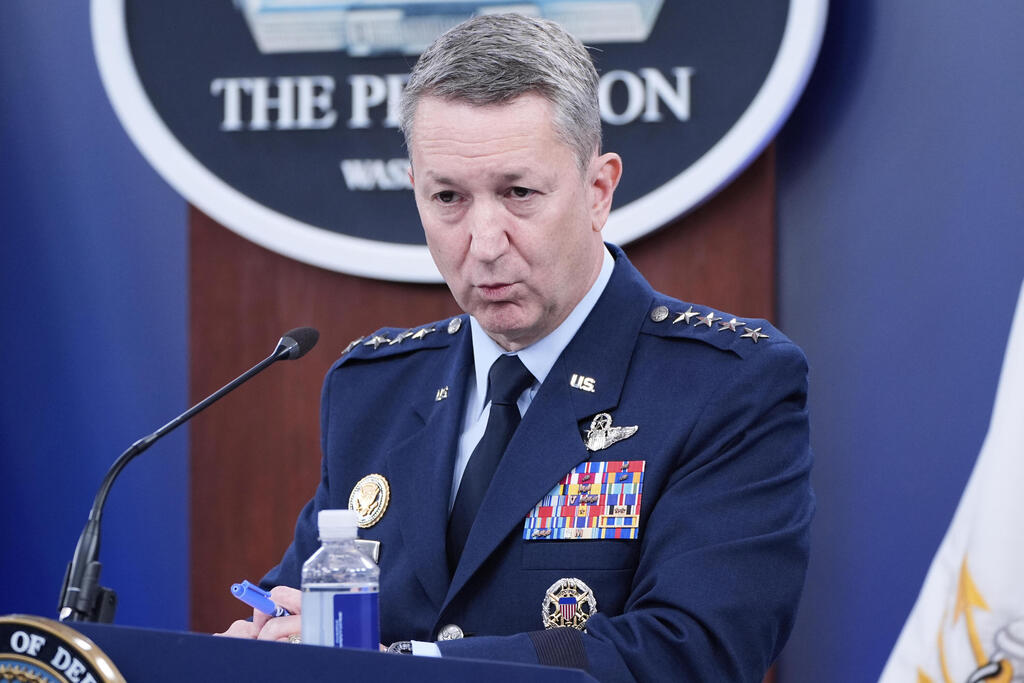
US Joint Chiefs Chairman Gen. Dan Caine
(Photo: AP Photo/Alex Brandon)
Iran’s government is still recovering militarily and faces what analysts describe as its most significant internal weakness since the 1979 revolution. Even if it were to survive such a war, its military and economic capabilities — including remnants of its nuclear program — would likely suffer severe damage.
Supporters of a strike argue that the current U.S. military presence in the region, directed squarely at Iran, may not be repeated in the coming years. In one, three or five years, the United States may not deploy such overwhelming force in support of Israel, nor may there be a U.S. president as receptive to Israeli requests.
Meanwhile, the steady stream of reports about additional U.S. aircraft landing in Israel and warships entering the Mediterranean has heightened public anxiety and diverted attention from other arenas, such as Gaza. The lack of regular military briefings to contextualize the developments has left many Israelis uneasy.
IDF spokesperson Brig. Gen. Effie Defrin has addressed the public only sporadically, often on Friday afternoons. More frequent appearances during prime-time newscasts, with substantive responses to reporters’ questions, could significantly reduce fear among millions of Israelis accustomed to sirens and explosions.
Absent that, alarmist narratives on television and social media have filled the vacuum, shaping the public agenda for nearly three months, even though not a single missile has been fired at Israel during that period.