


Former Prime Minister Naftali Bennett said Monday that the draft exemption granted to the Haredi public “costs us soldiers’ lives,” adding that October 7 changed his position on the issue.
“Before October 7, my approach was: Let’s give up on the draft, bring them into employment and lower the exemption age,” Bennett, chairman of the Yahad party, said in an interview at the ynet and Yedioth Ahronoth “2026: From Frontline to Growth” conference, held in partnership with Sapir Academic College. “But October 7 changed everything, because we need those soldiers. The shortage of combat soldiers costs us human lives.”
Gallery
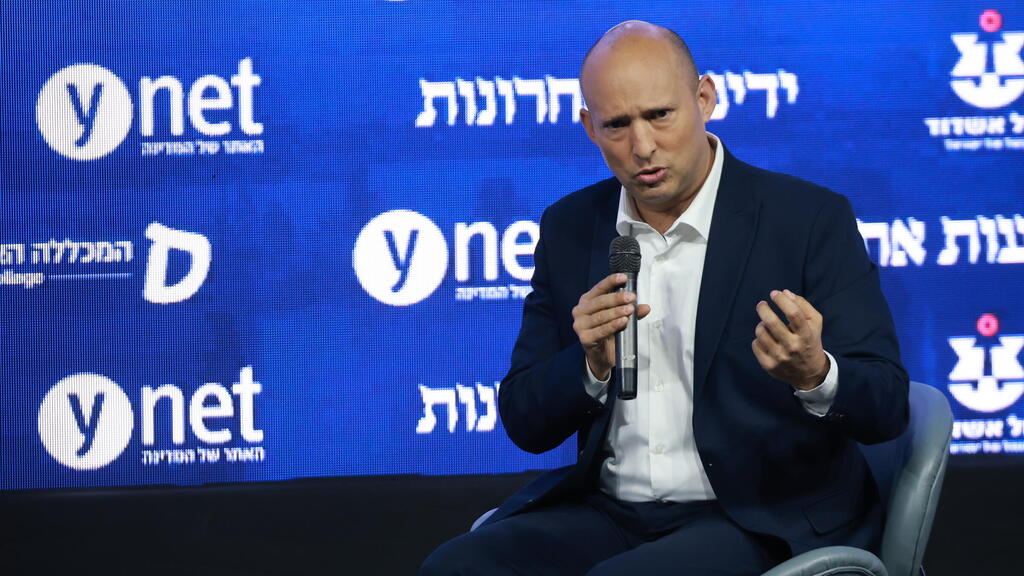
Naftali Bennett at the ynet and Yedioth Ahronoth '2026: From Frontline to Growth' conference
(Photo: Tal Shahar)
According to Bennett, the failure to draft Haredim comes at a cost for two main reasons. “The first reason is that our soldiers are being worn down, and their operational competence is declining,” he said. “I was a soldier, I fought in all the places they are in now — Beaufort, Nabatieh, Aishiya — but I never did the number of days they are doing. You get worn down operationally. People die from that.”
The second reason, he said, is the shortage of manpower that would allow the IDF to hold territory after it has been captured. “God forbid, I do not blame the Haredi public. I blame the government,” Bennett said. “We are losing soldiers because we do not have enough soldiers to seize and hold a place we have already conquered. So we withdraw from it, then conquer it again at the cost of blood, and withdraw. If we had soldiers to hold it, we would not pay the price.”
Bennett added: “I am saying something harsh and I stand behind it — this exemption that Israel gives the Haredi public from enlistment for political reasons costs us soldiers’ lives. And it will end.”
Bennett addressed claims that demands for Haredi enlistment and core curriculum studies amount to “persecution of the Torah world.”
“Guys, I study Torah. No one is persecuting anything,” he said.
He said he does not intend to send Haredim to prison, but would deny budgets to those who do not enlist or work. “There are currently 50 pipelines of money flowing. I will shut this thing down if I am prime minister,” he said. “Anyone who does not enlist will not receive a shekel from the state. I will not put him in prison, but he will not receive a shekel from the state. Anyone who does not work will not receive a shekel from the state. Call it the Brooklyn model — in Brooklyn, if someone studies Torah and does not work, America does not fund him. Snap out of it.”
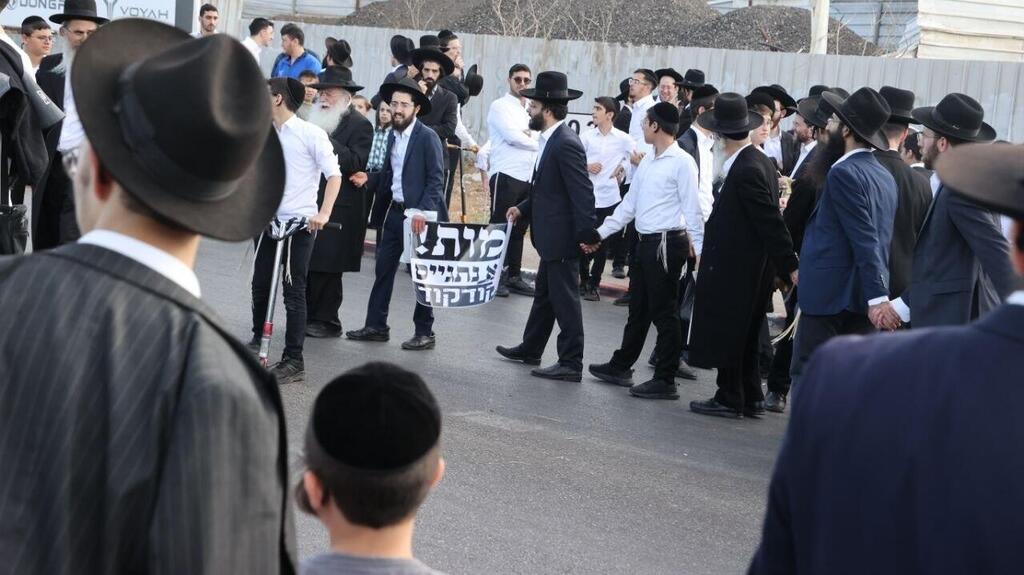
Haredi protest against conscription.
(Photo: Motti Kimchi)
Bennett said this is a matter of “correcting an error” in history. “We live as though we have always been in this madness, where there is an independent Haredi state operating under the State of Israel or separately from the State of Israel,” he said. “It was not like this. Until the 1970s, Haredim served in the army and worked. This is a startup that began in the late 1970s, when Begin made a mistake in the coalition agreements in 1977 and removed the ceiling.”
According to him, demographic change requires a decision: “Today, at this very moment, a quarter of Jewish first graders are Haredi. A third of Jewish babies now being born in hospitals are Haredi. That is fine, but it will not and cannot be that all of us pay taxes to fund them going to school, and they are taught against the State of Israel, against Zionism and against the IDF. That will not happen.”
'There must be a united bloc headed by a right-wing figure'
Bennett, who about a month ago joined forces with Yesh Atid chairman Yair Lapid in the Yahad party, which he leads, also addressed the political system ahead of the coming election.
He called on former IDF chief of staff Gadi Eisenkot, chairman of Yashar!, not to run separately but to join a united political framework. “I greatly respect him. I think his heart is in the right place,” Bennett said. “But his proposal to run separately in this election and create an intra-bloc duel throughout the campaign is a grave mistake. The people want us to unite."
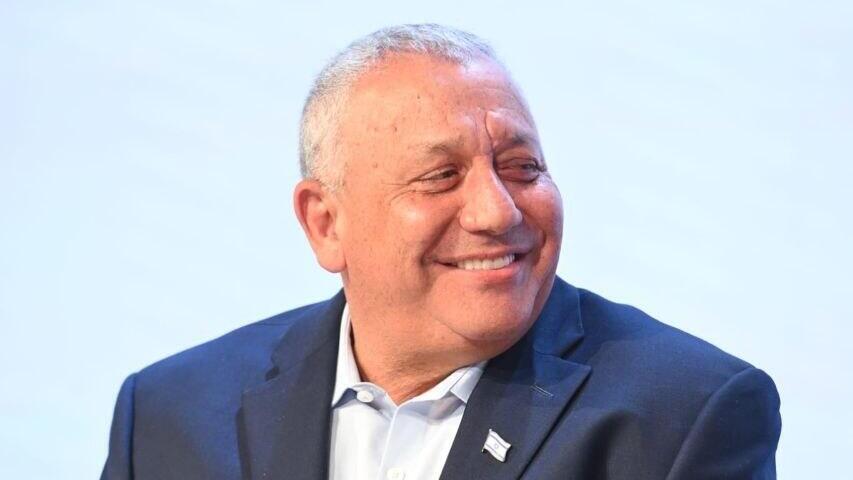
Calls on Gadi Eisenkot to unite
(Photo: Association of Municipal Corporations)
He added: “I will say this very clearly: The only way to win is a united bloc headed by a right-wing figure. My diplomatic positions are right-wing. The public has moved right. They will not elect someone from the center-left. They tried that with Livni and Buji,” he said, referring to Isaac Herzog.
Bennett called on Eisenkot to join him: “You can bang your head against the wall and run separately — that is a serious mistake. I call on my friend Eisenkot: Come unite, take half the kingdom, but let’s go, we cannot run divided.”
Asked whether such a bloc would lose if he did not head it, he replied: “Yes. Now it is empirical.”
Since 2009, he said, “the liberal bloc has always put a center-left figure at its head and always lost. The public is right-wing, but it also does not want the current government. It is repelled by corruption, draft-dodging, the fanaticism of Ben-Gvir and Smotrich — but it still wants a person with right-wing positions at the top.”
'I planned to order the elimination of Deif and Sinwar in summer 2022'
The former prime minister also addressed the security situation in the north, saying that “a serious government does not tell the enemy in advance that it is about to attack, it simply attacks.”
At the start of his remarks, he offered condolences to the family of Maglan fighter Adam Tzarfati, who was killed overnight. “My son is also there right now, in the same unit,” he said. “I wish all the soldiers who were wounded a full recovery, and all the soldiers who are fighting — may they return home safely.”
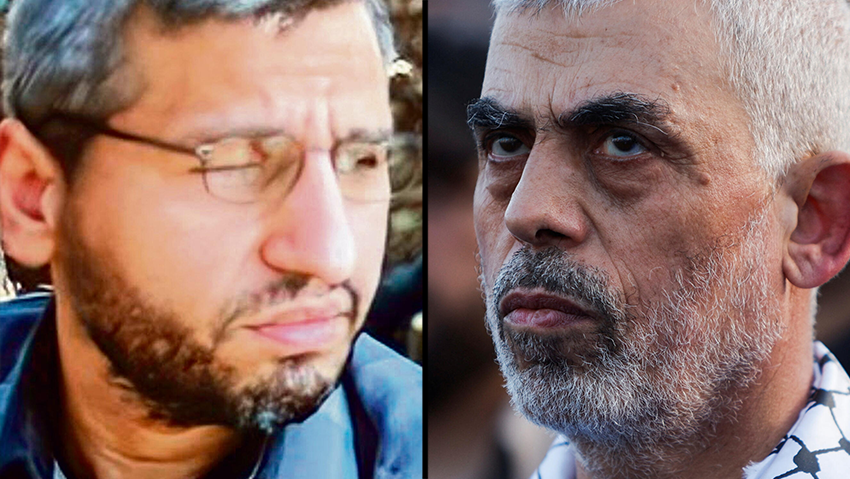
Deif and Sinwar
(Photos: Mohammed Salem, Reuters)
Bennett criticized the government’s treatment of northern residents. Last week, he said, he visited Kiryat Shmona and met a woman named Kati, a mother of three young children whose husband is in reserve duty.
“For months, she and her children have been in an apartment. They do not go out to school because there is no school. They do not even do Zoom, because no one cares,” he said. “They also cannot go outside because of the drones and mortars. It is an old housing-project apartment. She has no safe room. They have a shelter downstairs.”
According to him, the mother told him her children are already struggling with reading and writing. “She tells me: ‘My children no longer know how to read and write.’ Some of them are in third grade. Things like that. There is no state. No one talks to her. So first of all, you have to talk to them and be with them.”
Strategically, Bennett argued that the government is using almost only military force, without diplomatic, civilian and economic tools.
“When you are a state, you have a toolbox — military, civilian, diplomatic and economic,” he said. “The current government seems to have only one tool, and that is the military tool. The moment you have people like Ben-Gvir and Smotrich, who spend all day causing chaos, no one works with you diplomatically. You do not have the civilian tool and you do not have the economic tool. And when you do not have all these tools, you cannot achieve the required result. That is why we are not breaking through on any front.”
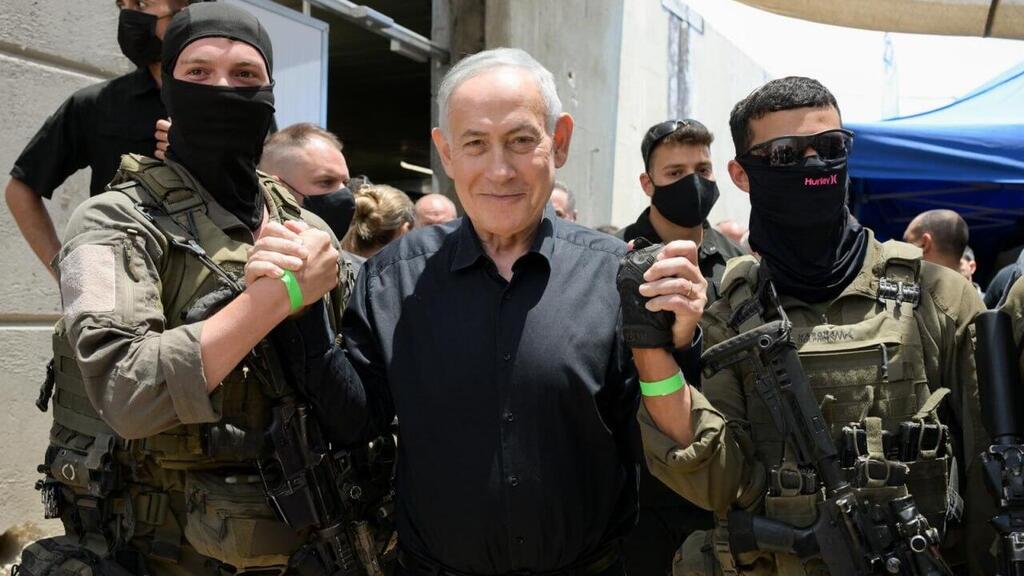
Prime Minister Benjamin Netanyahu visits troops on the northern border
(Photo: Maayan Toaf/GPO)
Bennett was asked about his time as prime minister and about having access to intelligence materials. He replied that a prime minister must be “very skeptical” toward the system, because “bad information does not always float upward.”
“Each layer beautifies and polishes,” he said. “That is why you have to be active, go into the field and ask questions. And here, my style and Netanyahu’s are very, very different.”
As an example, he cited Operation Protective Edge, when he served as a Cabinet member.
“In 2014, before Protective Edge, the way I discovered the 30 attack tunnels was not because someone told me about them through the hierarchy,” he said. “I went down to the field again and again, met residents and officers, and through that I managed to bring the issue to the Cabinet.”
Bennett said the plans for what would later be called the Al-Aqsa Flood, Hamas’ October 7 attack, were not known to him, and that as prime minister he viewed Hezbollah as the main front and Gaza as a secondary front.
“It has already been published, and certainly after a state commission of inquiry everything will be published — I pushed very hard for the elimination of Yahya Sinwar and Mohammed Deif,” he said.
He added that the move was set for summer 2022, but was not carried out because his government fell and “afterward, Netanyahu did not do it.”
Asked whether he would have been willing to go ahead with eliminating Sinwar and Deif even at a political cost, he replied: “Yes, yes.”
“I told all the ranks: Do not worry about the political consequences. Inside, I knew it would either happen or not, and I was prepared for that,” he said.
However, Bennett emphasized that he pushed for the move not because he foresaw the October 7 attack, but because he foresaw “a kind of October 7 in the north.”
“I wanted first to neutralize Hamas in order to isolate Hezbollah,” he said. “There were indications of this expression called ‘unity of arenas.’ Today we have been living it for several years, but then it was innovative.”
Bennett also addressed Iran and the possibility of an emerging agreement, saying that “ultimately, the test is the result.” Israel, he said, must insist on the complete neutralization of the nuclear program, dismantling of the ballistic missile program and dismantling of the terror axis.
“Just removing the material is not enough,” he said. “If they can manufacture centrifuges in underground worlds, they will produce the material again.”
Asked whether this can now be done without the United States, he replied that “the State of Israel must be capable of ensuring its security over time.”