

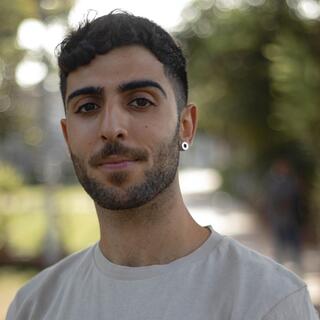
The skies are clear and blue. The sun scorches the back of the neck. The turnoff to Route 232—normally deserted during holiday seasons—is completely jammed, with drivers waiting several long minutes to make the turn. Many cars are haphazardly parked along the roadside, and people—lots of people—pause and linger at every corner. This is what the Gaza border region looks like on October 7, 2025, the holiday now marked by the worst disaster in Israel’s history.
A Ynet team visited memorials, roadside bomb shelters and the Nova music festival site, speaking with bereaved families, friends and passersby who came to the area to pay their respects and feel a fraction of what Hamas terrorists inflicted on this region that horrific Saturday.
Two years on, Israelis remember the October 7 massacre
(Video: Roni Green Shaulov)


‘The shelter is smaller—much smaller—than in the photos’
The so-called “shelters of death.” Along Route 232 are the concrete structures originally intended to protect against rocket fire. On the morning of October 7, they became brutal death traps, where terrorists massacred Israelis, many of them fleeing the Nova music festival. That’s how these structures came to be known as “shelters of death.”
In the shelter at the bus stop across from Kibbutz Re’im, 27 Nova attendees sought refuge. Sixteen were murdered, four were kidnapped and seven survived.
Gallery
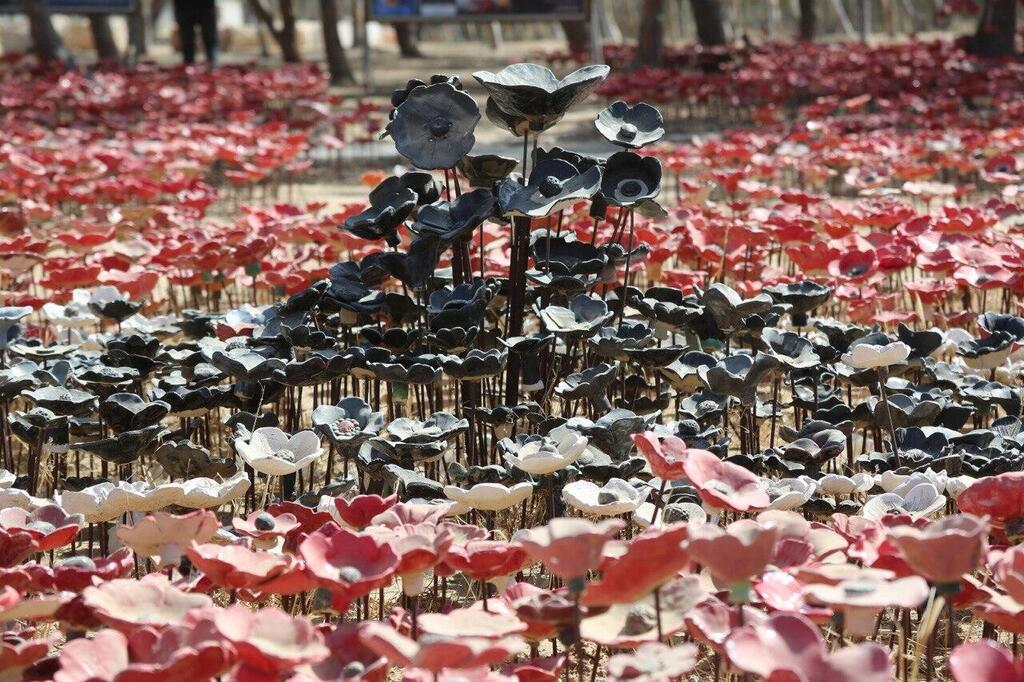
Memorial site along Route 232 honoring victims of the October 7 massacre
(Photo: Dror Schwartz)
The entire roadside turnout is filled with vehicles. Visitors come in one after another, faces solemn. Some light candles, others place stickers or scrawl messages on the walls. At the shelter’s entrance, a note reads: “Aner, you are the hero of Israel”—a tribute to the late Aner Shapira, who acted with extraordinary bravery, throwing back grenades that the terrorists had tossed into the small concrete structure.
A large family stands nearby, examining every inch of the shelter. From time to time, they gather around the open trunk of a car, which has been turned into a makeshift table for food and drinks. Many wear shirts printed with the photo of a young woman—clearly, a bereaved family.
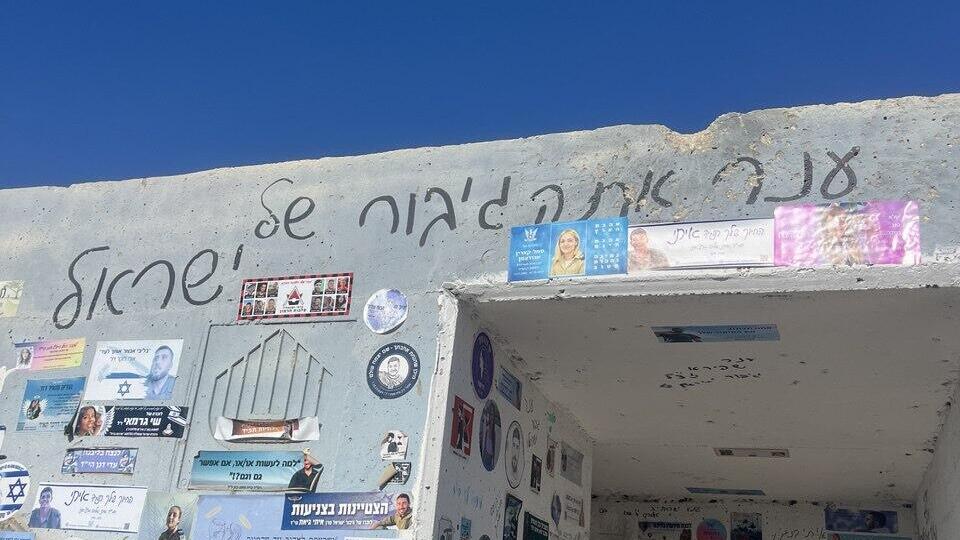
A reinforced shelter along Route 232, now a memorial site, displays tributes and messages honoring victims of the October 7 massacre. The inscription reads: 'Aner, you are the hero of Israel'
(Photo: Roni Green Shaulov)
“My sister was here with her fiancé. She was four months pregnant. They murdered them both,” says Ofri, sister of the late Nitzan Rahoum, who fled from the Nova festival to the shelter along with her partner, Lidor Levy.
“We come here from time to time. It’s important to us, but it’s never easy,” Ofri says. “Lidor went outside after the first grenade, and the terrorists shot him right here,” she says, pointing at the road.
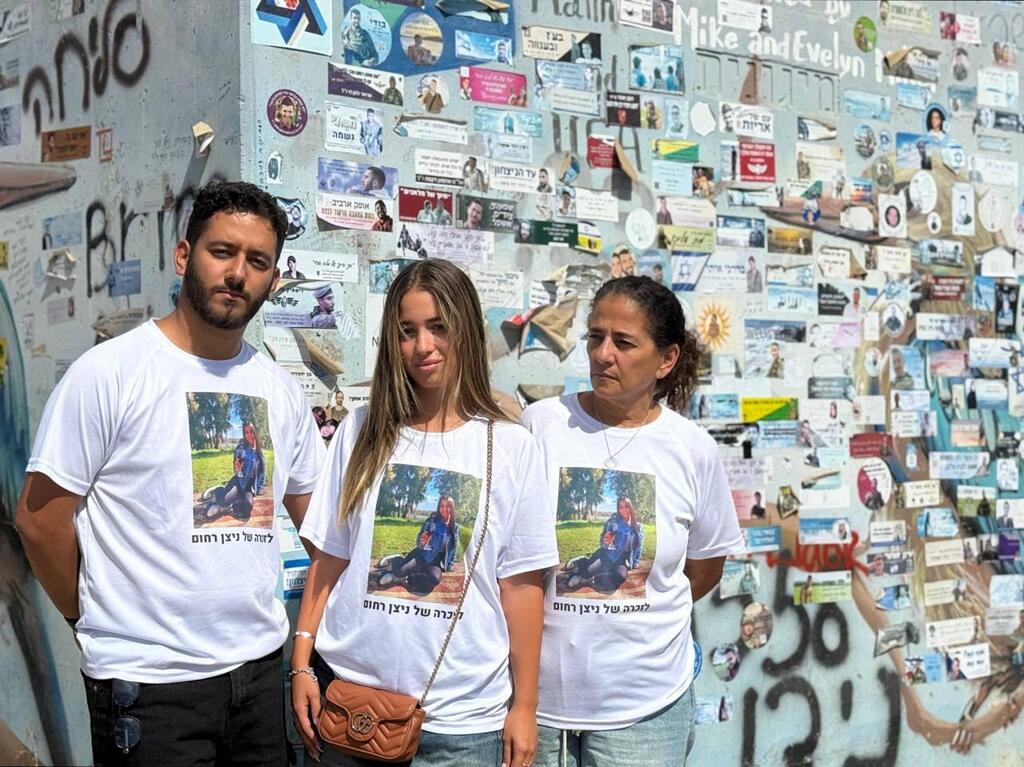
The Rahoums
(Photo: Roni Green Shaulov)
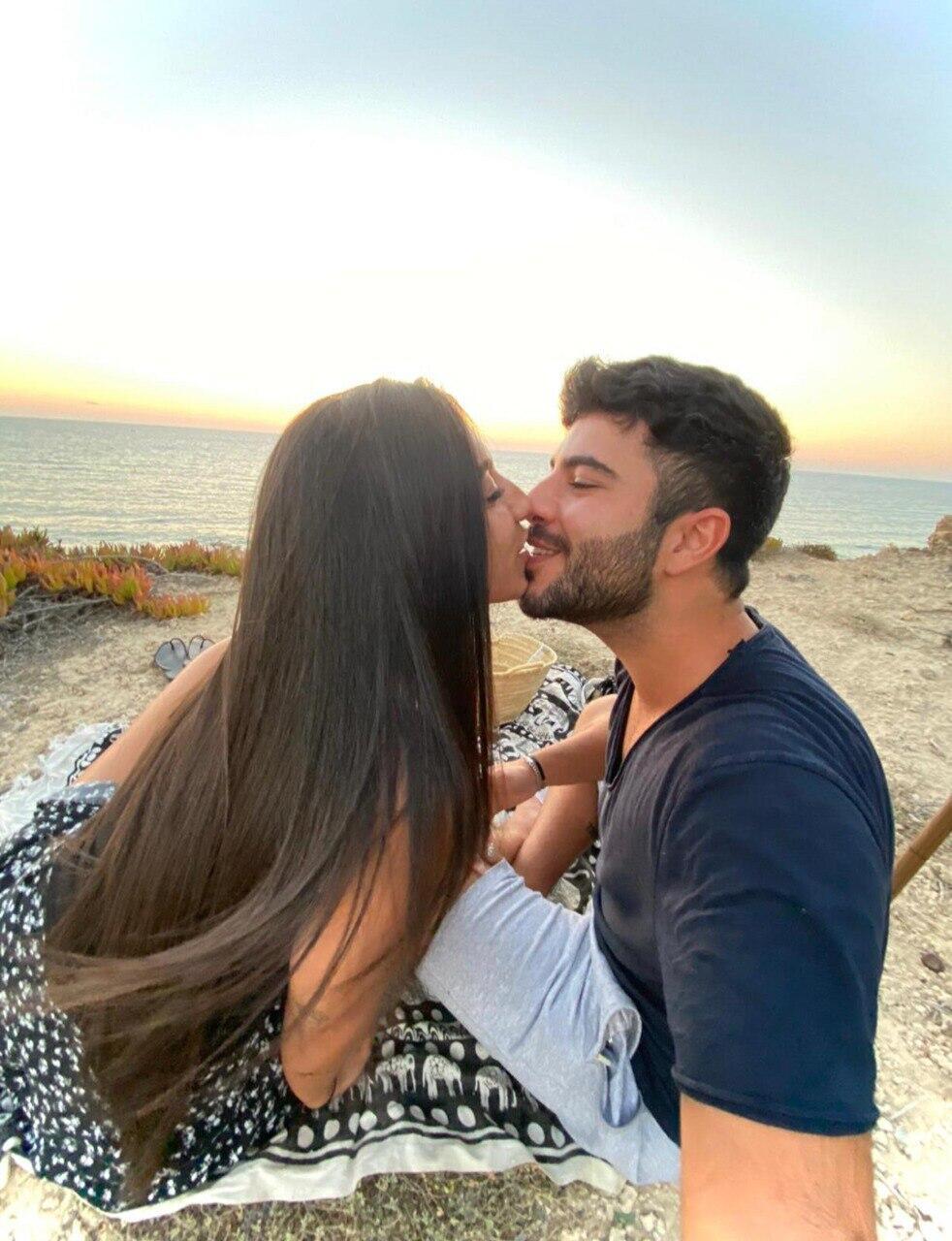
Nitzan Rahoum and Lidor Levy
“Nitzan was deeper inside and was killed there. Every time I enter the shelter, I realize how small it is—so much smaller than it looks in pictures. They were a young couple, both 28, here to celebrate life, and it was all cut short in a moment. For them—and for us. A switch inside us was shut off,” she says, placing a sticker on one of the walls.
The silence of car horns
About a kilometer north, the Re’im parking lot is packed to capacity. Even the traffic circle recently installed to help ease congestion is of little help. Yet, despite the heavy traffic, not a single car horn can be heard—a striking and unusual quiet.
Amid the signs and photos of the victims, many visitors walk solemnly. A group of American Zionists moves quietly through the site. Soldiers are present, and of course, bereaved families who have come to the memorials for their loved ones.
The Nova site, once a colorful party ground, was later turned into a makeshift memorial. Today, it is one of the most visited places in Israel—if not the most visited.
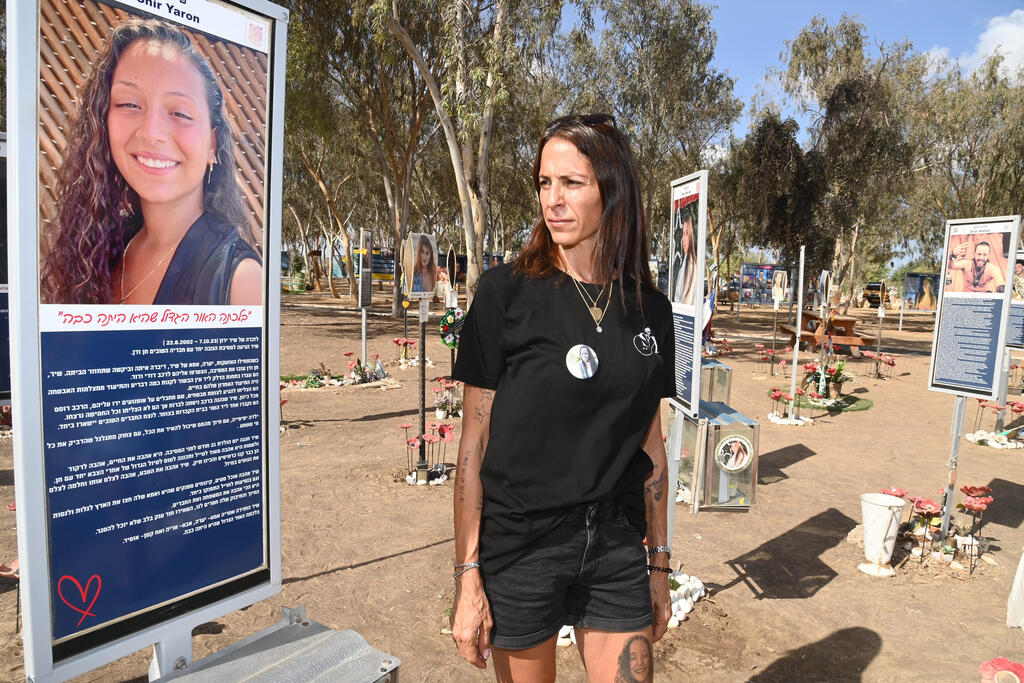
Ya’ara Yaron stands beside a memorial portrait of her daughter Shir, who was murdered at the Nova festival on October 7. A tattoo of Shir’s image is also inked on her leg
(Photo: Herzl Yosef)
“She was murdered five minutes from home. That’s the hardest part for me,” says Ya’ara, mother of the late Shir Yaron, who fled the party and was killed at the Mivtahim junction. Shir lived in Moshav Ohad in the Eshkol region, about 15 minutes from the Re’im parking lot. She had arrived at the party just an hour before Hamas launched its murderous attack.
“She didn’t even get to experience the party,” her mother says. Standing next to Shir’s photo—planted in the soil where the festival took place—are Ya’ara, her husband Aryeh, and cousin Gil. From here, they’ll head straight to Shir’s memorial service. They’re also wearing shirts printed especially for the occasion, bearing Shir’s photo on the back.
“Shir wasn’t just my daughter, she was my best friend,” Ya’ara says. “I gave birth to her at 20. We were close in age and spent a lot of time together. She was the center of my world. When Shir stopped living, so did I.”
There’s no point in talking to Ya’ara about words like “recovery,” “healing” or “comfort.” She isn’t there—far from it, she says. What comes next is unclear. “Today marks two years, and it’s not easy,” she emphasizes. “But it’s no different from yesterday or last week. Next week won’t be easy either. And a year from now, it still won’t be. Every single day is a nightmare.”
‘The walls tell a whole story’
At the police station memorial in Sderot, a group of leather-clad bikers parks in a perfectly straight line. These tough-looking bikers from the Harley Owners Club of Israel—men and women alike—remove their helmets and walk toward the memorial, their expressions softened by emotion despite their rugged appearance.
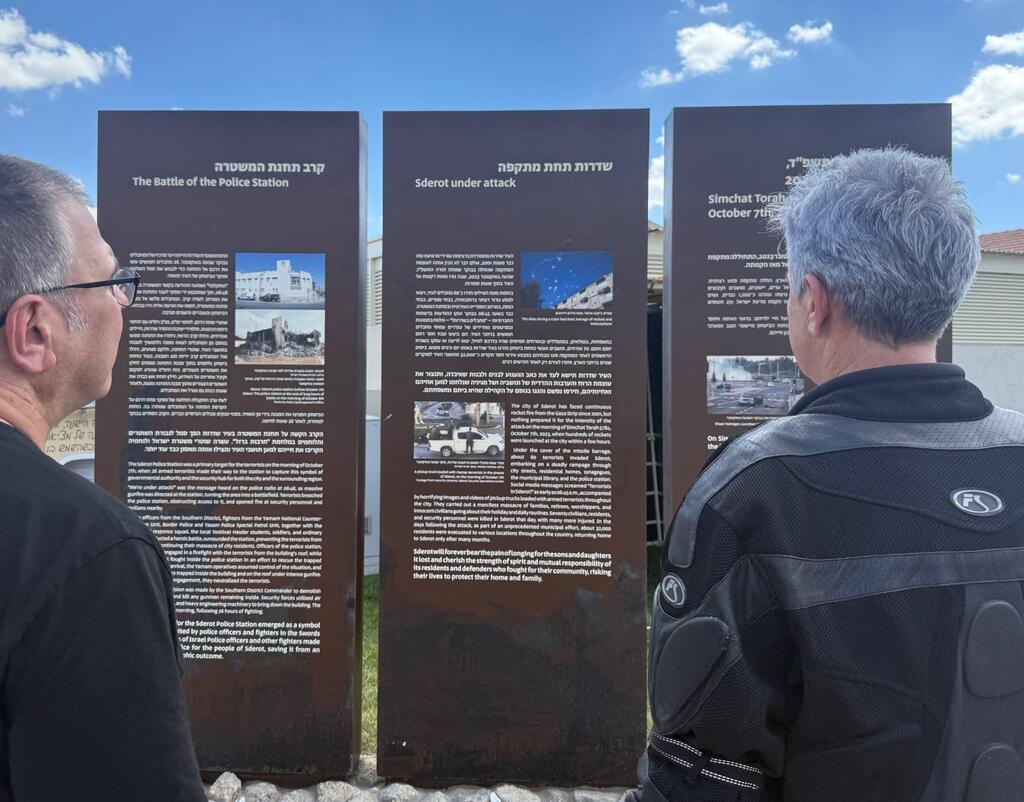
The Sderot police station attack memorial site
(Photo: Roni Green Shaulov)
It was at this location that, around 12 hours into the fighting on October 7, 2023, authorities made the decision to demolish the police station—while Hamas terrorists were still barricaded inside. A year later, a memorial was established here in honor of those killed, and a new police station was built elsewhere.
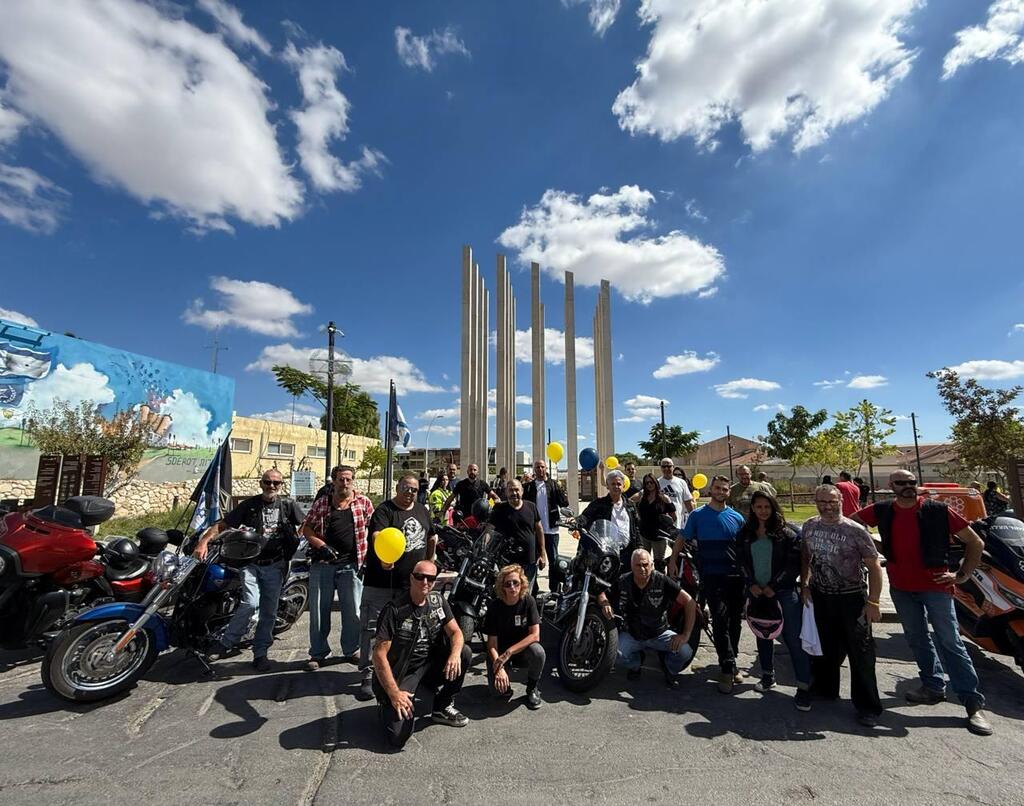
Members of the Harley Owners Club at the Sderot police station attack memorial site
(Photo: Roni Green Shaulov)
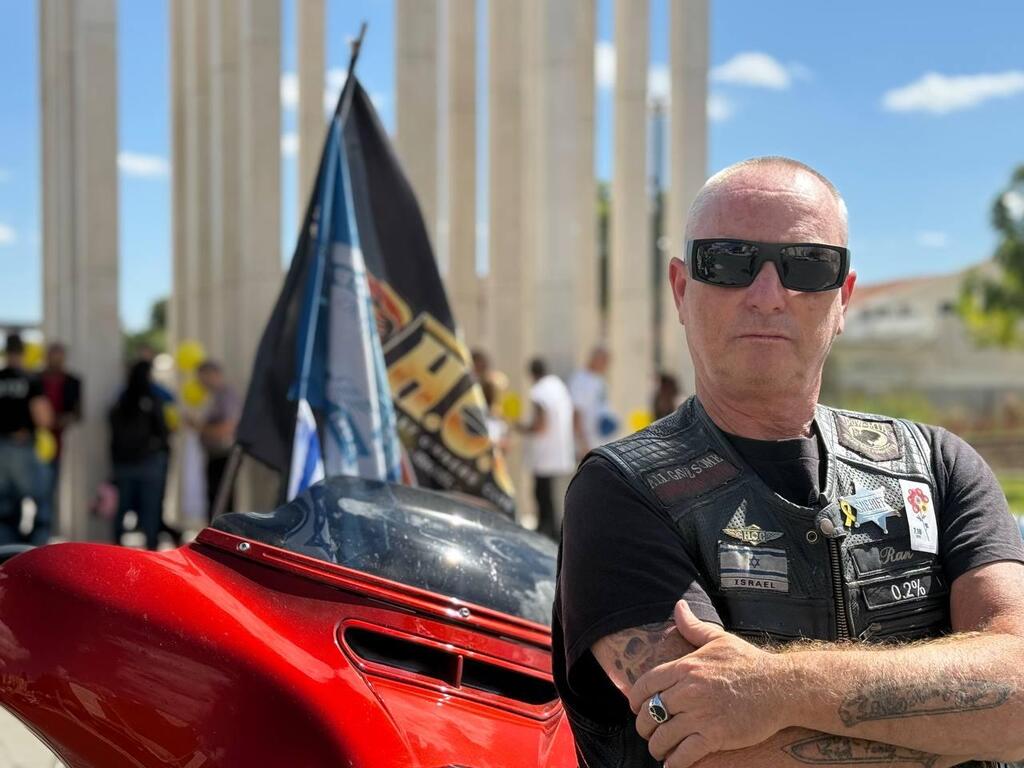
Ran Lanzman
(Photo: Roni Green Shaulov)
“Today marks the anniversary of the terrible disaster that struck us,” says Ran Lanzman of the Harley Owners Club, known by the acronym H.O.C. “We rode down from the center of the country. We first visited the Nova site and then came here. It’s simply important to be here. When I look at the bullet holes in the walls, they tell a whole story. We came to pay our respects to the fallen—and to the wounded.”
‘I decided to have 12 kids and name them all Be’eri. That’s my revenge.’
Back at the Nova festival site, amid the photos, candles and flowers, a young couple from Tel Aviv walks silently, pushing a stroller carrying their peacefully sleeping baby girl, oblivious to the scene around her. Mordechai and Tamara Artzi stood in this very spot exactly two years ago—and managed to escape. Soon after, they married, had a daughter named Alice, and today they returned here with her for the first time. For them, it’s a kind of victory.
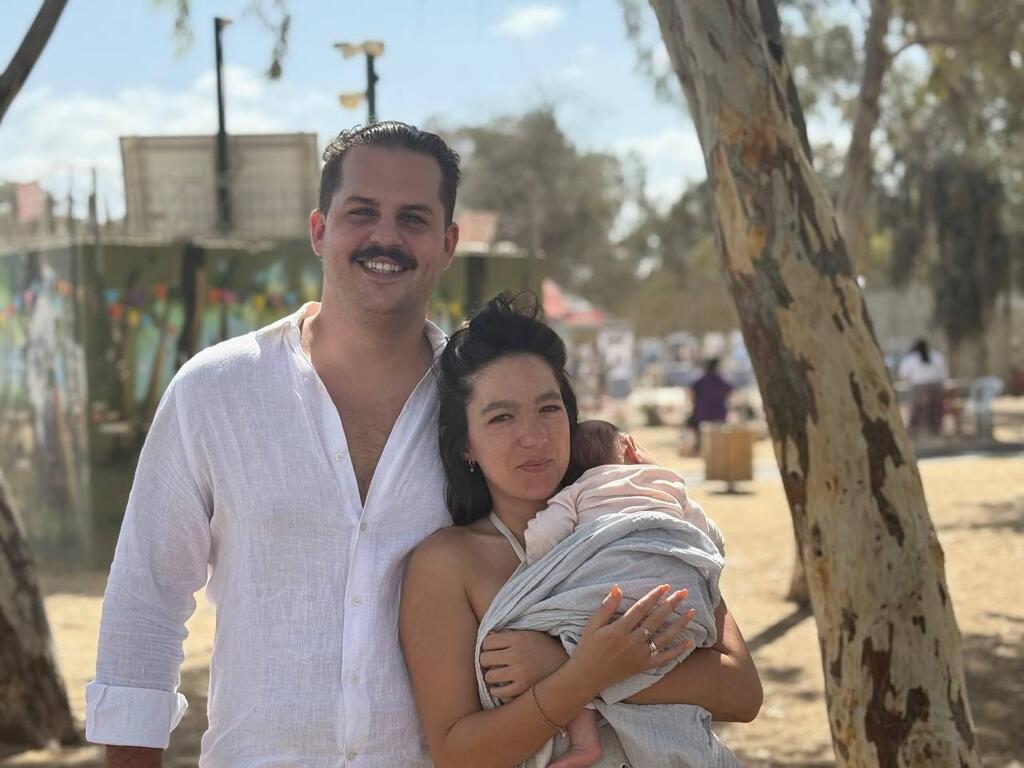
Mordechai and Tamara Artzi with their daughter Alice
(Photo: Roni Green Shaulov)
Mordechai recounts that morning with emotion and vivid detail. “It was a wild and joyful party. Like many others, we decided to take drugs before sunrise. That’s the high point of the festival. I looked up at the sky and suddenly it was black with rockets. The music stopped and we were told to evacuate. People panicked. There was chaos, and some started saying, ‘Terrorists have infiltrated.’ I got angry—I thought they were spreading baseless rumors.”
Suddenly, he recalls, gunfire rang out. “We tried to exit from the back gate, but it was completely blocked with cars. People had abandoned them and were running. We went back to the main entrance and saw total panic. Bullets were flying over our heads. Police stood helplessly, guns drawn. We got out of our car too and started running through the field with everyone else. And in that moment—the acid kicked in.”
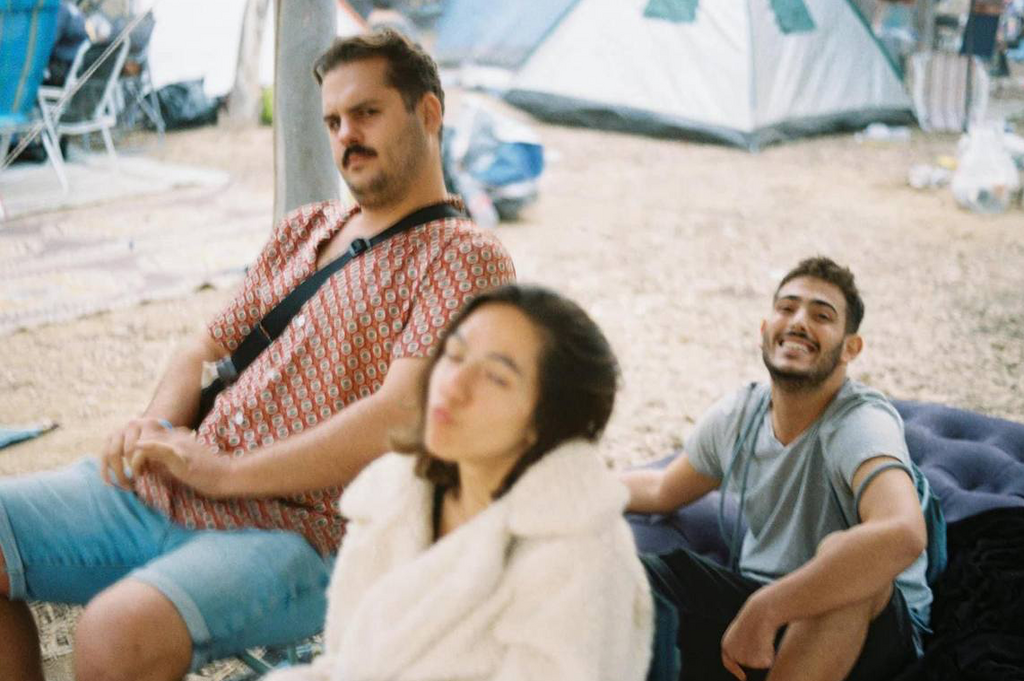
Mordechai and Tamara Artzi on the morning of the Nova music festival, shortly before the Hamas attack began on October 7
What may sound like a surreal aside in an otherwise horrific story underscores the chaos. Running for your life while high is far from ideal. “I saw thousands of people running through the fields, and no one knew what was going on,” he continues. “I told myself I had to get home. I entered survival mode. We got back in the car, and I saw the sun rising. I decided to drive toward it—east—away from Gaza and as far from it as possible.”
They sped through the fields at 200 kilometers per hour, he says, reaching the town of Netivot before merging onto Route 34. “We drove past bodies strewn across the road. It was insane. An hour earlier, we were in paradise, and now it was hell—and all this while I was high on acid and terrorists were hunting us. Somehow, no one shot at us. I don’t know how. Maybe we passed between the ambushes in a few lucky minutes.”
Tamara and Mordechai Artzi flee the Nova festival site on October 7, as Hamas terrorists launch a deadly assault
(Mordechai and Tamara Artzi)
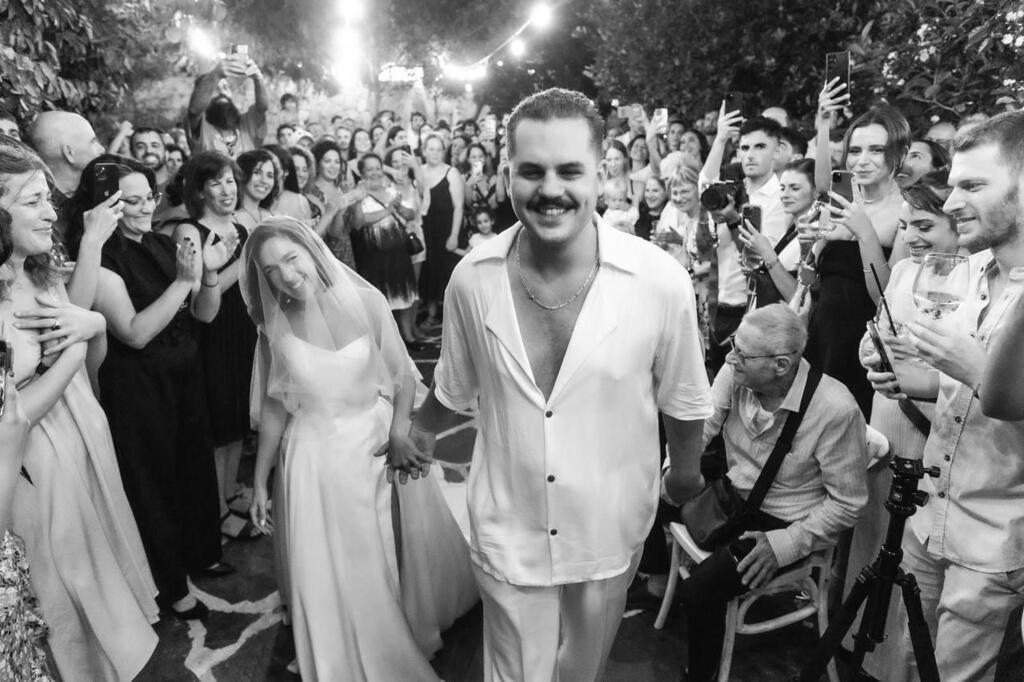
Mordechai and Tamara Artzi on their wedding day
(Photo: Gilad Mashiach)
Despite his humor and light tone, Mordechai shares how the trauma changed his life. “While we were fleeing, I decided I was going to get married and have kids—as many as possible. That would be my revenge. I was so close to death, and I suddenly understood what mattered. There’s no point wasting time on nonsense. I started looking for a ring, and the day after I got one, I proposed to Tamara.”
A few months later, Tamara became pregnant and gave birth to Alice. “If not for Nova, I probably wouldn’t have gotten married or had kids for another five years,” says Mordechai. “I would’ve stayed some Tel Aviv bro going to parties every day, doing nothing. This was a slap in the face—a real one. On the drive home, I decided I’d get married, have 12 kids, and name them all Be’eri. That’s my revenge. Today, we walk around Nova with pride. It’s hard, but we’re here with our baby for the first time. And I’d be happy to come here every year—with a new child.”
The communities of horror
Ceremonies were also held in the kibbutzim of the Gaza border region to mark the day when their members were slaughtered while waiting for the army to arrive. In Kibbutz Kfar Aza, for instance, residents gathered near the armory at exactly 6:29 a.m.—the moment the attack began. Members of the alert squad, half of whom were killed, stood alongside community members and families.
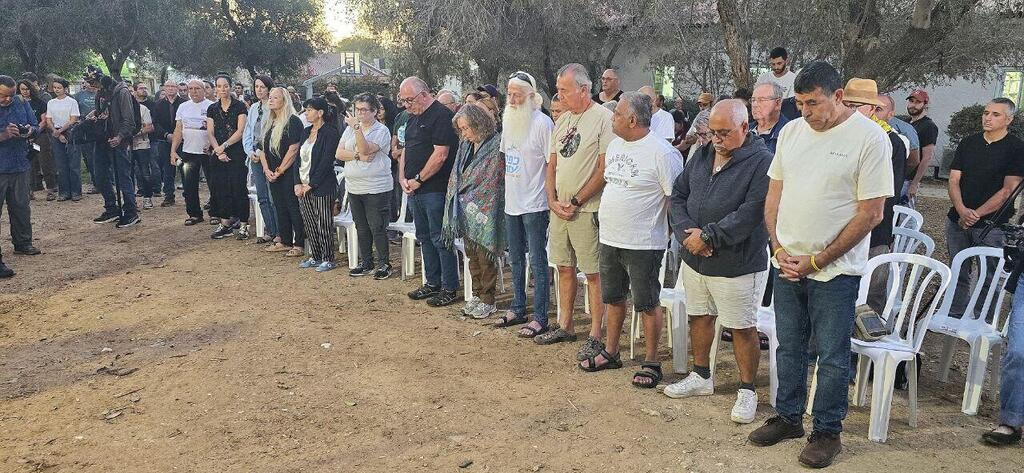
Residents of Kibbutz Kfar Aza stand in silence during a memorial ceremony marking two years since the October 7 attack and the start of the war
(Photo: Meir Even Haim)
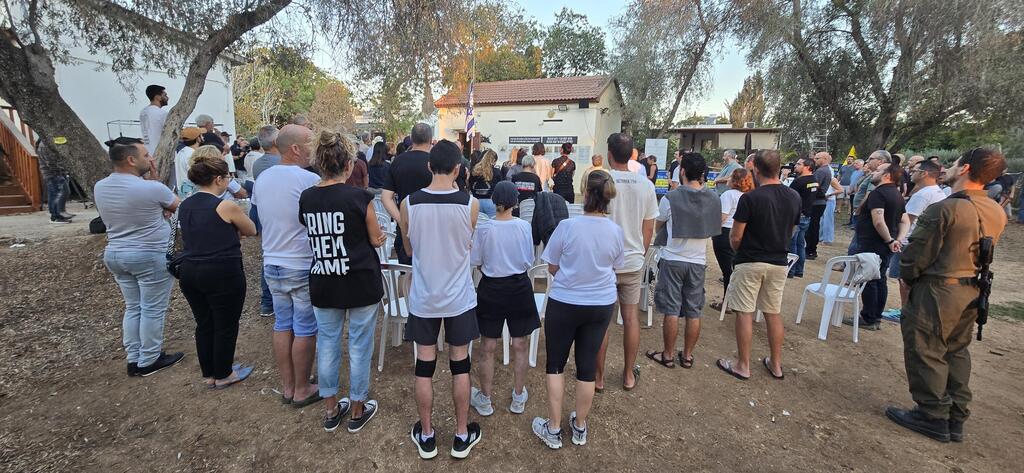
(Photo: Meir Even Haim)
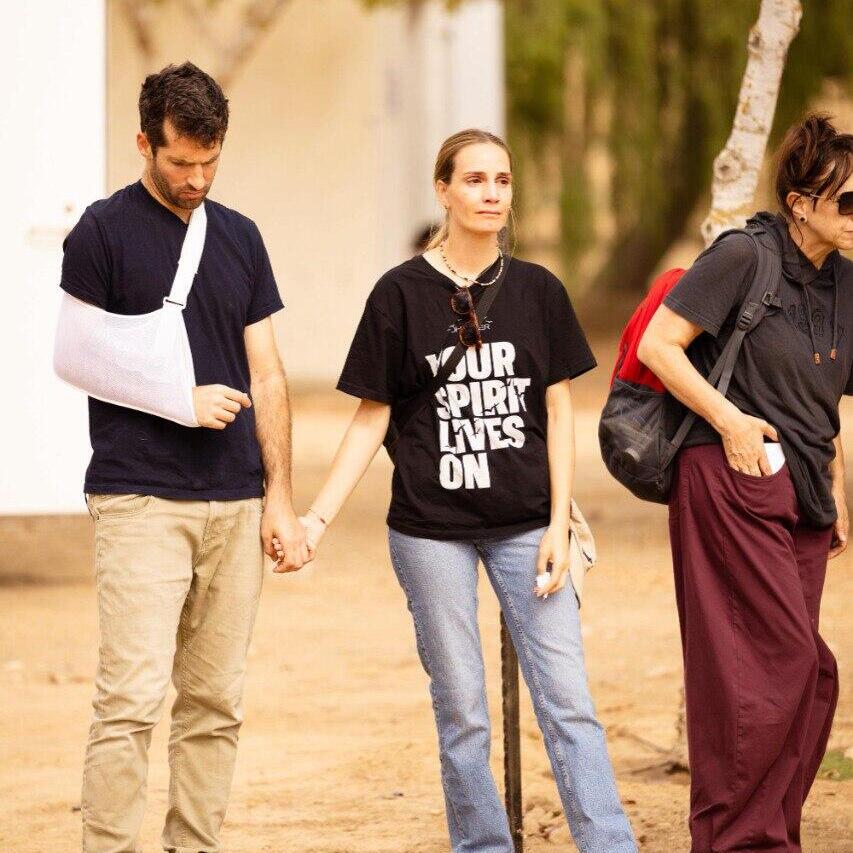
Sagui Dekel Chen, a former hostage, holds hands with his wife Avital during his first visit to the cemetery in Nir Oz, nearly a year after his release from captivity in Gaza
(Photo: Ohad Shahar)
In Be’eri and Nir Oz, residents visited cemeteries that have swelled dramatically since that cursed day.
Sagui Dekel Chen, a survivor of captivity in Gaza, visited the cemetery in Nir Oz for the first time. “Somehow, in a whirlwind, I survived,” he said. “I’m above all this, but not after all this. Today is my first time here, though in my dreams and thoughts throughout captivity, I was here often—without knowing the names, without knowing how small some of the coffins were.”