

Following multiple rocket attacks from Gaza into Israel in recent days, the Israeli military is preparing for further escalation of tensions as the Muslim holiday of Ramadan enters its final week.
The IDF is confident that Hamas shares the common goal of stability and security that would ensure the easing of restrictions for Gazan civilians. Hence, protests and riots on the border with Israel have been kept at bay, even throughout the recent charged days of clashes at the Al-Aqsa Mosque.

Still so, the upcoming week marks the last days of the holy month, keeping Israeli security forces on high alert and prepared for any deterioration of the security situation.
One of the central concerns is sniper attacks aimed at Israelis close to the border with Gaza. Therefore, the high vigilance will be maintained in the IDF Gaza Division, who are supported by additional armored and infantry forces.
The underground facility the IDF air force demolished last week, which stored chemicals for rocket engines, crippled Hamas' ability to regroup following last May's war. The assets destroyed were significant for the efficiency and accuracy of long range missiles belonging to Hamas.
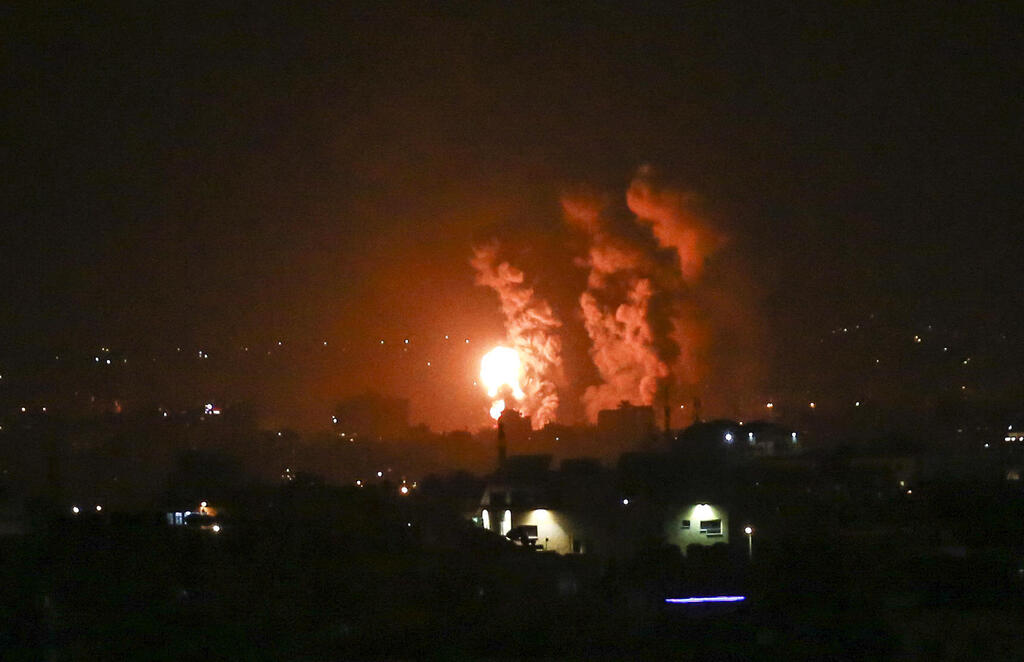
IDF attacks in Gaza in response to rocket fire
(Photo: AFP)
More so, the IDF and political representatives decided to close off the Erez border crossing for Gazan workers on Sunday as a punitive measure and an alternative strategic tactic in the wake of recent rocket attacks.
Security officials held an security assessment following Wednesday's rocket fire, which hit a residential home in the southern city of Sderot after the Iron Dome had failed to intercept it.
According to the IDF, at least two of the recent rocket launches were carried out by the Palestinian Islamic Jihad (PIJ) as a direct response to the violence that took place at the Temple Mount last week. The IDF predicts that these attacks are an attempt by Gaza's second-largest terror organization to intimidate Hamas.

Damage from rocket attack in Sderot
(Photo: Roy Idan)
Meanwhile, Hamas - Gaza's rulers - juggles between trying to maintain order in the Strip, and be seen as supporting the violence and terror attacks in Jerusalem and the West Bank.
The newfound Israeli preference of civilian sanctions over military ones in Gaza derives from the strategic benefit of the tactic. The toll of closing the border crossing to Israel is heavy for Gazan civilians.
The measure blocks out thousands of workers that have grown accustomed to the generous salaries they make in their jobs in Israel, in comparison to those they received while working in Gaza. The last few months of improved conditions for the Gazan population brings them face to face with the realization that order and security is of their best interest.
As opposed to previous escalations, this time the Gazan public has much more to lose if their rulers undermine the status quo.