

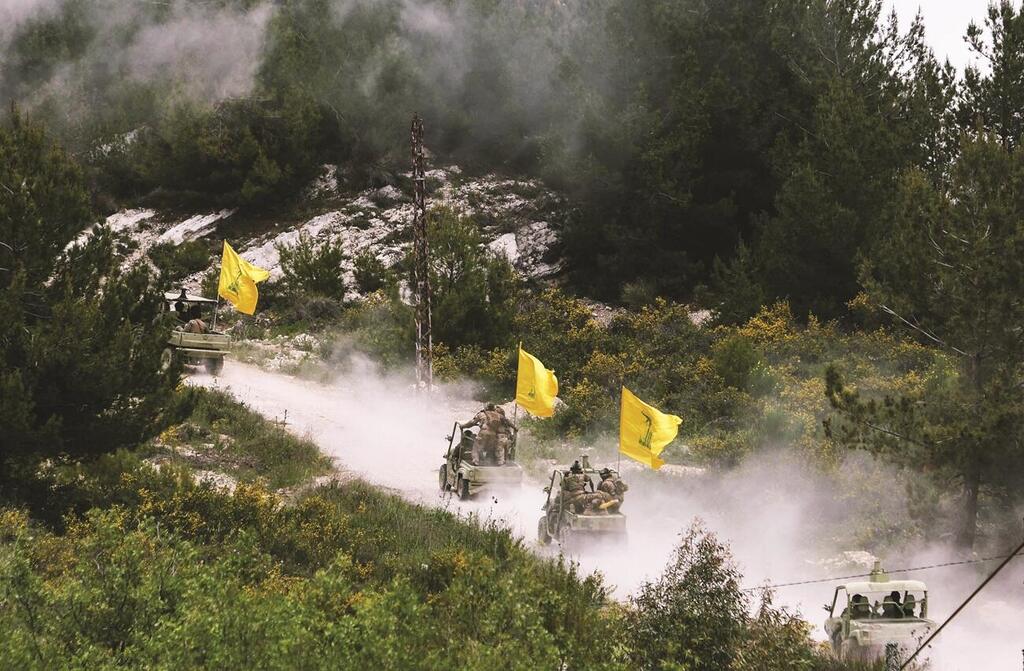
The IDF continued overnight Sunday to strike sites in Lebanon used for storing weapons and operating launchers belonging to Hezbollah, as daily attacks target what officials describe as the terrorist organization’s efforts to rebuild its capabilities.
Strikes have been carried out by fighter jets, drones targeting vehicles carrying Hezbollah terrorists, as well as artillery and machine gun fire. Despite the sustained military activity, there has been no significant diplomatic breakthrough, and the situation along the northern front appears to be in a holding pattern pending broader regional developments, particularly involving Iran.
Three upcoming meetings are expected to clarify or potentially advance developments.
The first is a Lebanese government session scheduled for Monday. Lebanese Army Commander Rodolphe Haykal provides monthly updates to the cabinet on progress in implementing a plan to consolidate weapons under state control. According to recent reports, he is expected to present the second phase of that plan, covering areas north of the Litani River.
Hezbollah has refused to relinquish its weapons, arguing that U.N. Security Council Resolution 1701 applies only to the area south of the Litani. The terrorist organization maintains that instead of pressuring it, the Lebanese government should focus on securing the withdrawal of remaining forces from southern Lebanon.
Hezbollah Secretary-General Naim Qassem is also expected to deliver a speech Monday at a memorial event for leaders of the terrorist organization, and is anticipated to address developments in Lebanon and the wider region.
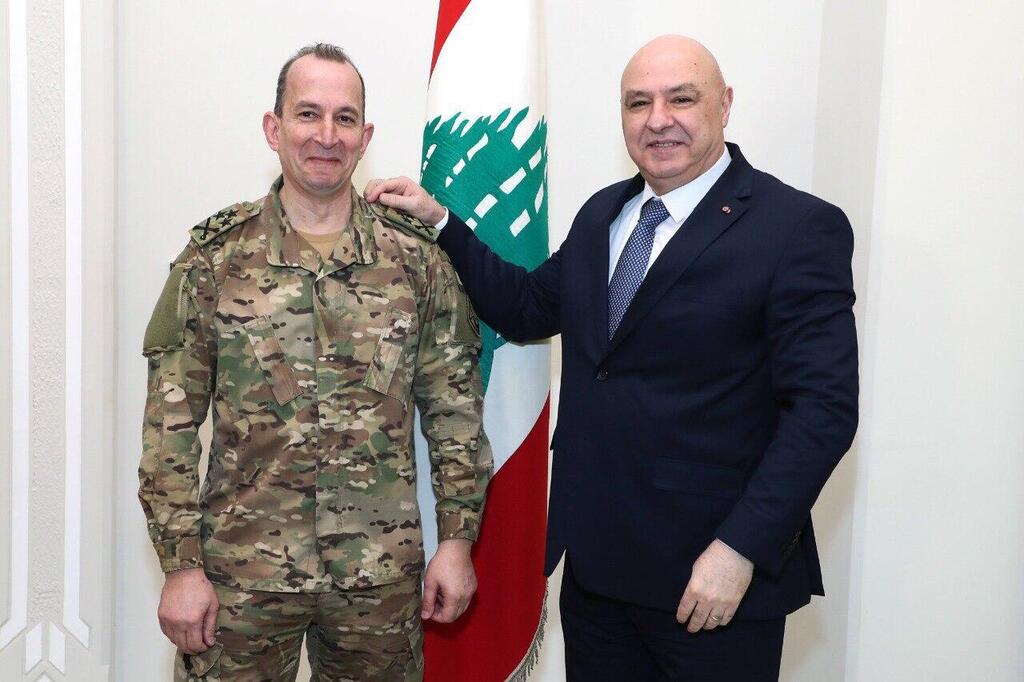
Lebanese Army Commander Rodolphe Haykal and Lebanese President Joseph Aoun
Another key meeting, set for the 25th of the month, involves the ceasefire monitoring mechanism committee, which has convened 13 times in 2025. The body was initially limited to military representatives but was later expanded to include Simon Karam, a former Lebanese ambassador to the United States, as the civilian head of the Lebanese delegation.
Senior Hezbollah officials opposed Karam’s inclusion, describing it as a “second mistake,” following what they called the first error — the plan to consolidate weapons — undertaken “under continued occupation of Lebanese territory and daily attacks.”
From Hezbollah’s perspective, any discussion of its weapons must take place solely within the framework of a domestic Lebanese national defense strategy, free of external pressure and only after several conditions are met: a halt to attacks, the return of Lebanese prisoners and a full withdrawal from southern Lebanon.
The terrorist organization views the ceasefire monitoring committee as having a strictly technical mandate limited to implementing commitments under the agreement, which it says applies only to areas south of the Litani River. Hezbollah lawmaker Ibrahim Mousawi reiterated that position earlier this month.
Al-Akhbar, a Lebanese newspaper affiliated with Hezbollah, published an article Friday titled: “What if the state dared to withdraw from the mechanism?” The piece argued that as long as attacks, destruction and killings continue following the 2024 ceasefire declaration, and as international promises remain unfulfilled, reconsidering cooperation with the mechanism becomes a legitimate question.
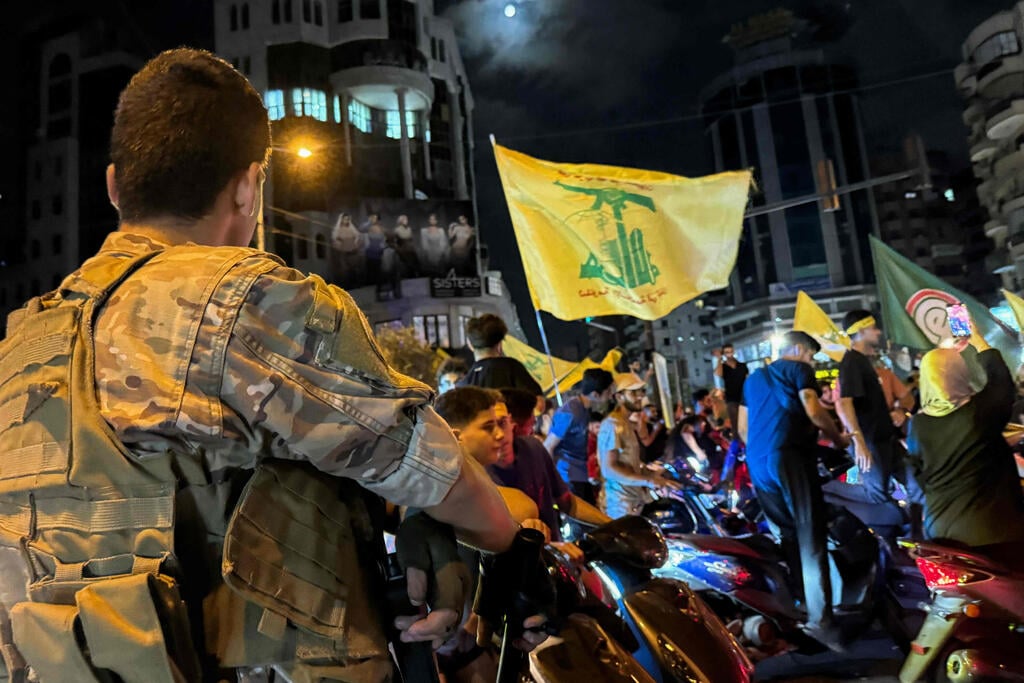
(Photo: Ibrahim AMRO / AFP)
The article outlined potential advantages and disadvantages of suspending cooperation, concluding that such a move would restore Lebanon’s national dignity and its right to defend itself “by all means,” asserting that the world respects only those who respect themselves.
A further significant date for Lebanon is March 5, when a conference in France is scheduled to support the Lebanese Army and security forces. A preparatory meeting is expected beforehand. Earlier this month, Lebanese Prime Minister Nawaf Salam called on Arab states to participate in the conference, saying, “We need your help.”
Lebanese leadership, including President Joseph Aoun, Salam and Haykal, has emphasized in meetings abroad that the army requires substantial assistance to carry out its missions. Haykal recently returned from a visit to the United States, where he met with political and military officials to discuss ways to enhance military cooperation and support the army’s capabilities.
In a statement, the Lebanese Army said American officials praised its performance and operations south of the Litani River.