

According to the latest update from the U.S.-based Iranian human rights organization HRANA, which relies on a network of sources inside and outside Iran, at least 538 people have been killed since the protests began in late December. HRANA said it had verified the deaths of 490 protesters and 48 members of the security forces, with more than 10,600 people arrested. Reuters said it was unable to independently verify the figures, and the true toll may be significantly higher.
Several situation assessments were held over the weekend at the IDF, led by Chief of Staff Lt. Gen. Eyal Zamir, following the protests in Iran. The military stressed that the demonstrations are an internal Iranian matter, but said it remains prepared on the defensive front and is continuously improving its capabilities and operational readiness. “We will know how to respond forcefully if required. The IDF will do whatever is necessary to protect the citizens of the State of Israel,” officials said.
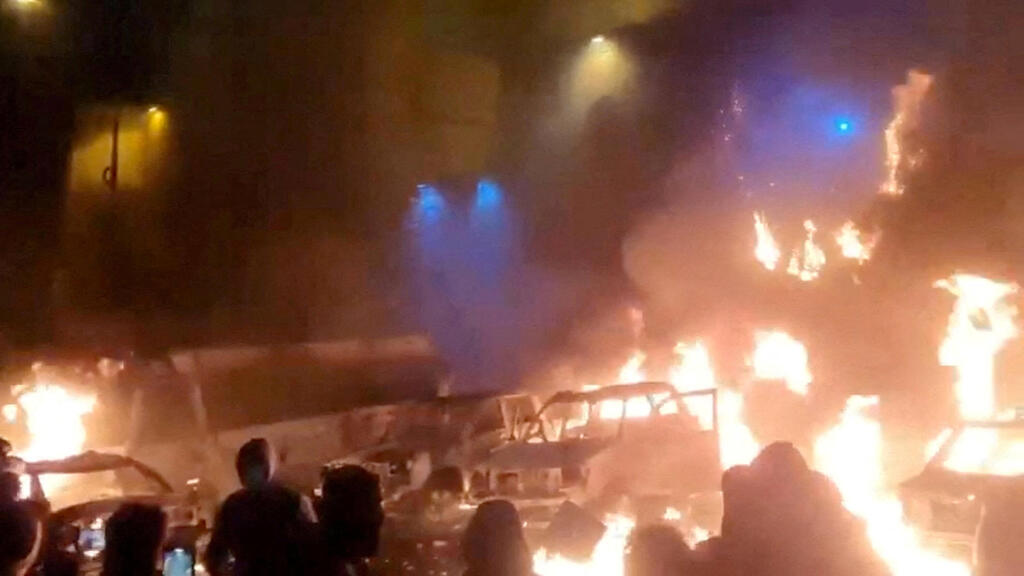
Protests in Tehran


At the start of the weekly Cabinet meeting, Prime Minister Benjamin Netanyahu said that “Israel is closely monitoring what is happening in Iran. The protests for freedom have spread across the country. The people of Israel, and the entire world, stand in awe of the tremendous courage of Iran’s citizens. Israel supports their struggle for freedom and strongly condemns the mass slaughter of innocent civilians.” He added that “we all hope that the Persian nation will soon be freed from the yoke of tyranny, and when that day comes, Israel and Iran will once again be loyal partners in building a future of prosperity and peace for both peoples.”
Footage verified by Reuters showed large nighttime demonstrations in Tehran, as well as fires, debris and explosions in the northeastern city of Mashhad. The flow of information from Iran has been severely restricted by an internet blackout imposed by authorities.
Three Israeli sources said Israel was placed on a high-alert footing amid concerns over possible U.S. intervention. An Israeli military official said Israel views the protests as an internal Iranian matter but is monitoring developments closely and is prepared to respond “with power if need be.”
Protests in Tehran
(Photo: Social Media/via REUTERS)
The New York Times reported Sunday that U.S. Secretary of State Marco Rubio spoke with Netanyahu over the weekend, with the two discussing the protests in Iran amid updated assessments in Jerusalem that there is now a tangible possibility the regime could fall.
According to several senior U.S. officials quoted by the newspaper who are familiar with the matter, President Donald Trump has been briefed in recent days on new strike options against Iran, as he weighs carrying out his threat to bomb the country over the violent suppression of the protests. At this stage, Trump has not made a final decision on a strike, but the officials said he is seriously considering ordering airstrikes in response to the ayatollahs’ regime’s efforts to crush the demonstrations, which erupted over Iran’s economic situation and deteriorating living conditions.
The Times reported that Trump was presented with a range of options, including strikes in Tehran against nonmilitary targets. Senior U.S. officials added that at least some of the options presented are directly linked to elements of Iran’s security services, which have used violence to rein in the growing protests.
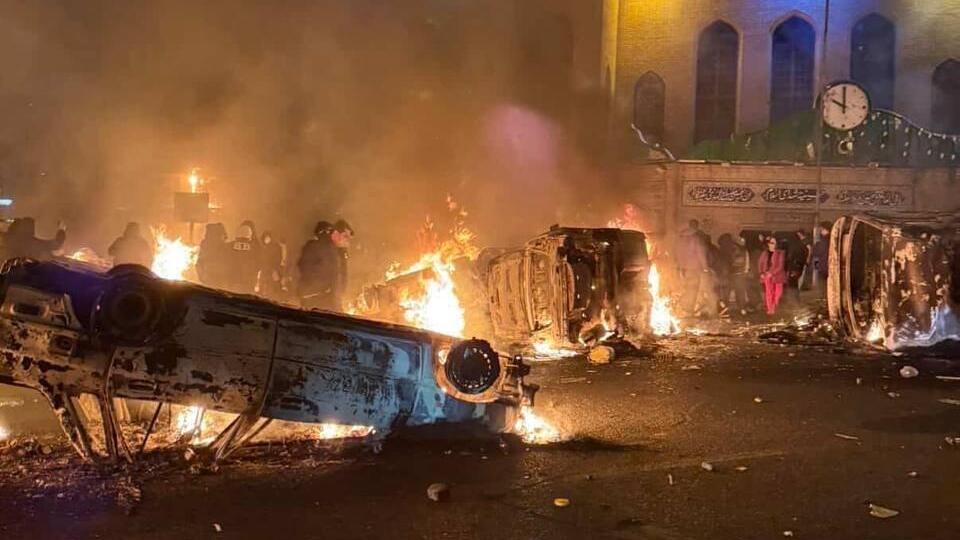
Vehicles set on fire in protests in Iran
At the same time, officials in Washington have stressed that the United States must be cautious, warning that strikes on Iran could have the opposite effect by rallying public support behind the ayatollahs’ regime, or trigger a wave of retaliatory attacks by Tehran that could threaten U.S. troops and diplomats across the region. According to a senior U.S. military official, American commanders would want additional time before any possible strike to “reinforce positions and prepare defenses” ahead of a potential Iranian response.
Earlier Sunday, Iranian Parliament Speaker Mohammad Bagher Ghalibaf warned that “in the event of aggression against Iran, American bases in the region and Israel will be within our range.” Iranian President Masoud Pezeshkian also sought to deflect blame toward Israel, saying Iran’s enemies want to “sow chaos and disorder” following the 12-day war waged against Iran in June. Pezeshkian said his government is determined to address the Iranian people’s economic problems and is willing to listen to the public, but urged Iranians to distance themselves from “rioters and terrorists.” He claimed that the United States and Israel are giving instructions to the “rioters” in an effort to destabilize Iran.
First published: 17:21, 01.11.26