

Hamas has moved quickly to reassert control in Gaza since Israeli forces withdrew from parts of the territory in October under the ceasefire agreement and has succeeded in rebuilding much of its operational strength, the New York Times reported on Monday, citing Israeli security officials and a senior Arab intelligence official.
Local businesspeople interviewed said Hamas police forces have returned to the streets of Gaza, armed operatives have carried out executions of rivals and senior officials have imposed fees on several valuable imported goods entering the territory.
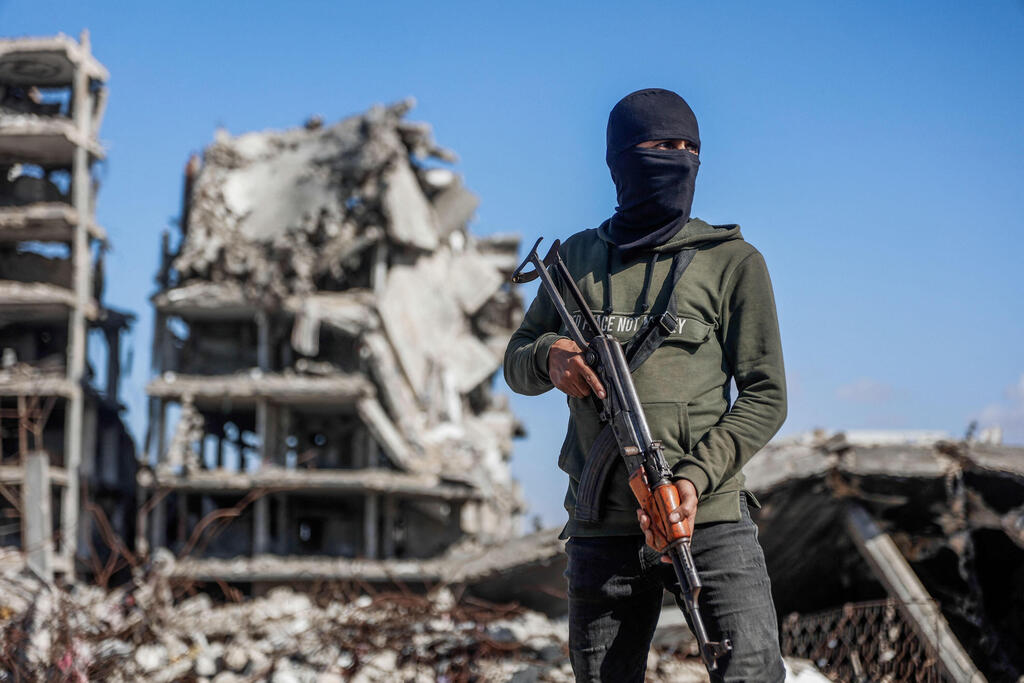
More than two years of war killed senior Hamas commanders and thousands of fighters, and significantly depleted the group’s weapons stockpiles. Israel currently controls more than half of the Gaza Strip, the report noted. “Hamas was hit hard, but it wasn’t defeated,” said Shalom Ben Hanan, a former senior Shin Bet official. “It's still standing.”
The group’s rapid reorganization poses a major challenge to the U.S. plan for Gaza’s reconstruction, which envisions a demilitarized territory and the dismantling of Hamas’ military infrastructure, including its tunnel network and weapons production sites. Hamas, however, emerges from the fighting with a foundation it can rebuild on, the officials told the paper.
Ben Hanan, who the report said is briefed by the Shin Bet leadership, estimated the group still has about 20,000 fighters. Brig. Gen. (ret) Erez Winner, dismissed in March from a senior role in the Southern Command after losing classified documents, said Hamas has replaced commanders killed during the war at a rapid pace.
Israeli and Arab officials said Hamas retains numerous locations in which to hide and store weapons, with more than half of its tunnel network believed to be intact. Ben Hanan added that Hamas continues to operate Gaza’s core governing institutions, including security services. While its rocket arsenal has dwindled, the group still holds large quantities of lighter weapons such as automatic rifles, RPG launchers and mortars.
Residents told the newspaper that Hamas gunmen are manning checkpoints in parts of Gaza, questioning and at times detaining people. They said police forces have also tried to prevent looting of aid trucks and abandoned homes. “They’re trying to convey to the public that they’re still in charge and they’re providing security,” said Nidal Kuhail, a 31-year-old resident of Gaza City. “You can feel their presence, but they also appear to be weaker than the past.”
Meanwhile, senior Hamas official Husam Badran said in an interview that the group is prepared to allow a committee of Palestinian technocrats to administer Gaza, warning that “Chaos would be the result of leaving behind a power vacuum. That would be the most dangerous decision.” Responding to residents’ claims, he added that police are attempting to “preserve security and stability.”
Still, Hamas has employed brutal tactics to settle accounts with rivals. In mid-October, the group forced eight men to kneel in a crowded Gaza street before executing them by gunfire, according to the report. Hamas internal security figures said the killings were retaliation for the deaths of several Hamas fighters during the war. On Thursday, Yasser Abu Shabab — the leader of a Palestinian militia backed by Israel — was killed in clashes in eastern Rafah. While it was unclear whether Hamas was involved, the group publicly welcomed his death.
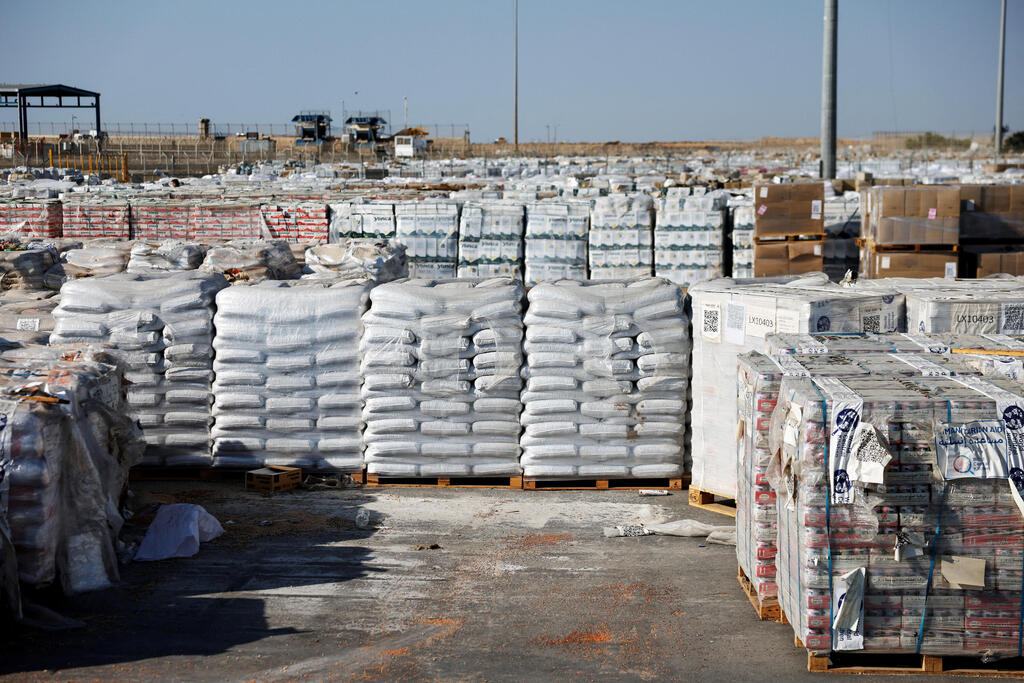
Humanitarian aid waiting at Kerem Shalom border crossing
(Photo: REUTERS/Amir Cohen)
Even as it seeks to restore security, Hamas has also tried to raise revenue under the ceasefire. Hundreds of trucks loaded with aid and commercial goods now enter Gaza daily — a sharp increase over wartime levels. Four Gaza-based businesspeople told the paper that Hamas has been collecting money from certain high-value imported items, including computers and solar panels. Ismail Thawabteh, director-general of the Hamas-run government media office in Gaza, denied that any taxes are being collected on imported goods.
Despite its partial recovery, it is clear that Hamas does not hold the power it had before Oct. 7, 2023, when it ruled Gaza with an iron grip, both politically and militarily. The half of the enclave it controls today was devastated in the war, and the Trump administration refuses to consider rebuilding areas that remain under its authority. Israeli officials say most of the group’s funding sources have also been cut.
But according to the Times, the most important development is that Hamas faces unprecedented pressure from Israel and the international community to relinquish whatever weapons it still holds. The Trump plan for Gaza is built on the dismantling of Hamas’ armed capabilities and the establishment of a new governing body backed by an international stabilization force.
Badran said Hamas is willing to discuss the group’s weapons — but only in the context of “serious” negotiations on a full Israeli withdrawal from Gaza, a complete halt to military activity in the territory, and the creation of a Palestinian state in the West Bank, Gaza and East Jerusalem.
“Without that, talking about these matters would be nonsensical. Without value,” he said. He also hinted that Hamas is open to a long-term ceasefire. For the organization, surrendering all of its weapons would amount to giving up a core element of its identity — the ability to resist Israel. Beyond its ideological commitment to armed struggle, Hamas members view their weapons as essential for self-defense, said Wesam Afifa, a Palestinian analyst and former director of the Al-Aqsa television channel.
Other Palestinian analysts said they believe Hamas may take a pragmatic approach in order to preserve some future role in Gaza and secure a long-term ceasefire with Israel. While a long-term truce is possible, Afifa said, a wholesale surrender is not in the offing.
Several Arab mediators also told the paper they believe they could persuade Hamas to give up part of its weapons, provided President Trump offers guarantees that Israel will not return to war. Senior Israeli officials have indicated they are unlikely to accept only a partial dismantling of Hamas, saying it would not align with the American vision. “This territory will be demilitarized, and Hamas will be disarmed,” Prime Minister Benjamin Netanyahu said at a Cabinet meeting in mid-November. “Either this will happen the easy way or it will happen the hard way.”
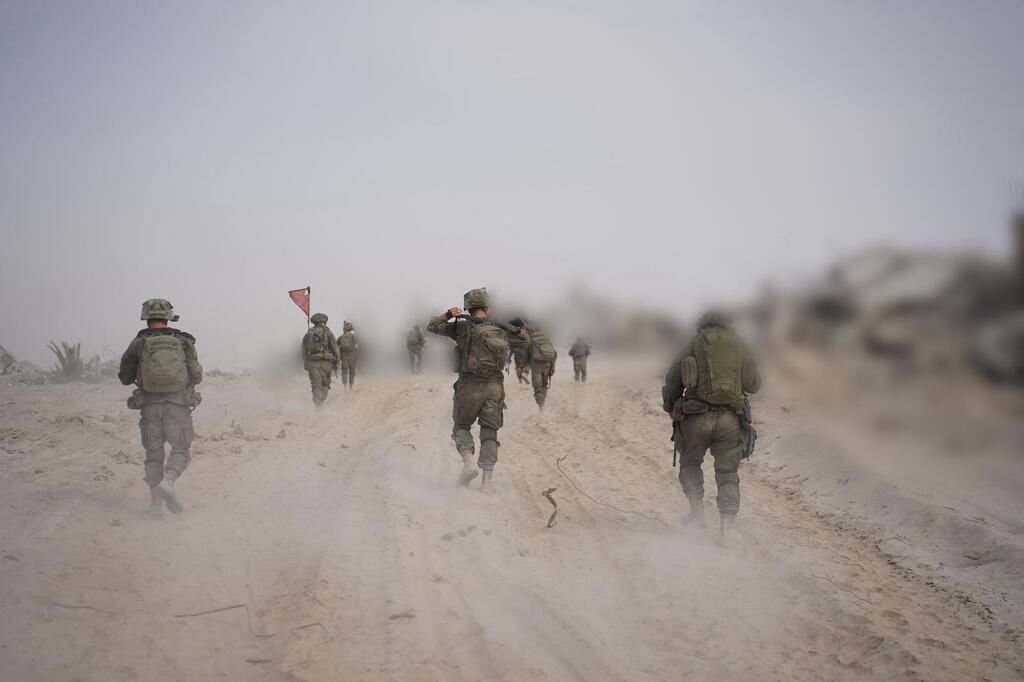
IDF forces operating in Israeli-controlled part of Gaza
(Photo: IDF)
Israeli political and military officials have complained that with each passing day of the ceasefire, Hamas deepens its control and reorganizes its forces, making it harder to introduce a viable replacement. The paper quoted Knesset Foreign Affairs and Defense Committee member Moshe Tur-Paz, who said Hamas’ resurgence “happened very quickly. The moment to bring in the new government was the moment the ceasefire started. Hamas was at its weakest.” He added that the slow process of setting up new governance in Gaza is “playing in Hamas’ favor.”
Ben Hanan, the former Shin Bet senior official, warned that Hamas could again pose a future threat if Israel becomes complacent. “Hamas is besieged,” he said. “But if it continues controlling parts of Gaza and wants to rebuild its capacities, it will find a way to rebuild them.” He added: “The next battle might be in 10 or 20 years, but it could be much worse than Oct. 7.”