

President Donald Trump said Tuesday he believes the war with Iran could end soon, as U.S. forces continue strikes targeting the country’s military capabilities, according to an interview with the New York Post.
Speaking by phone, Trump said U.S. operations were significantly degrading Iran’s offensive capacity, describing the campaign as nearing its final stages.
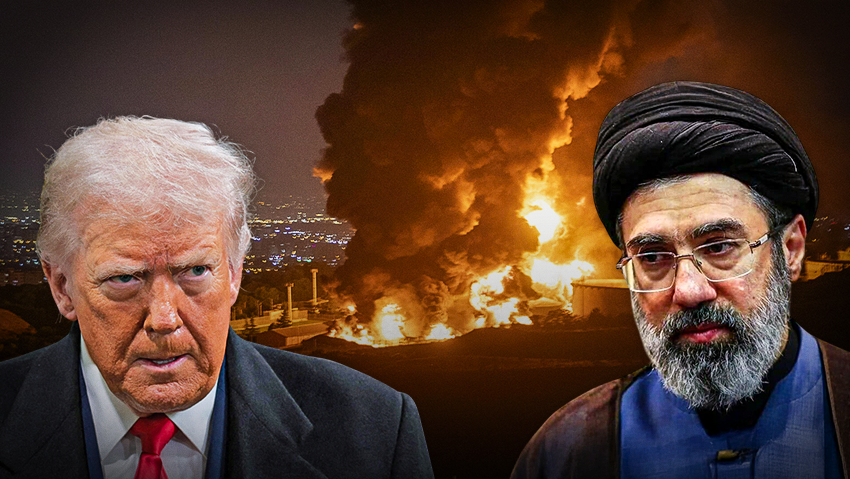
(Photo: Anna Moneymaker / AFP, Stringer / Getty Images)
“We’re not going to be there too much longer,” Trump said, adding that U.S. forces are continuing strikes to eliminate what he described as Iran’s remaining offensive capabilities.
His comments came as fighting between Israel and Iran entered its fifth week, with ongoing missile exchanges and U.S. involvement in strikes on Iranian targets.
Trump also suggested that the Strait of Hormuz — a critical global shipping route that Iran has closed for more than a month — could reopen without direct U.S. intervention. He said other countries that rely on the waterway could take responsibility for restoring navigation.
“I think it’ll automatically open,” Trump said, according to the Post. “Let the countries that are using the strait go and open it.”
The closure of the strait has disrupted global energy markets and raised concerns about maritime security in the Gulf.
Trump declined to provide details on recent U.S. strikes near the Iranian city of Isfahan, where key nuclear facilities are located, but said the attacks caused significant damage. He referenced footage he shared on social media showing large explosions, calling the strikes effective.
US strikes in Isfahan


“I’d rather not say,” Trump said when asked about specific targets, adding that more information would likely emerge later.
The president also reiterated that preventing Iran from obtaining a nuclear weapon remains his primary objective, suggesting that U.S. operations have significantly weakened Tehran’s nuclear capabilities.
At the same time, Trump indicated that the situation inside Iran may be shifting, describing what he characterized as a change in leadership dynamics, though he did not elaborate.
Despite signaling that the conflict could wind down soon, the U.S. has deployed thousands of troops to the region, including Marine amphibious units and Army airborne forces, leaving open the possibility of further escalation if needed.
Trump declined to say whether senior officials, including special envoy Steve Witkoff or Vice President JD Vance, would be sent to participate in potential diplomatic talks.
“I can’t talk to you about this stuff,” he said, according to the Post, when asked about possible negotiations.