


Residents of northern Israel woke Monday with a sense that the emerging security reality surrounding the agreement with Iran could put their lives in danger again, this time from Hezbollah in Lebanon. Hezbollah, the Iran-backed terror group that operates from Lebanon, has continued to present itself as determined to fight Israel. For Israelis living near the Lebanese border, the concern is that any arrangement tied to the Iran deal could leave them exposed once more.
“I woke up with a sense of betrayal,” said Moran Dadush, from Moshav Goren in the western Galilee. “Not from Iran and not from Hezbollah, but from the State of Israel and the government of Israel.” Dadush said residents of the north were left with basic questions as world capitals discussed agreements and ceasefires.
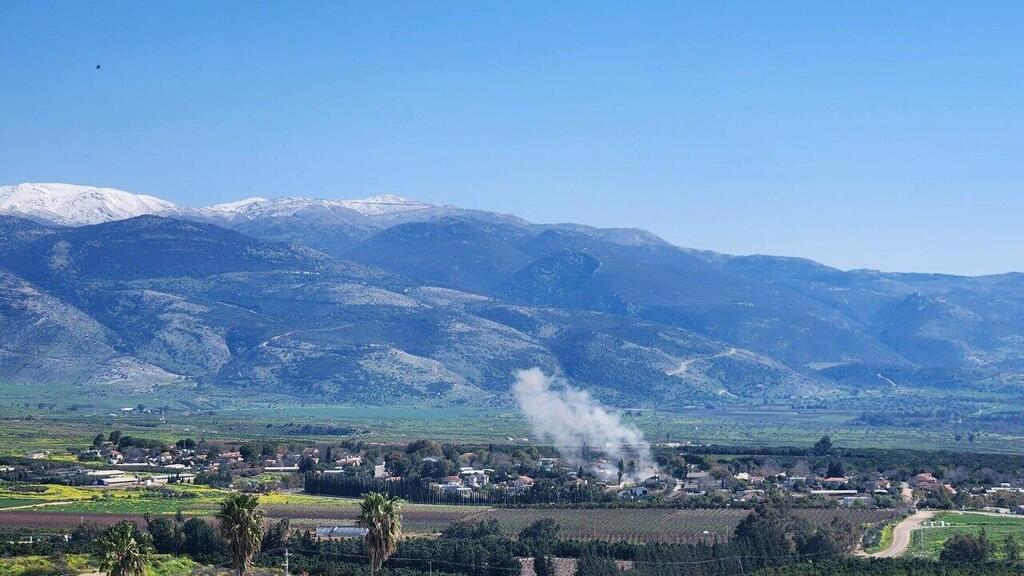
“While agreements are signed and ceasefires are declared in world capitals, we, the residents of the north, are left with the hard questions,” he said. “Who will guarantee our security? Who will prevent the next war? And who will take responsibility if the threat returns to the fence?”
He said that, as in previous ceasefire rounds since November 2024, when the war was halted without what he viewed as a stable decision, border residents felt they were “the first to pay and the last to receive answers.”
In Lebanon, residents began trying to return to the country’s south amid reports that the agreement could include an Israeli withdrawal from Lebanon.
Prime Minister Benjamin Netanyahu, speaking at a press conference, pledged that Israel would keep its security zones as long as necessary. “We will remain in the security zones as long as needed to defend our country,” Netanyahu said. “After October 7, I set a simple principle: Israel will not allow terror organizations to prepare for a massacre near our citizens. Today, the heroic IDF soldiers stand between the terrorists and our citizens.”
Despite statements by Netanyahu, Defense Minister Israel Katz and IDF commanders, residents of Israeli communities along the confrontation line fear the collapse of the current defensive line. They also fear that Israel’s security could become dependent on political and economic interests in the Trump administration.
Assaf Langleben, head of the Upper Galilee Regional Council, said responsibility for the safety of border residents belongs only to the State of Israel.
“Our test is not in declarations about agreements, but in actions,” he said. “After almost three years of war, the residents of the Upper Galilee are tired of promises and demand one thing: real security that will allow them to return to normal lives.”
Langleben said the IDF must remain on the line of outposts in southern Lebanon and act firmly to prevent any attempt to harm communities in northern Israel. “Only presence, enforcement and determined action will ensure that the reality of October 7 does not repeat itself on any border of the State of Israel,” he said.
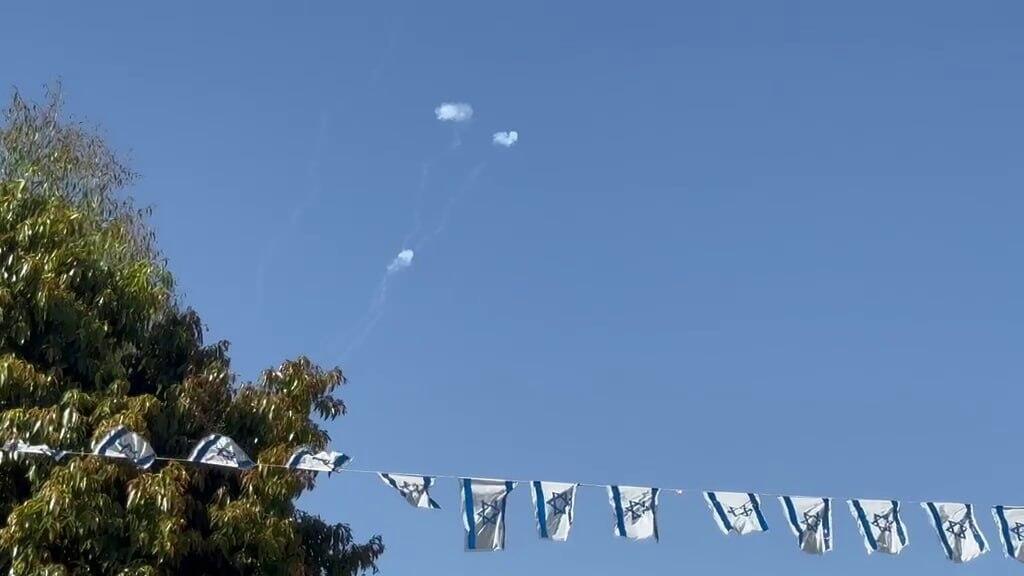
Interception in the North
In the Galilee Panhandle, residents also warned against a return to what they described as old security assumptions from before the war. Ofri Eliyahu-Rimoni, a resident of Yesud HaMa’ala, said the idea of proportional response was one of the greatest dangers to Israeli deterrence.
“A quiet border is a dangerous border,” she said. “That is a concept that should have shattered on October 7, but unfortunately we are returning again and again to the same equation: quiet will be answered with quiet, fire toward the State of Israel will be answered with a proportional response.”
Against the backdrop of disappointment with Netanyahu, Eliyahu-Rimoni said such formulas damage Israeli deterrence and harm the chance for a better future.
“As a resident of the Galilee Panhandle, I believe the next elections will be decided over Lebanon,” she said. “We as residents must make sure all political players put the challenge on the northern border at the top of the agenda, because that is what will determine the security and diplomatic future of the State of Israel.”
She said that if Israel properly leverages its military achievements and creates international understanding that a buffer zone in southern Lebanon is a regional interest, it could protect civilians on both sides of the border.
“With joined hands with additional international players, we will be able to create a better future for the citizens of Lebanon and the citizens of Israel,” she said.
Senior Israeli officials expressed satisfaction with the Lebanon-related aspects of the agreement.
“Iran’s pressure on us to withdraw did not work. They received a complete refusal. Now the ball will be in Hezbollah’s court,” the officials said. “If Hezbollah does not fire, it is accepting an Israeli security zone, which is a huge achievement from our perspective.”
The officials said Israel would continue clearing infrastructure in areas where Hezbollah is not present. “Compared with where we were three months ago, this is clearly a change for the better,” they said.
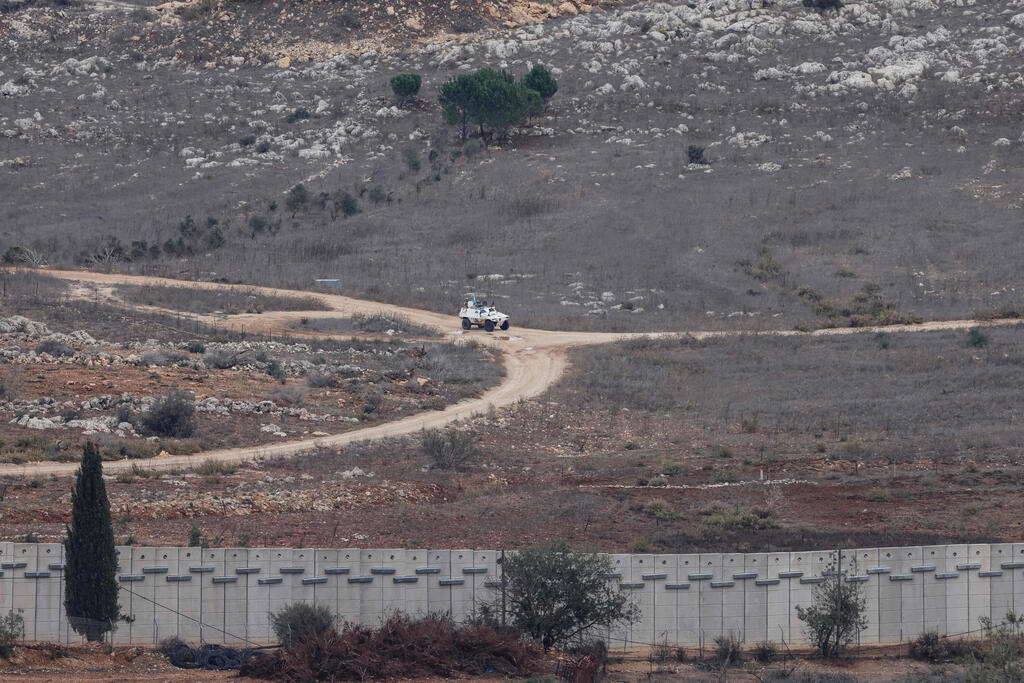
The Lebanese border
(Photo: Jalaa MAREY / AFP)
At the same time, the officials assessed that the situation in southern Lebanon would not last long. “It will be very difficult for Hezbollah to accept recognition of Israeli control in southern Lebanon while doing nothing about it. That is a great humiliation for them,” they said. “If they fire toward Israeli territory, Israel will strike Dahieh.”
Dahieh, a Hezbollah stronghold in Beirut’s southern suburbs, has long been seen in Israel as a symbol of the group’s political and military power.
“Hezbollah is trapped here,” the officials added. “On the one hand, it wants a ceasefire because continued fighting challenges it. On the other hand, a ceasefire without an Israeli withdrawal is a disgrace for it, because that means it is not protecting southern Lebanon and is accepting an Israeli occupation even north of the Litani.”
Metula Mayor David Azulay also criticized Netanyahu’s remarks Monday evening, saying he was stunned by “the passion of the statements, the promises and above all the ongoing neglect of Israeli citizens.” Metula, one of Israel’s northernmost towns, sits near the Lebanese border and has been heavily affected by the fighting.
Azulay said Israelis had been living through nearly three years of bloody war, which began with murder and what he called “the second Holocaust,” a reference to the October 7 attacks. He said the people of Israel and the IDF had achieved major military successes on multiple fronts, but that those successes had not been translated into diplomatic results. Azulay invited Netanyahu “to see up close the destruction of the communities, the population, the abandonment and the residents who are in post-trauma.”
“We would be happy to host the prime minister so he can hear about children who hid under tables during sirens,” he said. “Our luck is not the government of Israel and the person leading it, but the amazing people who mobilized and brought military achievements,” Azulay said. “When we are managing rehabilitation with about 70% of the budget coming from donations, it shows how disconnected the government and the person leading it are.”
He called it “another black and sad day” for the citizens of Israel and the Galilee. “We are preparing for the next round, hoping there will not be an October 7 here in the north,” Azulay said. “And all of it is the result of complete disconnection.”