

A portable XRF device was inaugurated at Ben-Gurion University of the Negev in memory of Nadav Goldstein-Almog, a university graduate who was murdered on October 7, 2023. The device will be used by students in geology, archaeology and other fields.
Nadav Goldstein-Almog, 48, was murdered in the massacre at Kibbutz Kfar Aza along with his eldest daughter, Yam, 20. His wife, Chen, and their three other children were abducted to the Gaza Strip and released after 51 days as part of a hostage deal.
Gallery
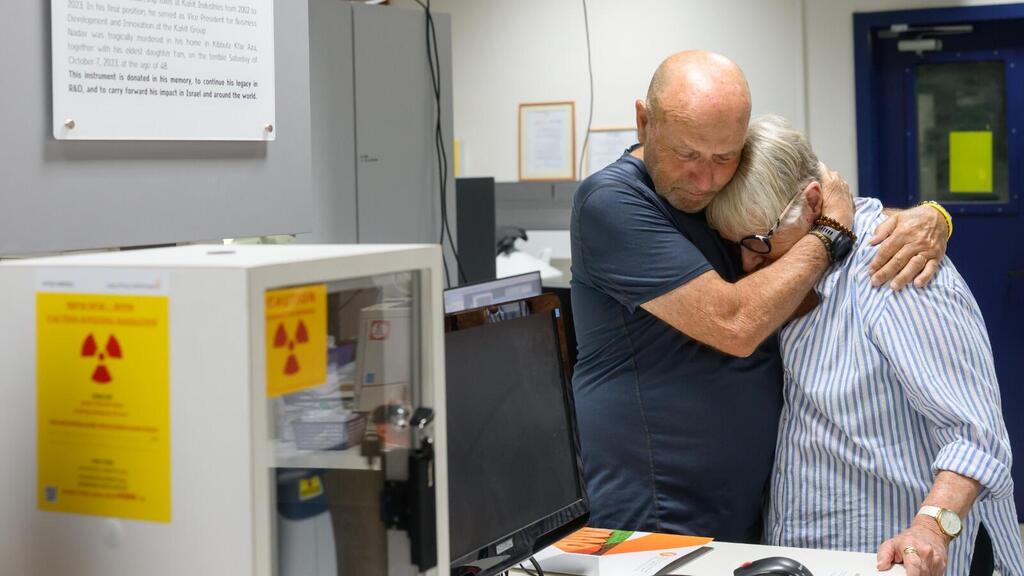
Nadav Goldstein-Almog's parents beside the device
(Photo: Dani Machlis, Ben-Gurion University)
Nadav was vice president of business development and innovation at Kafrit and a graduate of Ben-Gurion University of the Negev. To commemorate him, the university inaugurated a portable XRF device donated by the company and the Goldstein family. It will be available to researchers and students across a range of scientific disciplines, enabling advanced analysis of materials outside the laboratory.
The portable XRF device uses X-rays to identify the elemental composition of a wide variety of materials without damaging the sample. Unlike traditional XRF systems, which are large, stationary devices designed exclusively for laboratory use, the portable device allows measurements to be conducted at research sites and archaeological excavations.
It is expected to serve researchers and students in materials engineering, geology, earth sciences, archaeology, environmental sciences and other research fields.
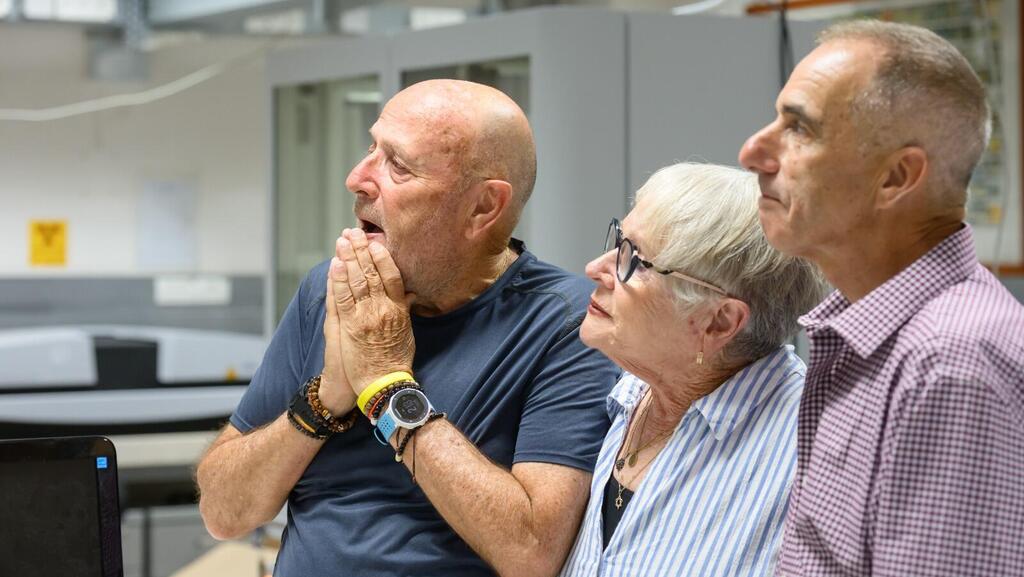
Nadav Goldstein-Almog's parents with Jeff Kaye (right), vice president of Ben-Gurion University
(Photo: Dani Machlis, Ben-Gurion University)
Nadav’s parents, Varda and David Goldstein, attended the inauguration alongside representatives of Kafrit, university researchers, faculty members and students. The device has already been used in research by a doctoral student in the university’s Department of Materials Engineering. The research led to the publication of a paper in an international scientific journal that included special thanks to the Goldstein family for donating the device.
“Our son, who was murdered, worked at Kafrit, an international Israeli company founded at Kibbutz Kfar Aza in 1973. The company is considered one of the world’s leaders in the development and production of additives and concentrates for the plastics industry,” his father, David, said.
“He had ties with the nanotechnology laboratory, where they work with this type of device. When people from the laboratory came to visit us, we discovered that the university itself did not have one. Kafrit decided to donate it. The geology department at Ben-Gurion University has also begun using the device. It is very much in keeping with Nadav’s spirit, a spirit of innovation and development.”
His mother, Varda, added: “We are commemorating Nadav and Yam through quite a few projects, but this initiative did not come from us, which makes it especially moving. We often commemorate him through sports, while this memorial reflects his professional life.
“As a bereaved family, we want him to be remembered as he was: a man of research and vision, an athlete and someone filled with the values of love for this country and determination.”

Nadav and Yam Goldstein-Almog
Varda and David are now rebuilding their home in Kfar Aza on the site where terrorists burned down the house in which they had lived.
“From the very beginning, we said we would return to Kfar Aza and rebuild the house,” she said. “It is not simple and it is not easy. All four of our children were born in Kfar Aza. Eight of our 10 grandchildren were born there, but some of them will not return.”
Members of the nanotechnology laboratory are scheduled to visit the kibbutz this week.
“When the family looked for a way to commemorate Nadav, it was important to them that the donation provide genuine value to research and students,” said Prof. Yuval Golan of the Department of Materials Engineering, associate vice president and dean for research and development.
“Nadav was someone who taught himself the field of materials and became an expert whom many professionals came to for advice. It is inspiring to see that from its very first uses, the device is already becoming part of the university’s research activities and serving its community of researchers and students.”