


IDF troops operating in southern Lebanon are facing the growing threat of explosive drones guided by fiber-optic cables. On Saturday alone, three soldiers were wounded by an explosive drone near Shlomi. Some troops say that in the absence of an effective tactical answer, they feel dangerously exposed, while the relevant protective equipment is being purchased by soldiers in the field with the help of civilian donations.
H., a reservist master sergeant serving in the 91st Division, is now on his sixth deployment in Lebanon since October 7. The current round, which began about a month ago and is expected to end only in another two months, will bring him to about 500 days of reserve service during the war.
Improvising solutions against Hezbollah drones


“In January, we finished a round in Syria that lasted three and a half months, and then we were called up again in April, to the Lebanon sector,” he said.
H. described the explosive drone threat as a constant concern.
“It preoccupies us a lot. Several times a day, we receive alerts about incidents, and unfortunately, every few days, the alert materializes after we fail to deal with it in real time. Right now, we have no clear answer to this threat, except to run to a shelter, hide and pray,” he said.
He pointed to one possible solution, a sight known as “Pagion,” which can lock onto a moving target.
“On paper, it is supposed to help, but the IDF does not have many of them, and our force currently does not have even one,” he said.
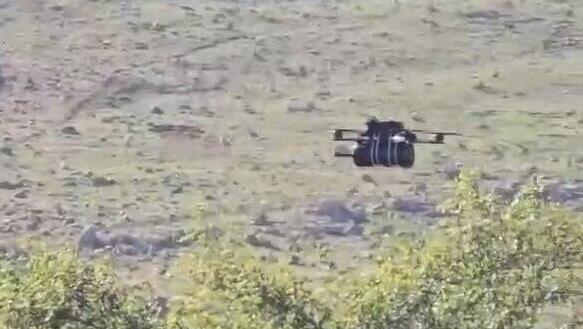
Unlike the UAV threat that was more common earlier in the war, he said, the explosive drones can “barely be heard,” leaving soldiers feeling helpless.
For now, troops are using “fishing nets,” which H. said they obtained independently.
“The goal of the ‘fishing nets’ we use is basically to push the drone’s impact farther away, so that if it comes at me, I won’t be killed, but ‘only’ wounded,” he said. “Instead of the army knowing how to supply us with them, company sergeants are raising money to buy them for us. They post a link to their Instagram story and ask civilians for money so we can buy life-saving equipment.”
H. said that three days ago, three soldiers in his unit were wounded by an explosive drone.
“In the field, they handled it with great courage and managed to evacuate them quickly for treatment,” he said.
He also described the danger caused by Hezbollah’s tactics in timing the launch of explosive drones.
“Hezbollah’s doctrine is to fire at us once and then send another drone that locks onto the rescue force. That adds to the fear, especially for those who rush to treat the wounded and could also be hit,” he said.
“This is a life-threatening danger and we are helpless against it. We are facing open skies,” H. said, expressing frustration. “As soldiers, we do not understand how the IDF can reach capabilities of intercepting outside the atmosphere, but in the end, against AliExpress explosive drones, the army does not provide an answer. Soldiers are losing limbs in the best case and their lives in the worst case.”
He also criticized the government, saying it “continues to deal with draft-dodging instead of finding solutions for those who show up again and again.”
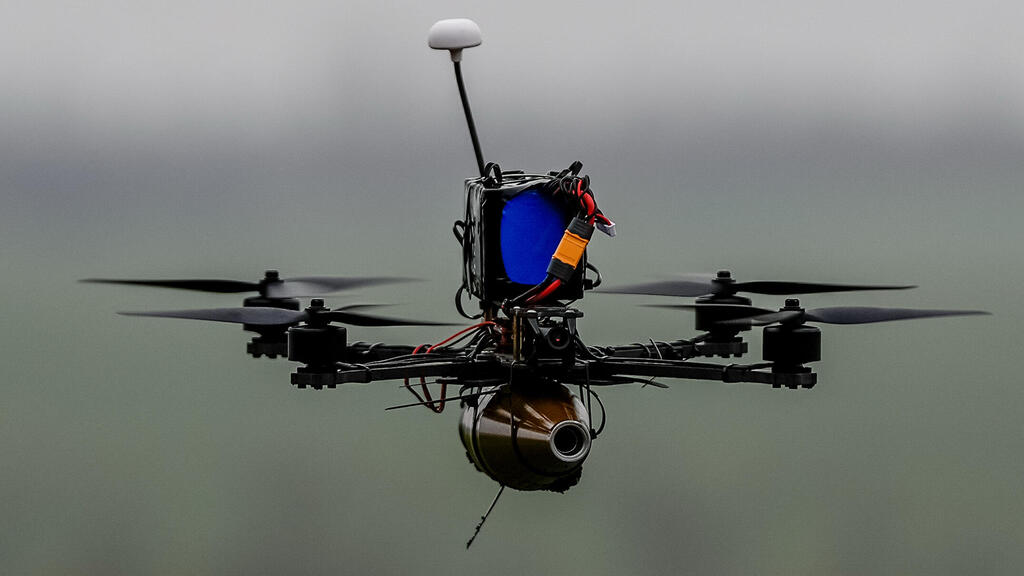
FPV drone
(Photo: Julia Demaree Nikhinson\AP)
Another reservist offered a different account. Maj. T., who serves in reserve duty attached to regular forces in Lebanon, said he feels his unit has the relevant tools needed to confront the drone threat.
“We are equipped with the gear and everything we need, including protection for the positions in the sector. We use very advanced observation systems and are in the process of integrating technological tools that will give us a long-term answer,” he said.
The IDF Spokesperson’s Unit said in response: “We take the challenge of dealing with explosive drones seriously. Accelerated learning processes are taking place, along with trials of new technologies and cooperation with international partners on the issue. Actions are being taken to improve detection and interception capabilities through dedicated radars, the transfer of protective equipment to combat forces in the field and their training to deal with the threat. IDF commanders are acting in every way to protect the forces and will continue to act in order to safeguard their security.”
The IDF’s answers to the drone threat
The commander of the Ground Forces has appointed the head of the Strike Brigade, Brig. Gen. O., to oversee the response to the issue of the low-altitude threat close to the ground, known in Hebrew by its acronym Rokak. This refers to threats to soldiers from aircraft flying up to 300 meters above ground, including UAVs, drones, balloons and model aircraft.
Brig. Gen. O. is a former Israel Air Force pilot who was appointed because of his connection to both the Ground Forces and the Air and Space Force. Under him, a department commander and additional officers are working to find solutions.
There are two main types of drones. The first are drones without fiber-optic cables, for which there is an established electronic warfare response based on communication jamming. The second are fiber-optic drones, a relatively new threat for which the current answer is still insufficient.
The main challenge in dealing with the second type is detection. The response is therefore focused on several combined layers.
The first layer is passive defense, including physical protection such as nets over troops, vehicles and posts. These measures have proven effective when soldiers maintain operational discipline.
The second layer is improved detection through dedicated radars, including the construction of a multilayered detection system adapted to identify drones from different angles and ranges.
The third layer is the development of interception capabilities at the level of the combat force. Measures being examined and implemented include the use of shotguns at short ranges, special ammunition that disperses in the air and fixed weapon positions connected to detection systems, allowing a rapid response.
As part of the effort to confront the drone threat, the IDF is conducting accelerated learning processes, trials of new technologies and cooperation with international partners. The military sees the threat as an ongoing challenge that requires rapid adaptation to changes on the battlefield and to new enemy methods.
Throughout the campaign in Lebanon, more than 100 male and female soldiers have been wounded by explosive drones, and three have been killed: Sgt. Idan Fuchs, Sgt. Liam Ben Hamo and Shefa-Amr resident Amer Hujirat.