

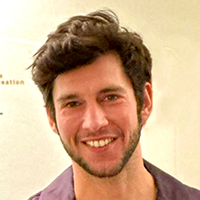
U.S. conservative activist Charlie Kirk, who was shot dead Wednesday during a debate event at Utah Valley University, made no bones about his strong support for Israel, which became a defining part of his public image. He often described Israel as a critical U.S. ally and defended its international standing after the Oct. 7 Hamas-led attack and the consequent war in Gaza.
Turning Point USA, the student organization Kirk founded as a teenager, maintains close ties with pro-Israel groups and frequently hosts pro-Israel speakers at its conferences. Kirk himself visited Israel in the past and, according to Prime Minister Benjamin Netanyahu, had been invited by him for another visit that never took place.
Charlie Kirk debates a pro-Palestinian student at a debate event on a US campus
(Video: from social media)


“Charlie Kirk was murdered for speaking truth and defending freedom. A lion-hearted friend of Israel, he fought the lies and stood tall for Judeo-Christian civilization,” Netanyahu wrote in a tribute on X. “We lost an incredible human being. His boundless pride in America and his valiant belief in free speech will leave a lasting impact. Rest in peace, Charlie Kirk.”
Pro-Israel social activists also voiced their grief after the shooting. Israeli advocacy activist Yoseph Haddad shared a video clip of Kirk confronting a pro-Palestinian student and eulogized him after the news of his death.
“We lost a true friend of the State of Israel. A brave man who defended our country with determination, stood up to pro-Palestinians without hesitation, and carried out Israeli hasbara even though he was neither Israeli nor Jewish. He will have an honored place in the chapter on hasbara during this war. This brutal murder is a dark day for the United States, but also for us in Israel.”
Jewish-American commentator Ben Shapiro, who lit a torch in Israel’s Independence Day ceremony for his pro-Israel advocacy after Oct. 7, wrote on X: “Like all of you, I am utterly stunned and heartbroken and sick to my soul today. It is unimaginable to write these words. I met Charlie Kirk when he was 18 years old, a young man so eager and determined that I immediately turned to a friend and said, ‘That kid is going to be the head of the RNC one day.’ Charlie became even bigger and more important than that.
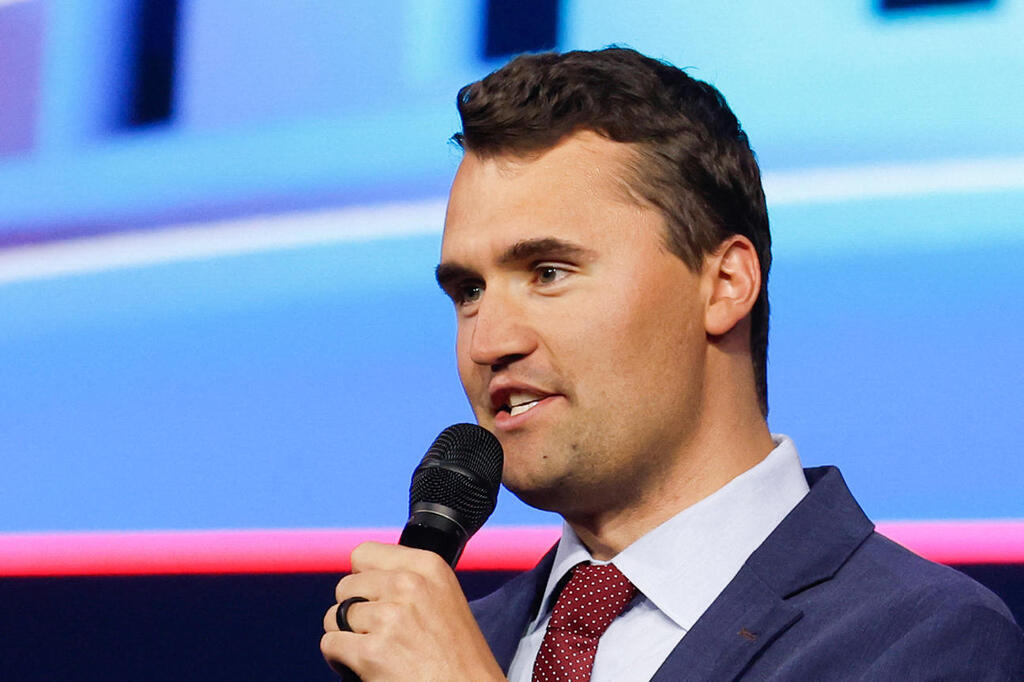
“It was a privilege to watch this principled man stand up for his beliefs and create the single most important conservative political organization in America. But more importantly, Charlie was a good man, a man who believed in right and wrong, who stood by his Biblical values.
“All of us will miss him, and I can’t imagine the pain of his beautiful young family, and we must all pray for them. And we must pick up the baton where Charlie left it, fighting for the things he believed in so passionately. And we must fight for a better America - an America where good people can speak truth and debate passionately without fear of a bullet.”
I’m heartbroken and utterly devastated. This is inconceivable. I met Charlie when he was 18, eager and determined. I said then he would one day lead the Republican Party. He became more than that. He stood for his beliefs and was a good man, someone who believed in right and wrong and lived by his biblical values. We will all miss him. We must fight for the things he believed in.”
Pro-Israel influencer Emily Schrader added: “We cannot live in a world where violence against those we disagree with is tolerated.”

Kirk moments before his assassination
Charlie Kirk was born Oct. 14, 1993, in suburban Chicago and grew up in Prospect Heights, Illinois. As a teenager, he became involved in politics, volunteering on Republican campaigns and appearing in the media on conservative civic and educational issues.
In 2012, shortly before finishing high school, he co-founded Turning Point USA with conservative activist Bill Montgomery, aiming to promote “values of liberty, free markets and small government” on U.S. college campuses.
Within a decade, the organization had grown into a massive force with hundreds of chapters, tens of thousands of activists, multimillion-dollar budgets and support from major conservative donors.
Kirk also led affiliated entities—Turning Point Action, TPUSA Faith, TPUSA Academy and the Turning Point Endowment Fund—that work in tandem on youth recruitment, direct political activity, educational training and media campaigns.
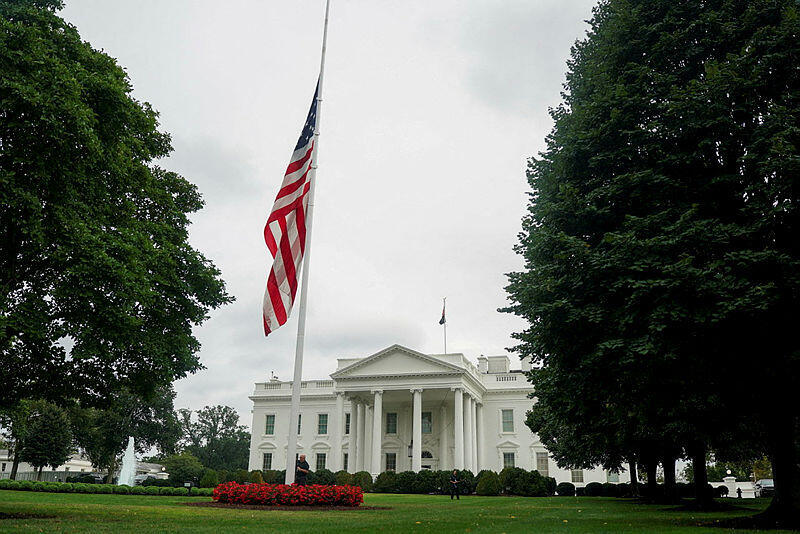
Flags at half-mast at the White House following Kirk's assassination
(Photo: Reuters/Nathan Howard)
He hosted the highly popular daily podcast and radio program The Charlie Kirk Show and toured college campuses and conferences nationwide. Through these platforms, he advanced a staunch conservative line, nurtured a new generation of activists and positioned himself as a significant voice in the American right.
Beyond his pro-Israel positions—which in themselves were not widely accepted in some U.S. circles—Kirk stirred considerable controversy. He promoted controversial ideas and stances on climate change, the COVID-19 pandemic, immigration and civil rights and was closely associated with campaigns such as “Stop the Steal,” which claimed the 2020 election was rigged and stolen from President Donald Trump.
Critics accused him of fostering a hostile climate on campuses and deepening polarization in American society. Supporters, by contrast, saw him as an authentic voice for a conservative younger generation and a leader who built a political framework outside the traditional establishment.
His views on Israel were a central feature of his public image. Kirk repeatedly stressed his solidarity with the Jewish people and his opposition to antisemitism.
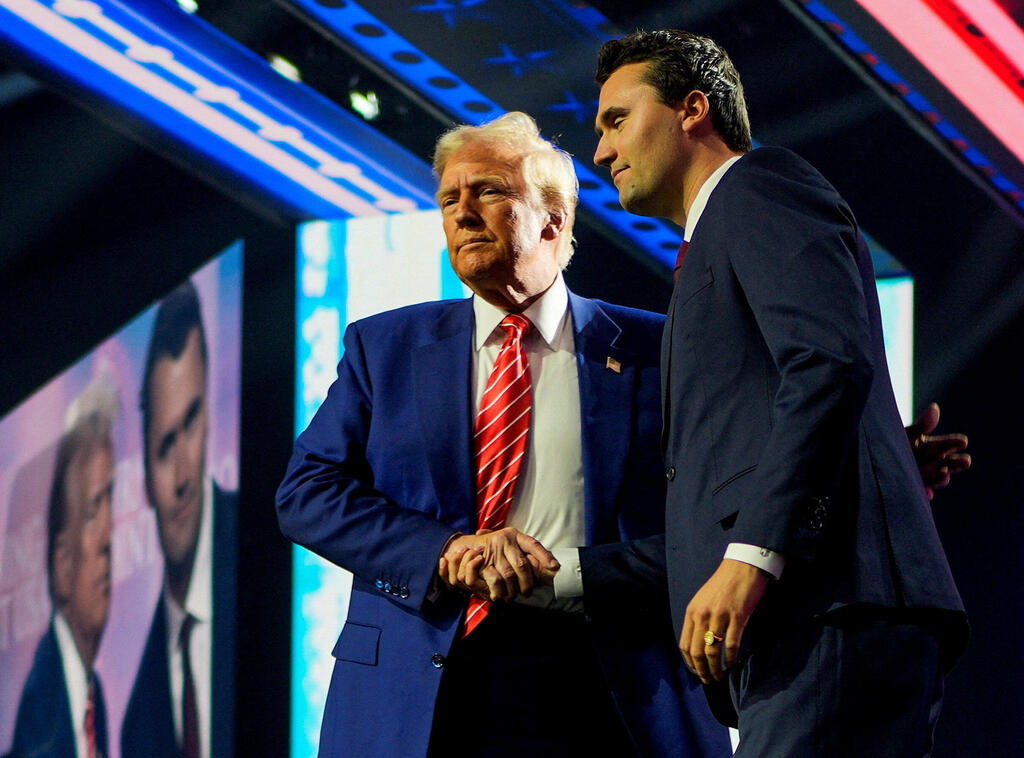
US President Donald Trump and Kirk
(Photo: REUTERS/Cheney Orr/File Photo)
As part of a rare critique of Trump, challenging the White House’s bid to penalize pro-Palestinian protesters on college campuses, he posted on X in April: “No non-Jewish person my age has a longer or clearer record of support for Israel, sympathy with the Jewish people, or opposition to antisemitism than I do.”
In opinion columns and speeches, he underscored the importance of the U.S.-Israel alliance, denounced boycotts of Israel and appeared on pro-Israel platforms. While opposing anti-BDS legislation on the grounds that it infringed free speech, he nonetheless cast himself as a fighter against anti-Israel sentiment on college campuses.
He also came to symbolize a broader schism within the American conservative camp—between those who remain firmly supportive of Israel and a younger cohort focused more on domestic policy and an “America First” ideology. U.S. media often viewed his activity in Israel through this lens, as he sought to rally young people to pro-Israel positions using contemporary conservative language.
Kirk became a regular commentator on conservative outlets. When Fox News reported on his killing, an anchor there—where Kirk had served as a commentator—broke down in tears on air. On those platforms, Kirk built a reputation as a sharp critic of higher education, liberal policies and “woke culture.”
Fox News anchor breaks down in tears on air as he reports on Charlie Kirk's assassination
Kirk was a frequent commentator on conservative media, where he built a reputation as a fierce critic of higher education, liberal policies and what he called woke culture. When Fox News reported on his assassination, one anchor broke down in tears on air.
Even so, Kirk faced sustained criticism over comments with antisemitic overtones. In April, on his popular show, he claimed Jews deny their whiteness and accused them of harboring hostility toward white people. He argued that Jewish communities were promoting the very kind of anti-white hatred they themselves sought to prevent against Jews. Defending Elon Musk—who has also faced accusations of antisemitic rhetoric—Kirk asserted that some of the largest donors to left-wing causes he viewed as anti-white were American Jews.
Kirk rejected such accusations and pointed to his long record of support for Israel as an expression of his evangelical Christian faith. For a time, his media past seemed likely to block his path into Republican leadership, and some veteran conservatives viewed his prominence as evidence of antisemitism within the movement. Still, Kirk remained a staunch Trump supporter, with his organization sponsoring the Jan. 6 rally that preceded the storming of the Capitol building. He addressed the 2024 Republican National Convention and was considered part of Trump’s close circle.