

Emily Damari, a British-Israeli citizen who was held captive by Hamas in Gaza for 471 days, made her first public appearance in the United Kingdom on Thursday night at the annual fundraising gala of UJIA, held in London under the theme “Looking to the Future.” The event also featured remarks from President Isaac Herzog—his first official speech in the UK since taking office in 2021.
Damari, who was kidnapped from her home in Kibbutz Kfar Aza on Oct. 7 along with her friends Gali and Ziv Berman—who remain in captivity after 707 days—shared harrowing details of her ordeal and her psychological struggle to survive.
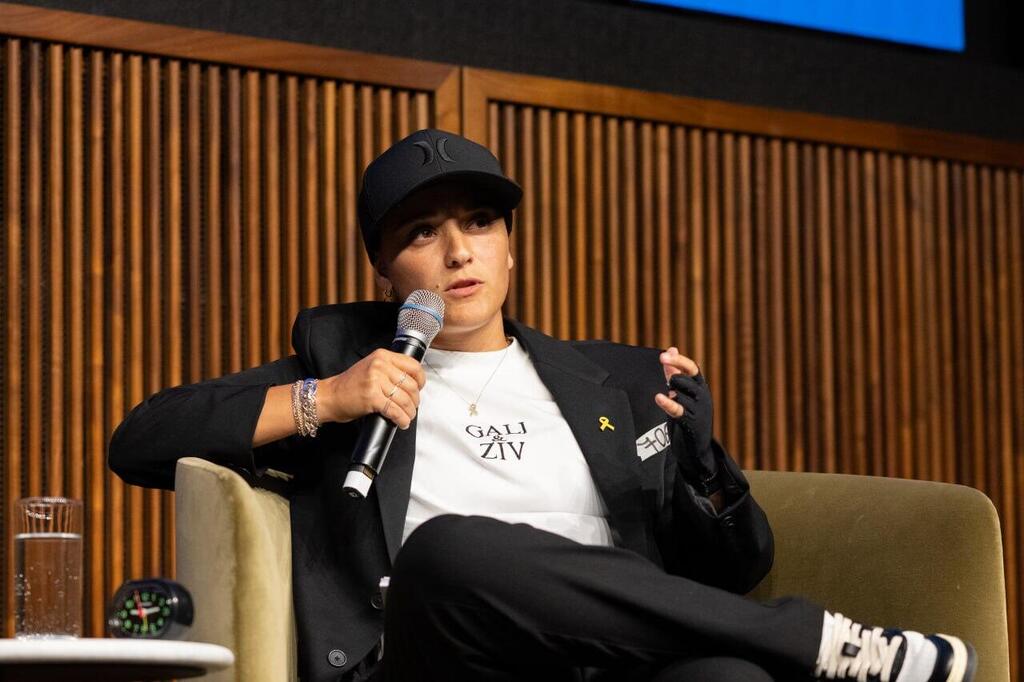
“I didn’t want to be kidnapped. I preferred to die,” she told the audience. “I took his rifle, put it to my head and said: ‘Shoot me! Shoot me!’”
She described the inhumane conditions in which she was held, including being confined in an overcrowded cage, and expressed deep gratitude to the British Jewish community for its sustained support throughout her captivity.
Just last week, the IDF and Shin Bet confirmed they had killed Hazem Awni Naeem, the Hamas terrorist who held Damari, Romi Gonen, and IDF observer Naama Levy during the war. The military said he was eliminated in an airstrike in the Gaza City area two weeks earlier and was described as a senior operative.
President Herzog emphasized the shared values between Israel and the UK Jewish community: “We have every right to defend ourselves. In the fight against the barbarism of Hamas and the genocidal ambitions of Iran, Israel is not only defending itself. It is defending the entire free world—Europe, the UK, and every nation that aspires to peace.”
Since her release, Damari has become an international symbol of courage and resilience, dedicating her time to advocating for the return of hostages still held in Gaza, including her close friends Gali and Ziv Berman, who marked their 27th birthday this week in captivity. As of now, 48 hostages remain in Gaza.
In late July, Damari issued a sharp rebuke of UK Prime Minister Keir Starmer following his announcement that Britain may soon recognize a Palestinian state.
“Prime Minister Starmer is not standing on the right side of history,” she wrote on social media. “Had he been in power during World War II, would he have advocated recognition for Nazi control of occupied countries like Holland, France or Poland? This is not diplomacy — it is a moral failure. Shame on you, Prime Minister.”
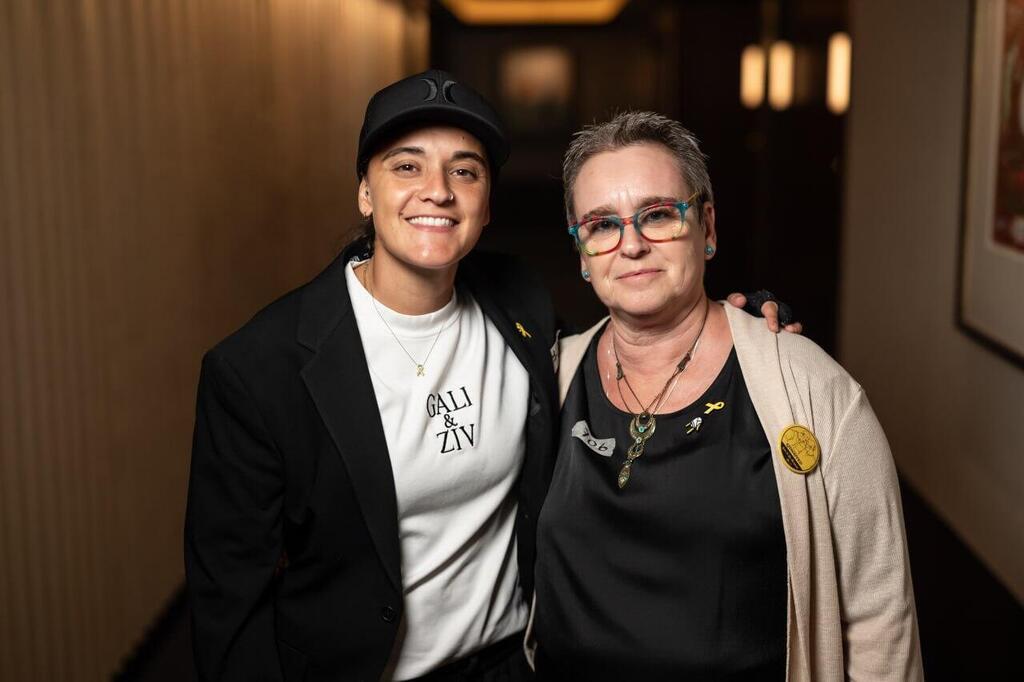
Emily and her mother Mandy
(Photo: Blake Ezra Photography)
She continued: “As a dual British‑Israeli citizen who survived 471 days in Hamas captivity, I am deeply saddened by your decision … This move does not advance peace — it risks rewarding terror. It sends a dangerous message: that violence earns legitimacy.”
“By legitimising a state entity while Hamas still controls Gaza and continues its campaign of terror, you are not promoting a solution; you are prolonging the conflict. Recognition under these conditions emboldens extremists and undermines any hope for genuine peace. Shame on you.”
Starmer later responded, acknowledging her trauma and reaffirming his call for all hostages to be released. However, he did not reverse his position on statehood. “I’ve listened closely to Emily Damari, who I’ve spoken to and whose mother I’ve met several times,” he said. “She and her mother have endured the most horrific experience, and that’s why I’ve been clear that all hostages must be released. They’ve been held far too long, under unbearable conditions.”
Still, Starmer reaffirmed the UK’s policy shift: “At the same time, we must do everything we can in response to the humanitarian catastrophe in Gaza, where we’ve seen starving children and infants. That’s why I said if nothing changes on the ground, we’ll need to review this in September and recognize a Palestinian state before the UN General Assembly.”