

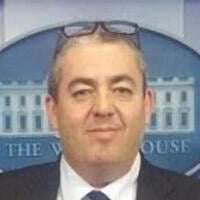
He does not want his name published, but he wants his argument heard. Reserve Col. A., a fighter pilot with the Israeli Air Force’s 101 Squadron who says he has taken part in thousands of strikes across multiple fronts and until about a year ago commanded Ramat David Air Base, rarely speaks publicly. But after the documentary NAZA won at the Venice Film Festival and reignited debate over Israel’s conduct in Gaza, he decided to respond.
A. says he has not seen the film itself or heard the testimony in full, and is responding to descriptions and headlines about it. “I haven’t seen the film or heard the testimonies. I’ve seen paraphrases by people who have, and I’ve seen the headlines,” he said. “But whoever took a process whose entire purpose is to put the truth, transparency, dilemmas and morality directly in front of you, as clearly and precisely as possible, and turned it into a claim that we deliberately tried to harm civilians, has done something astonishingly cynical. They have turned the entire process on its head.”
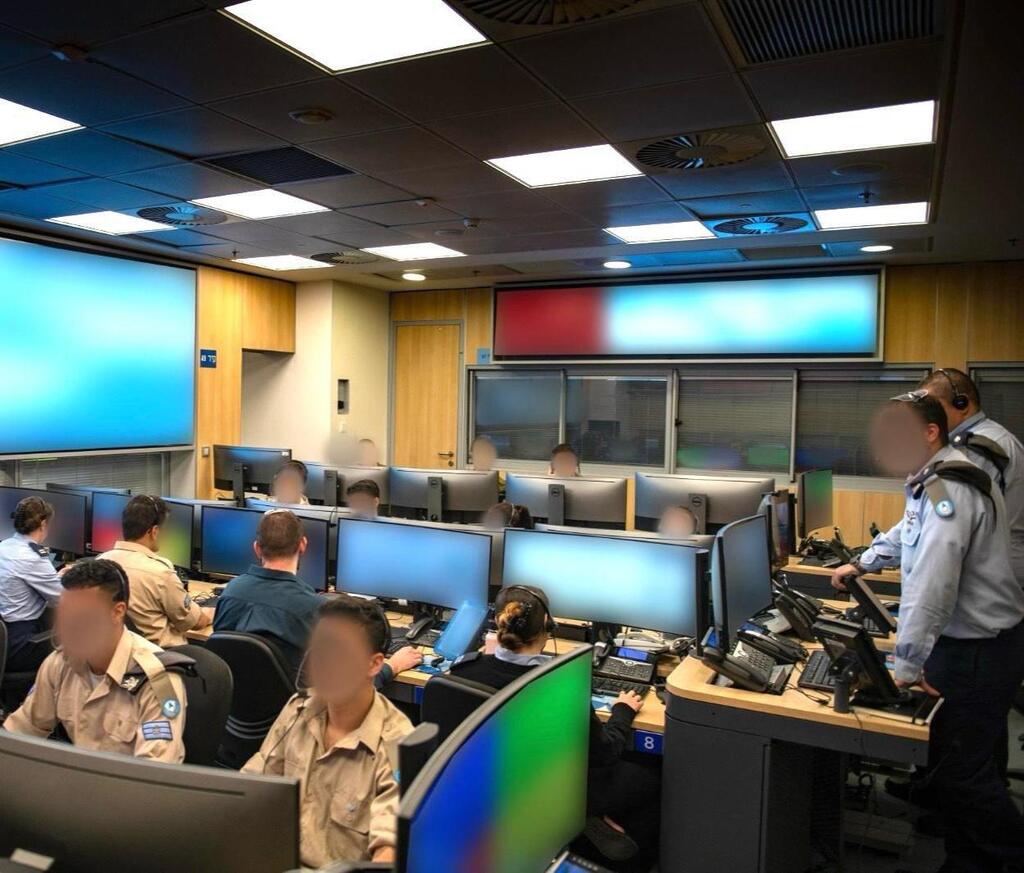
At the center of the controversy is nezek agavi, Hebrew for collateral damage and the phrase behind the acronym NAZA. A. describes it not as a single calculation but as part of an extensive system of intelligence, target verification, risk assessment and operational approvals developed by the IDF and Air Force over decades. He argues that the system was built to confront armed groups operating from within civilian areas. “The enemy does not separate the civilian population from terrorist infrastructure,” he said. “The missile is in the bedroom, the weapons depot is in the children’s room, the headquarters is on one floor of a densely populated civilian building and the hospital is used as a command center. That is not an accident. It is deliberate planning.”
A. argues that Gaza’s density alone does not explain that deployment. “Gaza is crowded, but it also has open and agricultural areas. If the enemy wanted to separate itself from the population, it could have done so. It deliberately chose otherwise,” he said.
‘You ask yourself what the operational gain is compared with the risk’
Describing the planning of an airstrike, A. said a proposed target begins with intelligence and must be verified as being used for terrorist activity under what he described as highly stringent standards. If there is uncertainty, he said, the target is rejected. Once verified, it passes through additional approvals before the final strike configuration is generally authorized by a senior officer.
“As a pilot, I’m the fourth stage in that process,” he said. “There are conditions that have to be met: weather, visibility, precise identification.” He said drones, helicopters or surveillance aircraft may scan the area before a strike to determine whether people are nearby, while aircrews can delay an attack or change the munition if conditions change. “If something doesn’t add up, I have discretion. Sometimes you change the size of the bomb. Sometimes you use a ‘roof knock’ to get people out of the building before the strike. An enormous amount of time is invested in trying to make sure nobody gets hurt.”
The final moments before releasing a weapon, he said, can involve what he called an extremely difficult judgment. “You ask yourself what the operational achievement is compared with the risk. It’s a multistory building. The risk to civilians is this or that, and the operational gain is eliminating a Hamas brigade commander. They give you as much information as possible to help you decide what is right.”
He recalled one operation in which an aircrew asked to wait because the conditions were not right. “I once saw an operational crew say, ‘I’m not carrying this out under these conditions. Let’s wait another two minutes,’” he said. “And during those exact two minutes, a barrage was fired from the launcher they were supposed to destroy.”
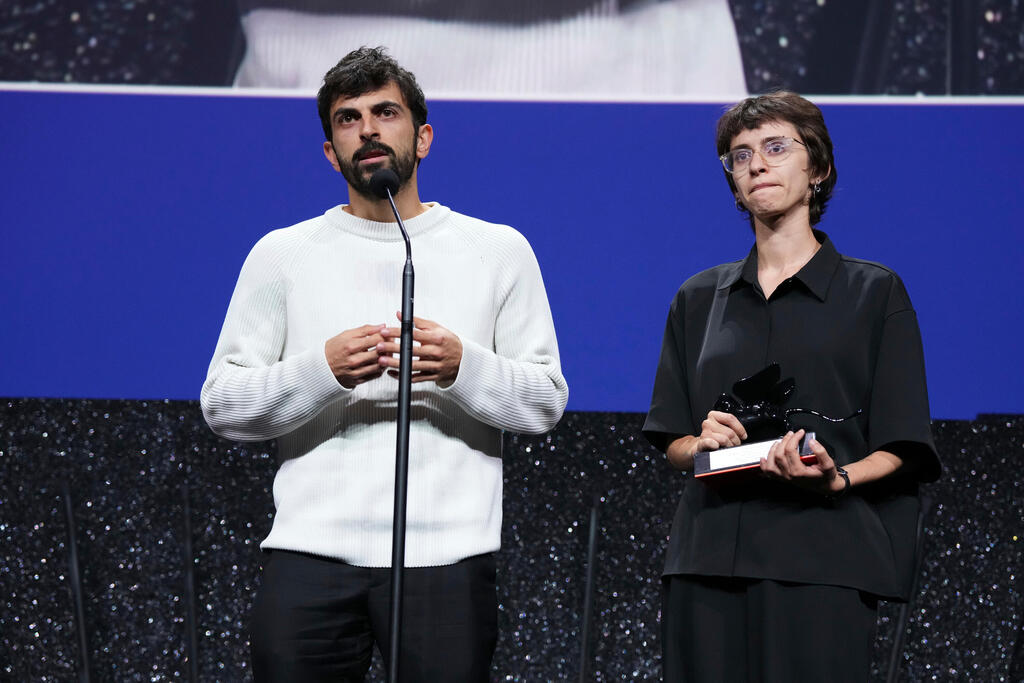
Yuval Abraham and Rachel Szor after winning at the Venice Film Festival
(Photo: Scott A Garfitt/Invision/AP)
One allegation surrounding NAZA has drawn particular attention: testimony that a strike was approved despite the possibility of causing hundreds of civilian deaths, reportedly as many as 500. A. emphatically disputes that account. “I was responsible for planning and carrying out thousands of strikes,” he said. “I never encountered a number like that, or anything close to it. I can say with a high degree of confidence: There was no such approved strike.”
At the same time, he does not deny the civilian toll inherent in war. “Every strike carries a risk of harming uninvolved people, and on a human level that is terrible. War is genuinely hell,” he said. “Even five or 10 dead is unacceptable. I would want the number to be zero in every strike. But the alternative, raising a white flag and leaving the rockets where they are, is not an alternative.”
For A., that calculation is also personal. “I know my brothers in Golani are on the ground below me, and my family is in Hamas’ sights in Sderot,” he said. “I know I am the solution. I am what stands between that rocket and the home or the force it is aimed at, and I am very proud to be the person who meets that threat before it reaches our civilians and our soldiers.”
‘What would you have done in my place?’
Despite his criticism, A. said he is not angry with filmmakers Yuval Abraham and Rachel Szor. “They were, at the very least, wrong in their perspective. Maybe they even lost their moral compass,” he said. “But if I met them, I wouldn’t throw accusations at them.”
He said he sees scrutiny of the military as an essential part of a democratic society. “I love investigations, criticism and transparency. That is what makes me proud to serve in the military of a democratic and liberal country, one that allows difficult questions to be asked even about itself,” he said. Instead, he would ask the filmmakers one question: “What would you have done in my place?”
“I think anyone with a head on their shoulders and a heart in their chest would answer that they would have done exactly the same thing,” he said. “I sleep peacefully with regard to my duty to the paratrooper maneuvering below me, to my family in Sderot and to the Israeli public in whose name I fight.”
“We don’t have a millimeter to be ashamed of,” he added. “But there is not the slightest bit of joy in us over what we were forced to do.”