

The film “NAZA” has brought one of the most controversial issues surrounding the fighting in Gaza back to the forefront: the extent to which the IDF uses artificial intelligence to locate and identify targets. Until now, most of the claims on the issue have appeared in reports by foreign media outlets, including The New York Times, which described how Unit 8200 integrated AI capabilities into systems it developed for intelligence purposes.
Among other things, in a clip released from the film, one of the interviewees said that although the number of people killed as collateral damage in strikes was not always checked, there was nevertheless “approval for 500 [deaths].” A senior military official told ynet: “The figure of 500 is unfounded.” He said there are different collateral-damage thresholds that require approval at various senior levels, but that these do not reach the hundreds and instead amount to only a few dozen.
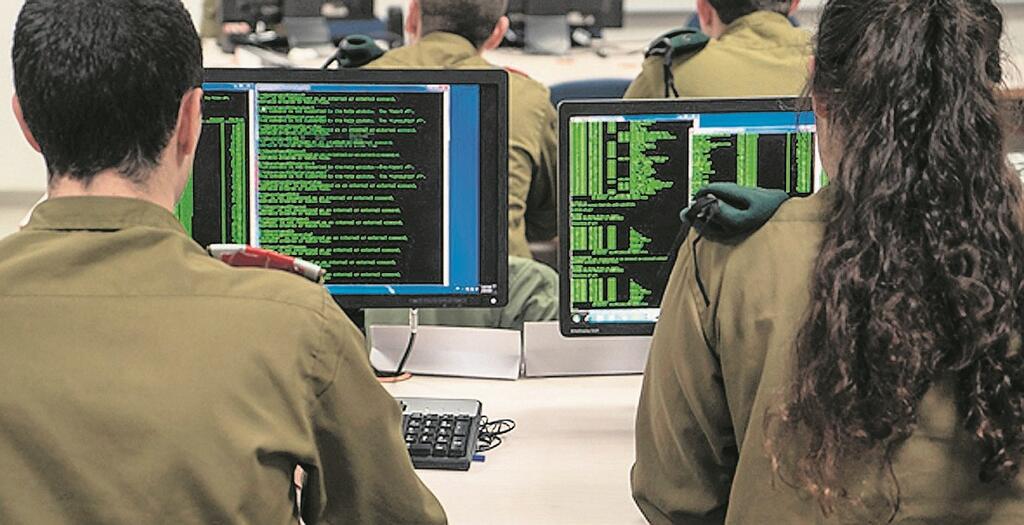
Many of the efforts to locate potential targets using a combination of artificial intelligence and facial recognition grew out of cooperation between Unit 8200 personnel and reservists who work at technology companies including Google, Microsoft and Meta. Unit 8200 established what later became known as the “Studio,” an innovative center that matches experts with AI projects. According to a New York Times report, these advanced technologies at times led to identification errors and the deaths of civilians in Gaza.
Parts of “NAZA” that have been released include claims that the IDF or Unit 8200 uses artificial intelligence tools to locate potential targets for strikes. In late April 2025, The New York Times published an extensive report describing the use of artificial intelligence during the war, particularly by Unit 8200. One example cited was the killing of Ibrahim Biari, commander of Hamas’ Central Jabaliya Battalion, who was among the leaders and planners of the October 7 massacre.
According to the report, Israel intended to kill Biari in late October 2023 and knew that he was hiding in Gaza’s tunnel network, but intelligence had been unable to locate him. Three Israeli and American officials told the Times that Israel decided to turn to a new military technology integrated with artificial intelligence. The technology had been developed a decade earlier but had not been used on the battlefield until then. The effort to locate Biari provided an incentive to improve the tool, and Unit 8200 engineers incorporated artificial intelligence into it.
Even if the IDF does use AI tools, that does not in itself indicate anything about the decision-making process regarding strikes or the considerations surrounding potential harm to civilians. Every strike and targeted operation is examined at different levels and reviewed by many people. Numerous considerations are taken into account: whether the target meets the criteria for a targeted strike; a comprehensive examination of the target’s surroundings, daily routine and the places where the target is located, including the surrounding areas; the type of munition; the nature of the operation; and additional considerations.
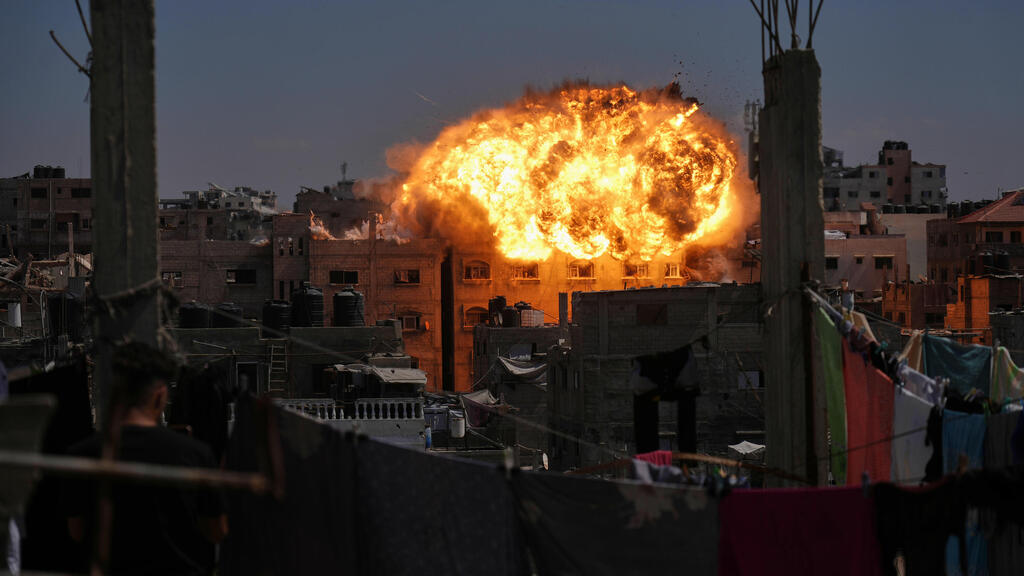
IDF strike in Gaza
(Photo: AP Photo/Jehad Alshrafi)
As part of the effort to locate Biari, according to The New York Times, Israel listened to his calls and tested an AI-based audio tool that provided an estimated location from which he was making them. Using that information, Israel carried out an airstrike on the site on October 31, 2023, killing Biari. A human rights organization claimed that more than 125 civilians were killed in that strike.
The Times said at the time that it had interviewed nine senior Israeli and American security officials, whose accounts indicated that Biari’s killing using the audio tool was only one example of the way Israel was using the war in Gaza to rapidly test and deploy artificial intelligence technologies for military use on a scale not previously seen.
Cooperation between Unit 8200 and reservists from tech giants
According to the report, during the 18 months preceding it, Israel incorporated artificial intelligence into facial recognition software to compare blurred images with real identities, used AI to prepare lists of potential targets for airstrikes and created an Arabic AI model to build a chatbot capable of scanning and analyzing text messages, social media posts and other Arabic-language data.
Many of these efforts grew out of cooperation between Unit 8200 personnel and reservists who work at technology companies including Google, Microsoft and Meta. Unit 8200 established what became known as the “Studio,” an innovative center that matches experts with AI projects. But at times, as noted, these advanced technologies led to identification errors and the deaths of civilians in strikes.
One of the tools developed by the “Studio,” according to the Times, was an Arabic artificial intelligence model known as a “large language model.” The American newspaper reported that developers initially struggled to create such a model because of the shortage of Arabic databases with which to train the technology. When data were available, they were largely in Modern Standard Arabic, which differs from spoken Arabic.
The IDF, however, did not face the same problem because of decades of deciphering text messages, transcripts of phone calls and social media posts in spoken Arabic. The “large language model” was therefore created during the first months of the war, alongside an Arabic-language chatbot. Unit 8200 integrated the tool with multimedia databases, allowing analysts to conduct complex searches using images and videos.
The chatbot’s errors
After the killing of Hezbollah Secretary-General Hassan Nasrallah, the chatbot analyzed reactions in Arabic-speaking countries. At times, it failed to recognize modern slang or words translated from English into Arabic. This required IDF intelligence officers specializing in different dialects to improve the system. The chatbot also sometimes supplied incorrect answers, such as images of pipes instead of weapons. Even so, the AI tool significantly accelerated various research and analytical processes.
At the temporary crossings established between northern and southern Gaza at the time, the Times claimed, Israel equipped cameras with the ability to scan Palestinians and send high-resolution images to the AI-based facial recognition program. But the system sometimes had difficulty identifying people whose faces were covered. This led to arrests and questioning of Palestinians who were mistakenly identified as suspects.
Another use of artificial intelligence was to filter intelligence data collected on Hamas members. Before the war, Israel built an AI-based system known as “Lavender” that could rapidly classify data in order to target low-ranking militants. It included a database of verified Hamas members and was intended to predict who else might also be a member of the terrorist organization. Although Lavender’s assessments were not perfect, Israel used the system during the early stages of the war to assist in selecting targets.
The ethical questions
The new technologies raise “serious ethical questions,” Hadas Lorber of the Holon Institute of Technology (HIT) told the American newspaper at the time. She warned that artificial intelligence requires checks and balances and added that “humans must be the ones making the final decisions.”

Yuval Abraham and Rachel Szor at the Venice Film Festival awards ceremony
(Photo: Scott A Garfitt/Invision/AP)
An IDF spokesperson told the Times more than a year ago that she could not comment on specific technologies because of their “classified nature,” and said Israel was “committed to the lawful and responsible use of technological tools.”
According to the Times, Israeli intelligence also used the same audio tool employed to locate Biari, together with maps and images of Gaza’s underground tunnel system, in efforts to locate hostages. Two senior Israeli officials also told the newspaper that the tool was improved over time to make it more accurate in locating individuals.
The unit at the center, and the counter-response
Against the backdrop of the film, there is an understanding within the IDF that enormous damage has been caused to the system. As a result, IDF Chief of Staff Lt. Gen. Eyal Zamir himself has become involved in the matter, which he does not view solely as a public diplomacy issue but as one that, if not addressed, could significantly harm IDF operations and soldiers currently deployed on the various fronts.
The steps the chief of staff has chosen to take against those who chose to be interviewed in the film are highly unusual, and the IDF is now examining whether they disclosed intelligence information prohibited from publication. IDF targeting efforts continue even now, mainly in the Gaza Strip, against the backdrop of the American effort to advance the Trump plan and the IDF’s withdrawal. In many cases, operations are halted because of restrictions on harming civilians. Moreover, according to security officials, strikes currently being carried out in Gaza are examined by many people, and some are halted because of concern over losing legitimacy in international public opinion.
Only at the beginning of last month, forces in Gaza received a new directive stating that from that point onward, only strikes intended to remove immediate threats would be carried out. Under the directive, targeted strikes require the approval of the chief of staff and the political leadership.
If it emerges that the soldiers interviewed for the film are currently serving in the IDF or the reserves, the military will examine whether to take action against them and how. IDF officials say the film is causing enormous damage to IDF activity in various arenas, with the main focus in terms of public diplomacy and investigation naturally on Unit 8200, which is at the center of the film.
The statements made in the film have significant implications because the unit works with other units and various entities around the world. Its veterans maintain business ties that affect Israel’s economy and security. The IDF is therefore moving to defend itself, but also to defend the unit, which is very well known around the world.