


Despite Gaza militia leader Yasser Abu Shabab's death in an internal dispute within the force he led in Rafah, and although he had become a central figure opposing Hamas in the Gaza Strip, local clans and armed groups say they intend to continue operating at full strength against the terrorist organization.
Their goal is to exploit Hamas’ weakness after more than two years of war with the Israel Defense Forces and expand their pockets of control across the Gaza Strip.
Rassan al-Dheini and the Abu Shabab militia


Abu Shabab’s death on Thursday cleared the way for his deputy, Rassan al-Dheini, to take command. Reports in Gaza described Abu Shabab as soft-spoken and less brutal than his successor. A phrase now circulating in the Strip — “the gentle one left, the crazy one arrived” — reflects expectations for al-Dheini’s harsher approach. He is seen as tough and ruthless, and those close to him say he assumed leadership with high motivation and determination. He openly declares, “There will be no mercy for Hamas members. Not today, not until their last day.”
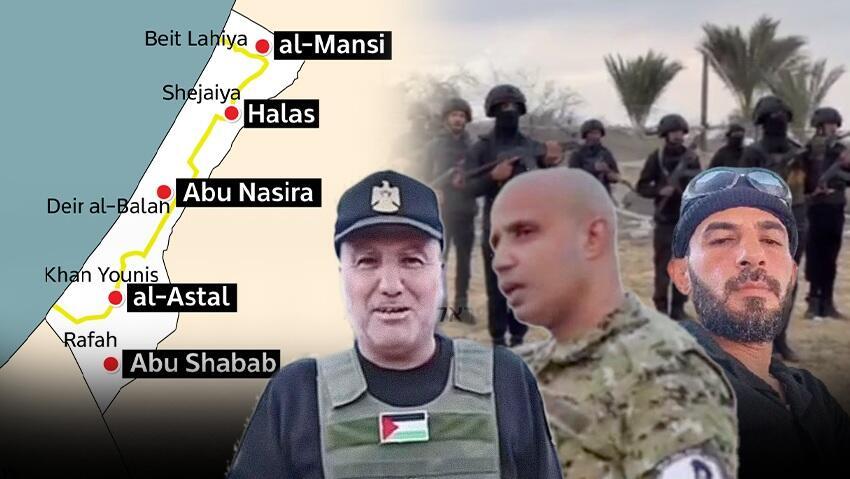
Al-Dhayni says the fight against Hamas is essential and that what he sees as the group’s current weakness is an opportunity to act more freely. He describes the moment as “the day after the war,” when armed groups can operate without restraints, while maintaining order and logistical discipline.
Regional backdrop
In the background are U.S. efforts to move forward with Phase B of President Donald Trump’s Gaza plan. For now, Hamas is drafting its own proposals, while Israel urges Washington not to advance without securing the return of the last fallen hostage, Staff Sgt. Ran Guayli. The U.S. is struggling to assemble the planned international stabilization force (ISF) and is floating an idea to deploy it in what it defines as “the green zone” — the Israeli side of the “yellow line,” where Hamas holds limited power.
Across Gaza, other armed groups also seek to topple Hamas and fill the vacuum:
• In Khan Younis, a force under Hossam al-Astal is active.
• In the ruins of Shejaiya, in eastern Gaza City, a group led by Rami Halas— a Gaza-based Fatah figure — operates in coordination with Israel.
• In northern Gaza, near Beit Lahiya, Ashraf al-Mansi heads the “Popular Army–Northern Forces.”
• In central Gaza, in Deir al-Balah — where the IDF did not maneuver on the ground — a new group led by Shawqi Abu Nasira is emerging.
Al-Astal: ‘We are already in the day after’
Hosam al-Astal, the commander in Khan Younis, told ynet on Sunday that Abu Shabab’s death was a heavy blow, but emphasized that all the groups would “continue operating and working as usual.” He said al-Dhayni was a worthy successor and added, “We are already in the day after the war.” His forces, he said, will continue acting “with determination and resolve,” driven by what he described as a growing sense of Hamas’ weakness on the ground.
Hosam al-Astal burns the Hamas flag

Long-standing hostility in Shejaiya
In Shejaiya, Halas’ group has been hostile toward Hamas since the terrorist organization seized control of the Strip in 2007, with memories of severe violence by Hamas operatives still resonating. The Halas clan is one of Gaza’s largest, with many members living in Shejaiya near Nahal Oz. According to sources, Rami Halas lives in Tel al-Hawa, in southwest Gaza City. He and his men possess significant weaponry and, according to those sources, receive cover and protection from the IDF.
The clan is broadly affiliated with Fatah. Among its most prominent figures is Ahmad Halas, known as Abu Maher, a member of Fatah’s Central Committee and Palestinian Authority President Mahmoud Abbas’ representative in Gaza.

Rassan al-Dheini and Rami Halas
New force in Deir al-Balah
In Deir al-Balah, Shawqi Abu Nasira’s new force has begun operating. Palestinian sources say he was once a Fatah security prisoner. He presents himself as a hardline leader committed to liberating Palestinians from Hamas, claiming that anyone who says “no” to the organization is, in his eyes, a “lion.” In footage circulated online, he stands before a group of armed men, calling for direct confrontation with Hamas and praising those who resist it.
Northern Gaza: al-Mansi’s campaign
In the north, al-Mansi is focused on curbing Hamas’ authority and establishing his group’s presence in its place. He frames his efforts as a campaign for the Palestinian people and for civilian freedom. He often says, similar to Abu-Nesira, that anyone who opposes terrorism and Hamas is a hero. He argues that the battle he leads aims to secure “a new and more just future for the residents of northern Gaza.”
‘New Gaza’ project and growing resolve
On Friday, the “Popular Forces,” Abu Shabab’s group, released footage of al-Dhayni’s show of power. The video shows him touring his forces and briefing them on the group’s future. In an interview with ynet, al-Dhayni said, “According to my brother Yasser’s plan, we will be exactly where we were, with even more determination and more strength. We will fight the remaining elements until the last terrorist, young or old. Hamas will see the true face they should have seen long ago, and the Popular Forces will continue to be a source of hope for free people.”
During the tour, al-Dhayni addressed his fighters: “We repeat that the fall of Commander Yasser was a very deep blow, but the greatest lesson we pass on to the enemy, and the greatest honor for our brother Yasser’s spirit — who united us around the idea of fighting terrorism and striving for safe and peaceful lives — is that we continue on the same path and move with the same power we had before, and even more.” He added, “Our morale is sky high.”
How Abu Shabab died
As first reported by ynet, Abu Shabab was not shot but died from beatings during a brawl with other operatives, apparently due to internal disagreements. The Popular Forces claimed he had tried to resolve a dispute between clans and was shot, but emphasized that Hamas had no connection to the incident. “It is a weak movement, too weak to harm our commander,” members said.
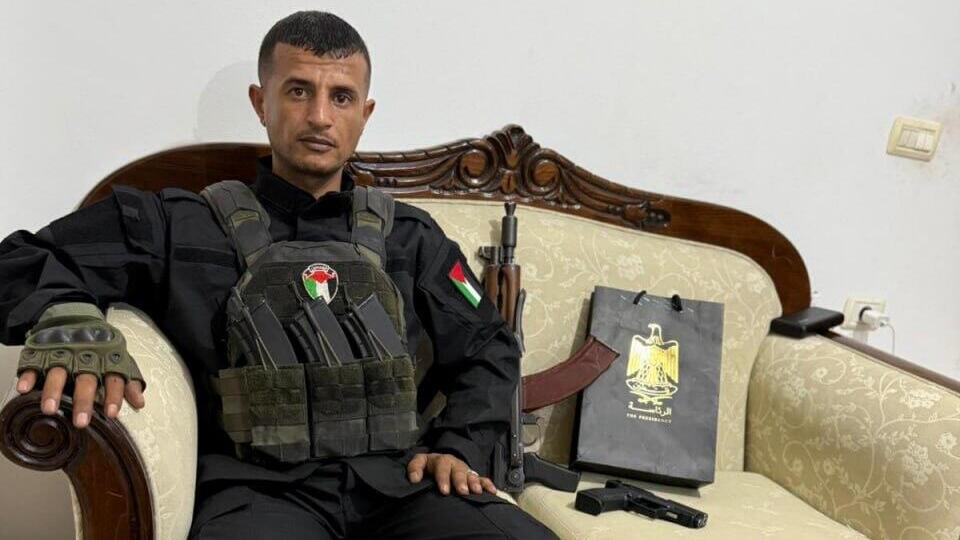
Yasser Abu Shabab
During the war, Israel decided to support Abu Shabab and other groups opposing Hamas rule. After a cease-fire was announced in October, officials feared the Strip could see violent power struggles between Hamas and local clans. As part of its efforts to suppress clan uprisings, Hamas sent senior fighters to assassinate Abu Shabab, but the attempt failed partly because he was in an area currently under Israeli control, beyond the “yellow line.”
A Sky News investigation published in late October revealed Israel’s support for the “New Gaza” project led by armed groups fighting Hamas. Al-Astal told the British network, “We have an official project — me, Yasser Abu Shabab, Rami Halas and Ashraf al-Mansi. We all support ‘New Gaza.’ Soon we will gain full control of the Strip and unite under one umbrella.”