

At least 1,500 death row inmates held in Iran’s largest prison have been on hunger strike for two weeks in protest of a sharp rise in executions under the increasingly harsh repression of the ayatollahs’ regime, with some inmates even sewing their lips shut as an act of protest. Human rights organizations monitoring events in the Islamic Republic reported the strike.
According to reports, the mass hunger strike at Ghezel Hesar Prison, located near Tehran, began on July 13 after six inmates sentenced to death for drug-related offenses were transferred to solitary confinement ahead of possible executions. The strike is also a protest against the regime’s use of the death penalty for drug offenses.
"No more executions": Protest in Iran's largest prison


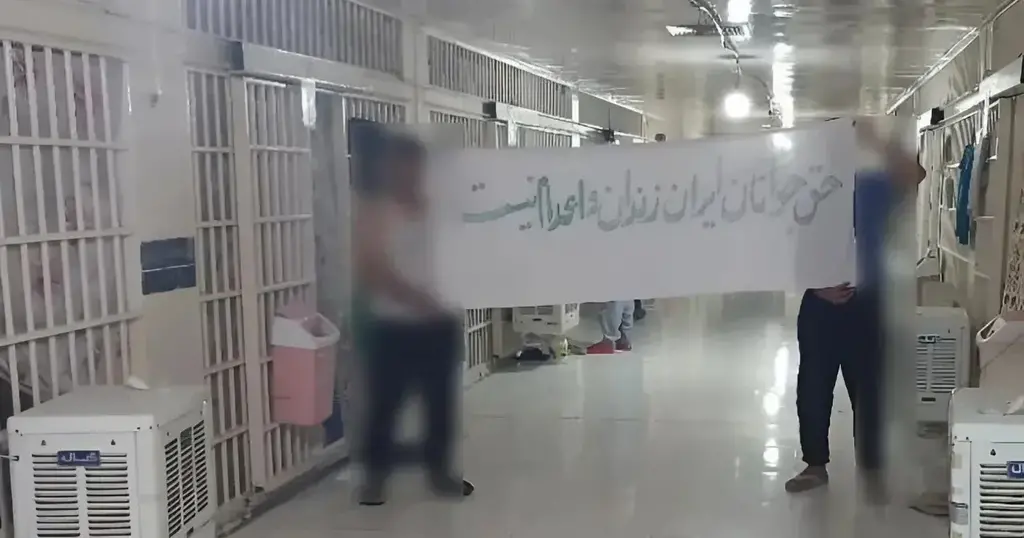
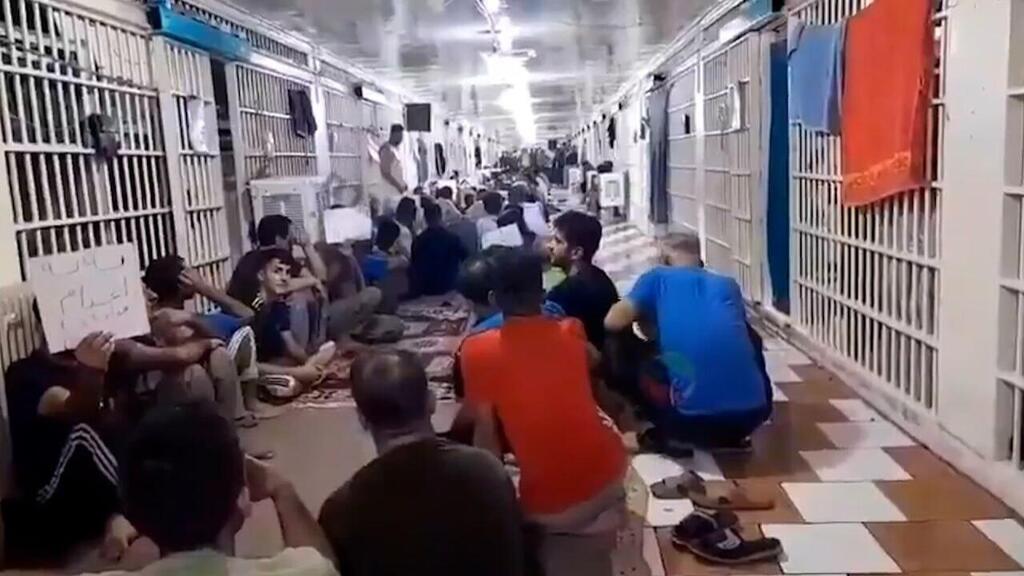
Footage released by human rights groups from inside the prison shows inmates sitting in a corridor between cells, holding protest signs reading “No More Executions” and chanting: “Be our voice!”
The British newspaper The Guardian reported on a disturbing video obtained by the paper, which it did not publish, showing one inmate speaking to the camera and saying he intends to sew his lips shut because, six days into the hunger strike, no prison official had responded to the protest. Later in the video, another inmate is seen using a needle and thread to sew the man’s lips together.
In a third video circulated from the prison, an inmate can be heard calling for urgent medical assistance for prisoners whose condition had deteriorated, according to him. “The guards will not open the door so we can take them to the prison infirmary,” he says.
Gallery

From the documentation distributed from the Ghezel Hesar Prison. Protest signs between the cells
In a message sent to The Guardian, one inmate sentenced to death for a drug-related offense said: “We are prisoners who turned to such mistakes simply to afford the basic necessities of life, and deeply regret our actions. Where else in the world is a human life taken for a first mistake?”
A similar protest was held at Ghezel Hesar Prison in October 2025, when more than 1,500 inmates also went on hunger strike, this time for six days. The protest ended after senior officials from the judicial and prison systems made a rare visit to the inmates and reportedly promised to temporarily halt executions and review their cases. Activists say those promises were never fulfilled.
Iran’s regime, it should be noted, makes extensive use of the death penalty as part of its campaign to suppress opponents of the government. Last year, according to estimates by human rights groups, Iran recorded at least 1,639 executions, the highest number documented in the country since 1989.
Last year, Iran broke a record in executions, and Trump's threats aren't helping either
As part of the regime’s brutal crackdown, tens of thousands were killed by Iranian security forces during the mass protests that erupted in late December and peaked in January following the economic crisis facing the Islamic Republic.
Since then, the regime has continued executing activists arrested during the protests. Just this morning, it reportedly publicly executed two protesters, Abolfazl Sepahi Bajani and Amirhossein Safari-Hosseynabadi, who were accused of involvement in the killing of four security personnel in Isfahan on January 8.
According to United Nations data, including the two men, Iran has already executed 26 people who took part in the January protests. At the same time, Iran continues to execute prisoners for security-related offenses, including alleged espionage for Israel, as well as carrying out executions for drug-related crimes.
According to Iran Human Rights (IHRNGO), based in Oslo, at least 424 people have been executed in Iran since the start of the year, most of them for drug-related offenses.
U.S. President Donald Trump, who during the height of the mass protests in January promised Iranian protesters that “help is on the way,” has repeatedly threatened to punish Iran if it executed those arrested during the unrest. But amid negotiations he has been conducting with Tehran, executions have continued.
A report in The Guardian on Tuesday quoted a source in Tehran as saying that the execution campaign has only intensified since the ceasefire: “Whenever the shadow of war over the regime fades even slightly, the regime becomes more brutal.” The source said an execution took place in Iran on April 6, the same day the United States and Iran reached a ceasefire agreement. “The intensity of executions has actually increased since the war supposedly ended.”
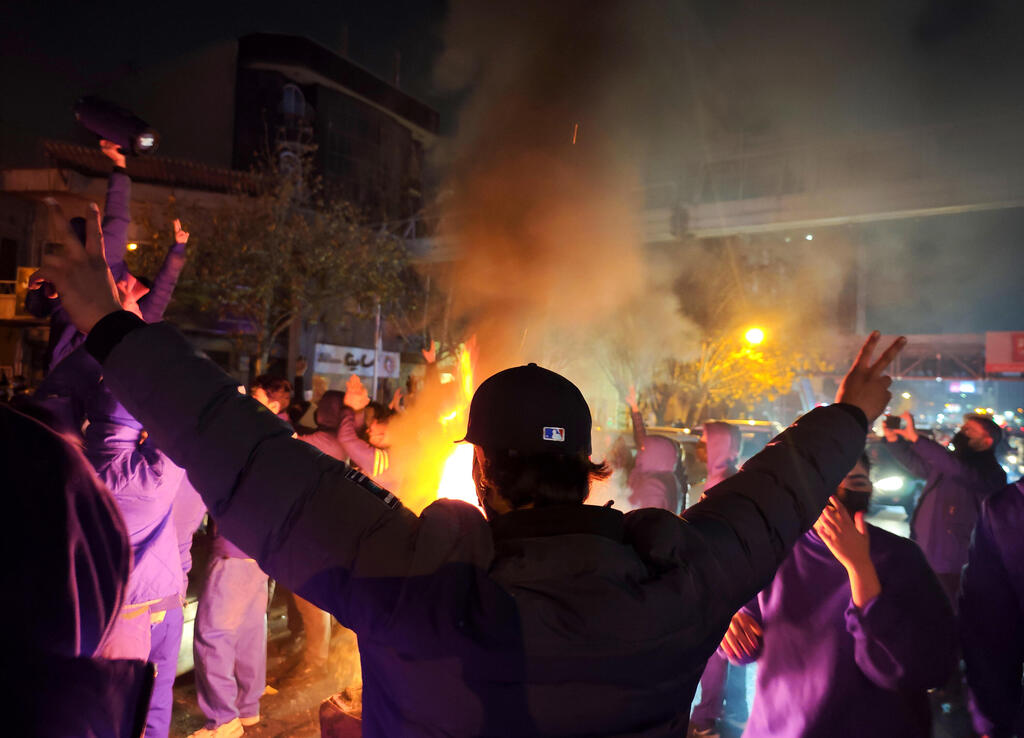
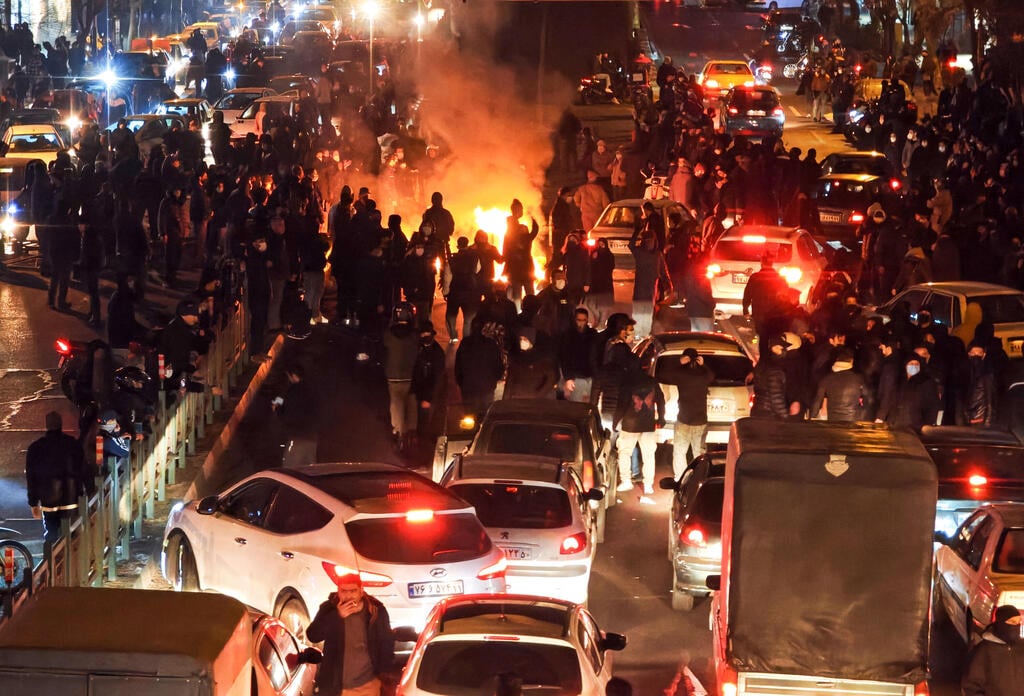
Demonstrators in Tehran during the huge protest in January. 'Whenever the shadow of war over the regime fades even slightly, the regime becomes more brutal'
(Photo: Anonymous/Getty Images)
(Photo: Anonymous/Getty Images)
Mahmood Amiry-Moghaddam, the director of IHRNGO, told The Guardian that those sentenced to death for drug offenses come from Iran’s most disadvantaged social groups and said they have little voice even among prisoners facing execution.
“Last year alone, at least 795 people were hanged on drug-related charges, with almost no international reaction and hardly any domestic or social media campaigns to save them,” he said. “. By staging this protest, the prisoners in Ghezel Hesar are taking an extraordinary risk. They know that the authorities can execute them at any moment, yet they have chosen to raise their voices in the hope that the international community will finally hear them and increase the political cost of these executions.”
According to Amiry-Moghaddam, “The Islamic Republic has no legitimate justification for using the death penalty for drug offences. It is not required by Islam, and the authorities themselves have repeatedly acknowledged that executions have failed to deter drug trafficking or drug use. On the contrary, both drug trafficking and addiction have continued to rise over the years. Those sentenced to death are rarely major traffickers; they are typically the lowest-ranking couriers, recruited because of poverty for a small payment. Many are convicted solely on the basis of confessions extracted under torture.”