


Prime Minister Narendra Modi of India is set to land at Ben-Gurion Airport at 12:45 p.m. Wednesday for a two-day state visit to Israel, during which the two countries are expected to announce an upgrade of their strategic relations to the highest level.
The visit comes less than a day after Prime Minister Benjamin Netanyahu said Israel is seeking to build “an axis of our own” made up of countries opposed to what he described as two axes of extremist Islam.
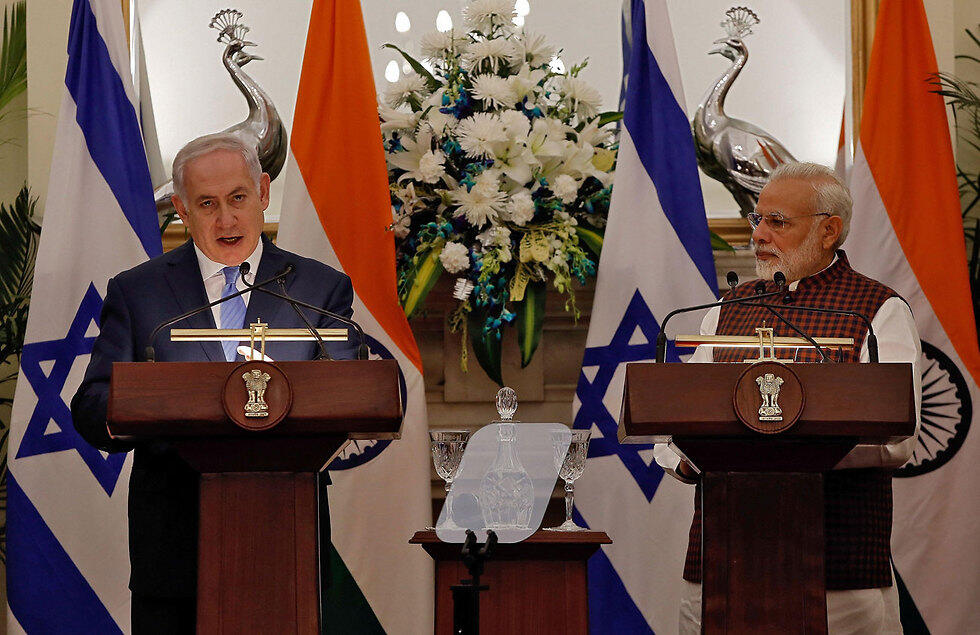
“We have a great interest in creating an axis of our own — of states that oppose the two axes of extremist Islam,” Netanyahu said Tuesday at a Shin Bet leadership conference.
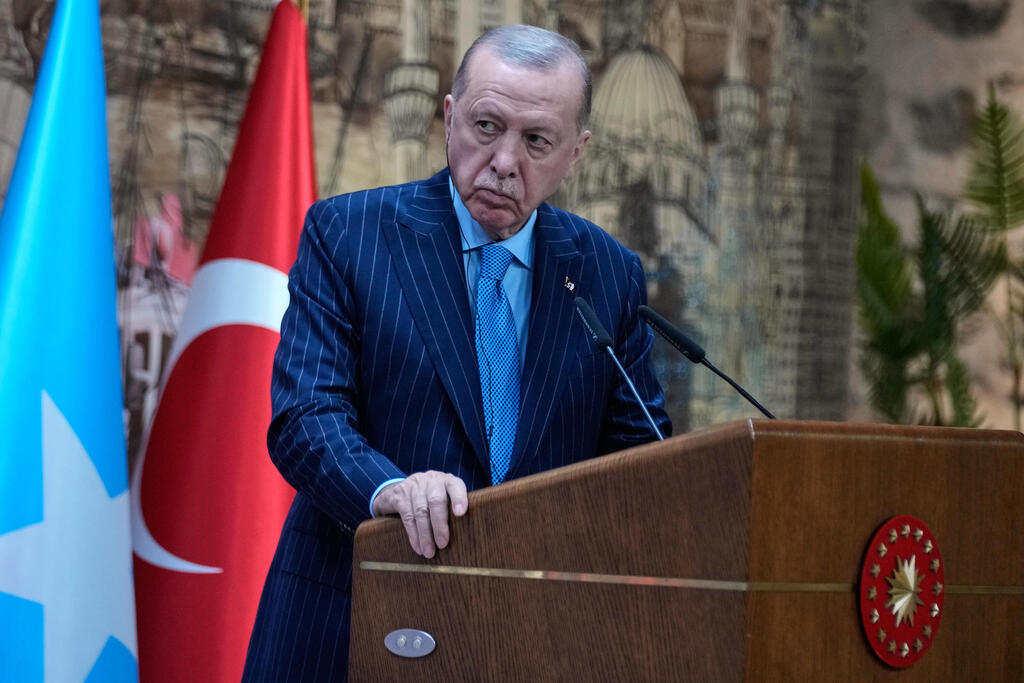
Modi’s visit carries significant regional implications, including tensions between India and Turkey. Turkey has provided weapons assistance to Pakistan and Bangladesh, a development that has raised concerns in New Delhi.
One response by India has been to tighten ties with Israel and promote a bloc of moderate states linking India to Europe through the India-Middle East-Europe Economic Corridor, or IMEC. The envisioned route would connect India through the United Arab Emirates, Saudi Arabia and Jordan to Israel and onward to Europe.
The goal, according to Israeli officials and analysts, is to strengthen a moderate axis in the region amid concerns about a Muslim Brotherhood-aligned bloc led by Turkey and fears that Saudi Arabia could draw closer to it.
Modi will be welcomed at the airport by Netanyahu and his wife, Sara. He is scheduled to meet with Netanyahu at the airport before heading to Jerusalem for a meeting with the Indian community. At 4:30 p.m., he will address the Knesset and later attend a technology exhibition featuring 12 Israeli companies. The day will conclude with a festive dinner with Netanyahu.
On Thursday, Modi will visit Yad Vashem and meet with President Isaac Herzog. He is also scheduled to hold an expanded meeting with Netanyahu, oversee the signing of agreements and deliver joint statements to the media. He is set to depart for India at 2 p.m.
The visit comes during what analysts describe as a sensitive security period, as tensions rise ahead of a possible confrontation with Iran. Dr. Lauren Dagan Amos, an expert on India’s foreign and security policy at Bar-Ilan University, said Modi’s arrival at such a time underscores the depth of ties between the countries and India’s desire to play a greater role in the region and advance IMEC.
She said India’s “Make in India” policy, which requires local production, has created obstacles to deeper industrial cooperation, including in defense industries. “There are major implications that in the past we were not prepared for, and today there is a convergence to move forward because Israel understands the importance of India — the fourth-largest economy, its relations with the United States and its position in the Indo-Pacific,” she said.
(Photo: Khalil Hamra/AP)
Dagan Amos added that additional agreements are expected in areas including artificial intelligence, cyber and quantum technologies. Although relations are strong, she said, “we are not realizing the full potential.”
On Tuesday, the 10th meeting of the India-Israel Joint Working Group on Counter-Terrorism was held in New Delhi. The Israeli delegation was led by Nadav Eshkar, head of the strategic affairs division at the Foreign Ministry. In a joint statement, both sides emphasized the importance of bilateral cooperation in combating terrorism and reiterated a principle of zero tolerance for terrorism in all its forms, including cross-border terrorism.
Dr. Avner Golov, vice president of Mind Israel and a former senior official at the National Security Council, said the visit also reflects mutual support during recent conflicts. “When we were at war, India was there for us. Over the past year, during their confrontation with Pakistan, Israel stood by India,” he said.
Golov pointed to growing concern in Israel over shifting regional alignments, including closer ties between Saudi Arabia, Turkey and Pakistan. He said deepening cooperation with India, along with Greece, Cyprus and the United Arab Emirates, could help anchor a regional framework linking India to Europe through Israel.
At the start of the weekly Cabinet meeting, Netanyahu outlined a broader vision of building a network of alliances in and around the Middle East, including India, Arab states, African countries, Greece and Cyprus, as well as additional Asian countries he did not name.
“The intention is to create an axis of states that see reality, the challenges and the objectives in the same way, in the face of the radical axes,” Netanyahu said. “Cooperation between us can yield great benefits and ensure our resilience and future.”