


After nearly a month of fighting, Israeli officials assess that any end to the war with Iran would leave Israel in a far stronger position than before the conflict, but warn that outcomes vary significantly.
Officials say the most problematic scenario would be a unilateral U.S. decision to end the war without a formal agreement, potentially forcing Israel to halt operations before achieving its core objectives.
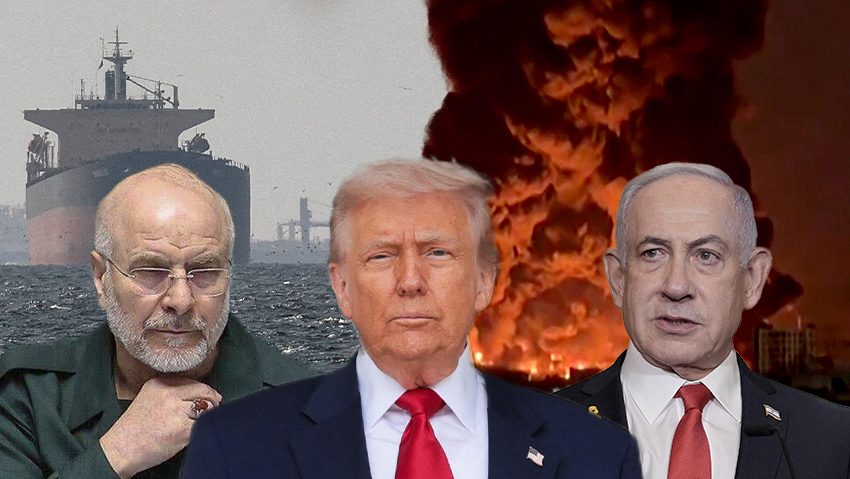
(Photo: AFP / UGC / UNKNOWN, REUTERS/Jessica Koscielniak/Stringer, Oliver CONTRERAS/AFP)
The preferred outcome, according to Israeli assessments, would be internal unrest in Iran leading to the fall of the regime. Another favorable scenario would see Tehran accept U.S. demands in order to preserve its rule.
Even without a deal, Israel assesses Iran would emerge from the war in one of its weakest positions since the 1979 Islamic Revolution, facing economic strain, internal unrest and major damage to its military capabilities.
Officials say Iran’s air defenses, air force and navy have been severely degraded, while its ability to rebuild missile production and advance its nuclear program has been significantly constrained by Israeli intelligence penetration and air superiority.
Israel is measuring potential end-of-war scenarios based on several key criteria: ending Iran’s nuclear program, significantly curbing its ballistic missile capabilities, halting support for proxy groups such as Hezbollah, establishing effective monitoring mechanisms and creating conditions for potential regime change.
Officials warn that any agreement failing to address these issues could allow Iran to recover and lead to renewed conflict.
US Air Force striking targets in Iran
(Video: CENTCOM)


Israel also insists that any sanctions relief be gradual and conditional, warning that immediate financial gains could enable Iran to rebuild its military capabilities.
Another key demand is the removal or transfer of Iran’s enriched uranium stockpile to a third party, which officials view as essential to preventing a rapid restart of the nuclear program.
On ballistic missiles, Israeli officials say a viable agreement would need to limit Iran’s range to about 300 kilometers (185 miles), framing longer-range systems as a strategic threat.
A unilateral U.S. declaration ending the war without an agreement would present additional challenges, officials say, including difficulties restoring normal life while Iran retains the ability to launch attacks.
The assessment does not fully account for the parallel conflict with Hezbollah in Lebanon, which could further complicate the situation, particularly if Iran continues to support the group.